
Vandaag of morgen in huis

Kwaliteit gegarandeerd

Welkomstaanbiedingen ontgrendelen: GRATIS bezorging | Tot 80% korting | Gratis 30 dagen JoyPlus-proefperiode
Download de app
Buying an espresso machine seems simple until you have to choose between a bean-to-cup coffee machine, semi-automatic espresso machine, manual espresso machine, coffee pods or a coffee machine with a grinder. Marketing copy often focuses on pressure, power and “professional” results. However, those figures do not tell the whole story.
The right choice mainly depends on how much control you want, how much maintenance you are prepared to accept and how much space you have in your kitchen. By considering the points below, you can avoid a disappointing purchase and choose a coffee machine more confidently for your home, home office or travels.
A pump pressure of 15 or 20 bar sounds impressive, but a higher figure does not automatically mean better espresso. The grind size, dosage, temperature and filter are at least as important. Use pump pressure as a technical specification, not as proof of quality on its own.
An espresso machine with a coffee grinder grinds beans immediately before brewing. This can contribute to a fresher preparation, but a built-in grinder also needs cleaning and may require adjustment. With a semi-automatic machine, you also have to measure out the coffee and tamp it yourself. If you mainly want to make coffee quickly at the touch of a button, a bean-to-cup coffee machine is probably a better fit.
An espresso machine with a milk frother is not always fully automatic. A steam wand requires you to move the milk jug yourself and control the steam properly. A milk reservoir with automatic preparation is easier to use, but it has additional parts that need to be cleaned after use. Also check whether the milk jug is removable and how the system is cleaned.
Do not just measure the width of the worktop; check the depth and height as well. A compact model may still be difficult to fit beneath kitchen cupboards if the water reservoir has to be filled from the top.
For everyday use, a reservoir of around 1 to 1.8 litres is practical for making several cups. A smaller reservoir saves space but needs filling more often. Also check whether the reservoir is removable. This makes filling and cleaning easier.
Check whether the brewing unit, drip tray and water reservoir are removable. For milk preparation, an easy-to-clean steam wand or milk reservoir is important. Descaling is still necessary, even when a manufacturer specifies a filter or automatic cleaning function.
Under EU consumer rules, the products mentioned are covered by a minimum of two years’ legal guarantee; additional manufacturer’s terms may vary by brand and model. Keep your proof of purchase and read the manual for information on installation, water hardness and maintenance.
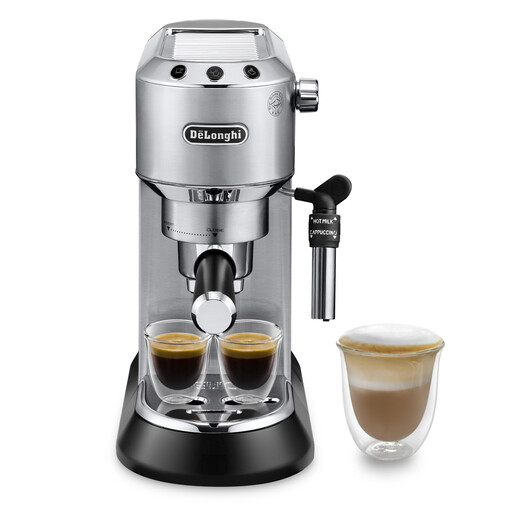
Why it suits this profile: This slim manual espresso machine is 14.9 cm wide and works with ground coffee and E.S.E. pods. This makes it easy to get started without having to buy a separate grinder straight away.
The preparation method is clearly manual. You are not paying for a complicated automatic system that you may never use.
15-bar pump pressure, removable 1.1-litre reservoir, steam wand and space for two cups.
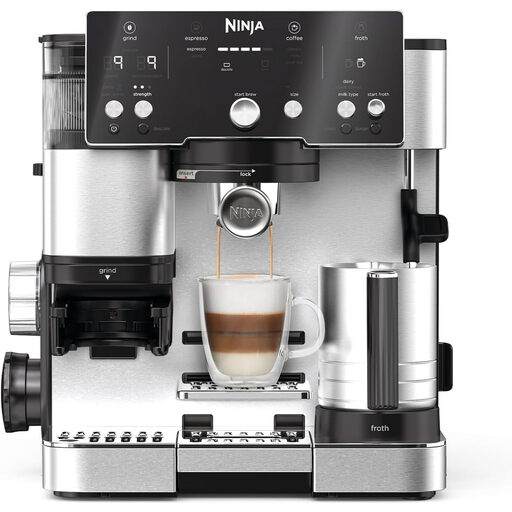
Why it suits this profile: This model combines espresso and filter coffee with a built-in grinder, built-in scales and an automatic milk frother.
The specifications make it clear that this is a more advanced appliance. However, check beforehand that its width of 33.5 cm and weight of 11.32 kg are suitable for your kitchen.
25 grind settings, 2-litre water reservoir, two milk-frothing settings and dishwasher-safe parts according to the product information.
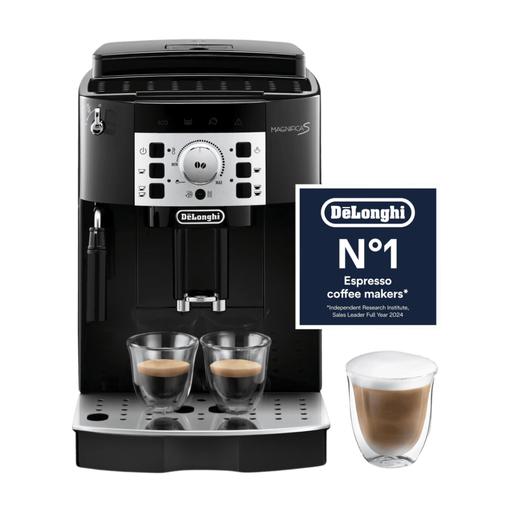
Why it suits this profile: For households or home offices where several cups are made each day, this bean-to-cup coffee machine offers bean-based brewing and a steam wand.
The brewing unit is removable and the descaling programme helps with maintenance. However, the steam wand means that frothing milk remains a manual process.
1.8-litre water reservoir, 250-gram bean container, two cups at once, and adjustable grind size and coffee strength.
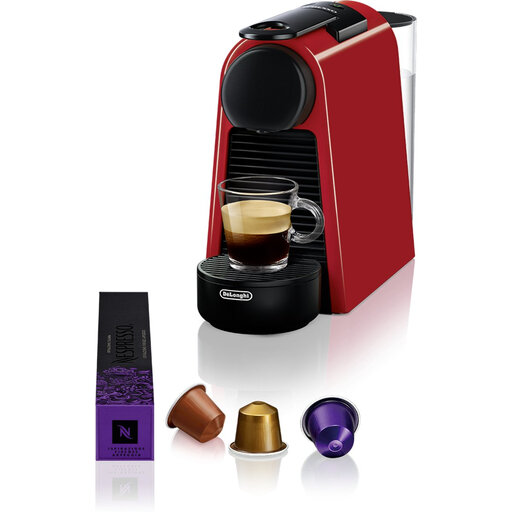
Why it suits this profile: This compact capsule model is 11 cm wide and offers two programmable coffee options: espresso and lungo.
The limited features are clear from the outset. You are choosing speed and compact dimensions, not a built-in grinder or manual milk preparation.
0.6-litre capacity, automatic switch-off and a stated pump pressure of 19 bar in a lightweight 2.3 kg appliance.
We have put together a complete, up-to-date list of products that fully meet these strict selection criteria and the applicable European safety regulations.
As well as the purchase price, you will pay for coffee beans, capsules, milk, water filters and descaler. A bean-to-cup machine usually does not need capsules, but it does require regular maintenance. With a Nespresso coffee machine, capsules are easy to use, while the cost per cup can vary depending on the capsule and brand. So do not compare only the machine price; also consider how many cups you expect to make each day.
Its lifespan depends on usage, water hardness and maintenance. Regular cleaning, descaling when needed and following the instructions help reduce the strain on the components. Before buying, check whether replacement parts and accessories such as filters, milk reservoirs or water filters are available.
A bean-to-cup machine suits users who want to make coffee from beans quickly with minimal effort. A semi-automatic espresso machine or manual espresso machine is a better choice when you want to control the grind, dosage and milk texture yourself. For travelling, a portable espresso machine makes more sense, provided you take water, power and cleaning on the go into account.
