
Vandaag of morgen in huis

Kwaliteit gegarandeerd

Welkomstaanbiedingen ontgrendelen: GRATIS bezorging | Tot 80% korting | Gratis 30 dagen JoyPlus-proefperiode
Download de app
Choosing dog food seems simple until you start comparing labels. “Grain-free”, “natural”, “high in meat” and “for sensitive dogs” sound appealing, but they do not always tell you enough about whether a product is suitable for everyday use. The right choice depends on your dog’s age, size, activity level and any specific nutritional needs.
As a Joybuy Product Recommendation Officer, I focus mainly on verifiable information: the legal product name, ingredients, analytical constituents, life stage and feeding guidelines. This helps you avoid relying solely on eye-catching claims on the front of a bag of dog food.
Grain-free dog food contains no grains, but it often includes peas, lentils, chickpeas or sweet potato instead. Grain-free therefore does not mean that the product is carbohydrate-free. It is mainly relevant when your dog needs a specific dietary adjustment recommended by a vet. Always check the full ingredients list.
An analysis showing, for example, 27% or 38% crude protein indicates how much protein the product contains, but it does not automatically show what proportion comes from animal or plant sources. So also look at the first ingredients and the listed protein sources, such as chicken, lamb, fish or game.
Glucosamine, omega-3, probiotics or taurine may be listed in the product specifications. However, that does not make dog food suitable as a treatment for joint problems, heart conditions or digestive issues. If your dog has a health condition, such as heart problems, discuss their diet with a vet.
First choose between puppy food, adult dog food and senior dog food. Puppy food is formulated for growth, while senior food often has a different energy density and kibble size. Kibble size, feeding amounts and energy requirements may differ for small and large breeds.
Pay attention to the legal product name. If it says “complete pet food” or “complete food”, it is intended as a daily meal when used according to the feeding guidelines. A product labelled “complementary pet food” is not intended for this purpose.
If you are looking for dog food with lamb, dog food with fish or dog food with chicken, it is worth reading the ingredients list rather than relying on the flavour name alone. Check:
For sensitive dogs, a recipe with an alternative protein source may be worth considering, but “sensitive” is not a diagnosis. If symptoms keep returning, professional nutritional advice is the wiser option.
A large bag of dry dog food may seem better value, but only if your dog tolerates the product well and the food can be used before its shelf life expires once opened. Store dog food in a cool, dry place, seal the packaging properly and check the best-before date.
It is best to switch gradually over around seven days. Start by mixing a small amount of the new food with the old food, then slowly increase the proportion. This makes it easier to see how your dog responds. Always provide fresh drinking water.
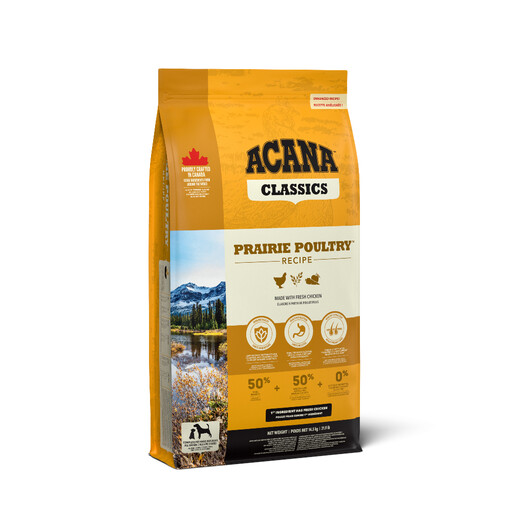
Why it suits this profile: The large pack is practical for households that use dry food every day. According to the product information, the recipe contains chicken, turkey, oats and vegetables and is suitable for all life stages.
The product page states that 50% of the ingredients are of animal origin and that the food contains 27% crude protein. Compare this information yourself with the daily feeding amount and current price.
14.5 kg contents; oats as a carbohydrate source; listed 300 mg/kg glucosamine and added bacterial cultures.
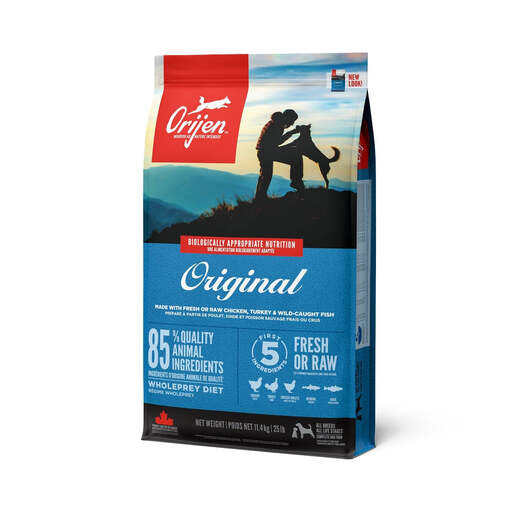
Why it suits this profile: This recipe combines chicken, turkey, herring, cod and egg. It is suitable for owners of adult dogs who are looking for several animal protein sources and are considering a grain-free recipe.
The product information provides a full ingredients list and analytical values. This allows you to assess the high protein content of 38% in context.
Grain-free; 38% crude protein; 11.4 kg pack; the product description states that it is complete food formulated in accordance with FEDIAF guidelines.
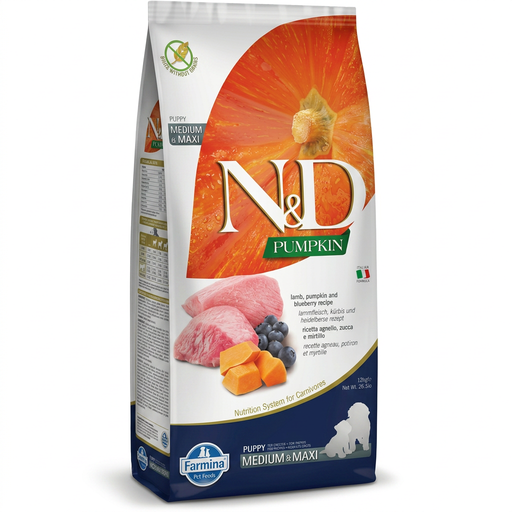
Why it suits this profile: According to the product information, this food is intended for puppies of medium and large breeds. The feeding table provided makes it practical to measure portions based on weight.
The life stage and breed size are clearly stated. However, check that your puppy’s expected adult size corresponds to medium/maxi.
Lamb as the listed protein source; grain-free recipe; 12 kg contents; a gradual switch over seven days is recommended.
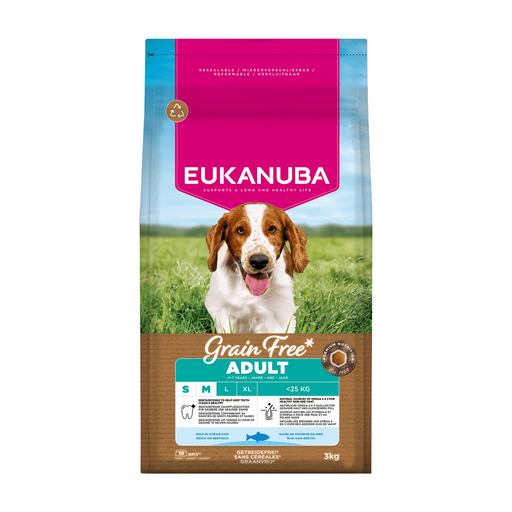
Why it suits this profile: This dog food for adult dogs of small and medium breeds lists ocean fish as a protein source and, according to the product description, contains no chicken.
The product information clearly identifies the target group, protein source and chicken-free recipe. For a sensitive-diet plan, always check the full label.
3 kg pack; grain-free formula; ocean fish as the listed protein source; suitable for adult small and medium-sized dogs.
We have put together a complete, up-to-date list of products that fully meet these strict selection criteria and the applicable European safety regulations.
Dog biscuits and dog treats are complementary food. According to the product information, INABA Churu Dog Multipack contains at least 90% moisture and is intended as a treat, topper or training reward. It does not replace a complete meal. Ideally, keep treats below around 10% of your dog’s daily energy intake and adjust the amount of their main meal if necessary.
For dogs with heart problems, Vet Life Cardiac Formula for Dogs is available as a specific formula. Do not use this type of veterinary diet independently as a substitute for veterinary advice. The right amount and suitability depend on your dog’s diagnosis, medication and condition.
Mix the new food gradually with the old food over around seven days. Start with a small proportion of the new food and increase it slowly. Follow the instructions on the packaging and monitor your dog’s appetite, stools and overall tolerance.
This varies by brand and packaging. Seal the bag airtight, store it in a cool, dry place and follow the shelf-life information on the label. A smaller pack may be more practical if your dog eats little or if freshness is important.
No. Grain-free is a recipe choice, not a general guarantee of quality. Some recipes replace grains with pulses or potato. Choose based on your dog’s life stage, the ingredients and their individual needs. If you suspect a food sensitivity, discuss the options with a vet.
