
Vandaag of morgen in huis

Kwaliteit gegarandeerd

Welkomstaanbiedingen ontgrendelen: GRATIS bezorging | Tot 80% korting | Gratis 30 dagen JoyPlus-proefperiode
Download de app
A wok may seem easy to choose at first. But many home cooks fall into the same traps: a pan that doesn’t work properly on induction, a coating that wears out sooner than expected, or a size that turns out to be too small for a family meal. A few checks beforehand can help you avoid a disappointing purchase.
In this buying guide, we compare key materials, sizes, lids and care requirements. You’ll also find some popular options for different cooking styles.
A wok designed for a gas hob won’t necessarily work on induction. Induction requires a magnetic base with enough contact with the hob. Always check the product description and look for induction, gas, electric and ceramic to be listed separately.
A traditional round-bottomed wok can sit securely on a gas burner, but may be less stable on a flat induction hob. A flat, magnetic base is more practical for induction.
A non-stick wok can be handy for eggs, vegetables and dishes that need little oil. However, the coating usually requires moderate heat and gentle utensils. Product descriptions for several ceramic pans recommend hand-washing to extend the life of the coating, even when the pan is dishwasher-safe.
An uncoated wok, such as a stainless steel wok or carbon steel wok, can handle higher temperatures better. On the other hand, it requires more care with your cooking technique and maintenance.
A 30 cm wok gives you plenty of room to stir-fry, braise and deep-fry food for several people. However, heat may not be distributed as evenly on a small induction zone. So, check not just the diameter but also the diameter of the base.
For one or two people, 24 to 28 cm may be enough. A 30 cm wok is often more practical for families, as long as your hob and storage space can accommodate it.
Carbon steel responds quickly to changes in temperature and is suitable for high heat. A carbon steel wok needs to be seasoned before its first use. With regular use and a light coating of oil, the surface can gradually become less prone to sticking. This isn’t a factory-applied coating, and the wok needs to be dried carefully to prevent rust.
A stainless steel wok is generally corrosion-resistant and suitable for everyday use. A three-ply construction with an aluminium core can help distribute heat more quickly and evenly. Without a non-stick coating, food may initially stick more easily. For example, Maxcook’s instructions recommend heating the pan thoroughly, adding oil, then cooking over a medium to low heat.
Aluminium heats up quickly and is relatively lightweight. If the pan has a ceramic coating, avoid overheating it and using metal utensils. Also check that “PFAS-free” is actually stated in the product specifications. According to Brabantia Dusk’s product description, its ceramic coating is PFAS-free; the information may differ for other models.
A wok for induction needs a flat, magnetic base. A multi-layer base can help distribute heat evenly, but always check the stated hob compatibility.
For a wok designed for a gas hob, quick changes in heat and a sturdy handle are important. At very high temperatures, both the pan and the handle can become hot. Use an oven glove and keep the pan out of children’s reach.
A wok with a lid is useful for braising, simmering and retaining moisture. According to the product description, a glass lid lets you see what’s inside without lifting it. Check whether the handle and lid are oven-safe, though, as this varies by model.
“Dishwasher-safe wok” doesn’t mean the dishwasher is the best option for every material. Stainless steel models can go in the dishwasher according to their product descriptions, but hand-washing is often recommended to keep the surface in good condition. Carbon steel should be washed by hand, dried straight away and, if needed, lightly oiled.
“Healthy wok” isn’t an official product category. Instead, look for verifiable information about the material, whether it has a coating and how it should be cared for. Brand claims about reducing smoke or how a product works should be treated as claims made by the brand, not as guaranteed results in every kitchen.
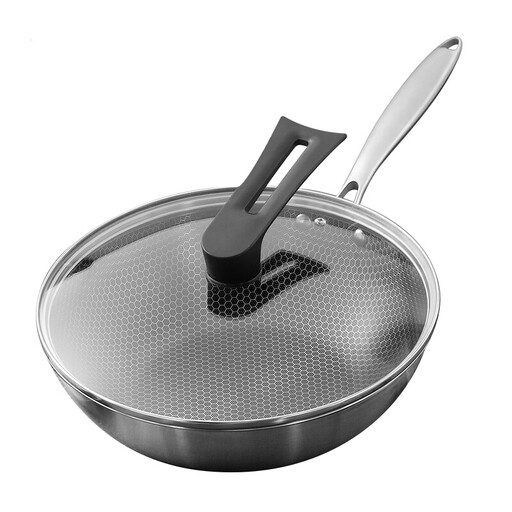
Why it suits this profile: The 30 cm size and included lid give you plenty of room for family meals. According to the product description, this wok is suitable for gas, induction and electric hobs.
The product information clearly lists the compatible hobs and confirms that a lid is included. Before buying, check that the base shape is right for your induction zone.
30 cm diameter; glass lid; suitable for stir-frying, sautéing and deep-frying according to the product description.

Why it suits this profile: This pan is designed for anyone who values a durable, uncoated construction and versatility. It has a diameter of 28 cm.
The stated three-ply construction with an aluminium core is clearly described. There’s no non-stick coating that could be damaged by improper care.
304 stainless steel; glass lid; suitable for induction, gas, electric, ceramic and halogen hobs according to the product description.
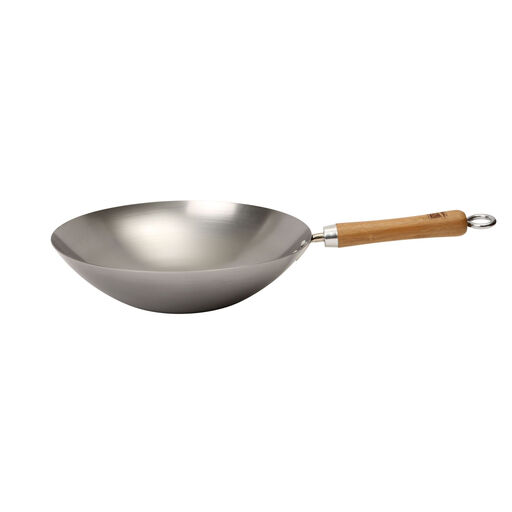
Why it suits this profile: This lightweight wok is designed for high heat and classic stir-frying for around two to three people. According to the product description, the bamboo handle is designed for comfortable handling.
The care requirements are clear: season it before use, dry it straight after washing and don’t put it in the dishwasher. That way, you know what to expect when it comes to care.
Uncoated carbon steel; 30 cm size; integrated hanging loop; suitable for stir-frying according to the product description.

Why it suits this profile: This 30 cm wok combines a stainless steel body with a ceramic non-stick coating and a glass lid. According to the product description, it’s suitable for induction, gas, electric and ceramic hobs.
Hob compatibility and cleaning instructions are listed separately. The product information specifies hand-washing, so there’s no need to count dishwasher use as a benefit.
30 cm diameter; ceramic coating; glass lid; suitable for several types of hob according to the product description.
We’ve put together a complete, up-to-date list of products that meet these strict selection criteria and the applicable European safety regulations.
Choose a model with a flat, magnetic base and an explicit statement that it’s suitable for induction. An induction wok should also fit the cooking zone properly. A 30 cm diameter doesn’t automatically mean the hob will heat the entire base.
It depends on how you cook. Carbon steel is suited to high temperatures and stir-frying, and to anyone happy to season and dry the pan carefully. A non-stick wok is easier for beginners and for cooking food that sticks easily, but it generally needs more care when it comes to heat and utensils.
Its lifespan depends on the material, how it’s used and how it’s cared for. Stainless steel has no coating that can come away, but it can discolour or scratch. Rust on carbon steel can usually be avoided by drying it straight away and applying a little oil. A ceramic coating can last longer if you avoid overheating, metal spatulas and sudden changes in temperature. Check the care instructions for each model.
