
Vandaag of morgen in huis

Kwaliteit gegarandeerd

Welkomstaanbiedingen ontgrendelen: GRATIS bezorging | Tot 80% korting | Gratis 30 dagen JoyPlus-proefperiode
Download de app
A vacuum cleaner should suit your home, floors and cleaning routine. Yet many people choose one mainly based on a high suction-power figure, long battery life or a smart app. This can lead to a poor purchase. For example, a robot vacuum cleaner will not work well if cables and small items are left on the floor. A cordless vacuum cleaner may promise impressive performance, but quickly run out of power on its highest setting.
As a Joybuy Product Recommendation Officer, I therefore focus primarily on verifiable product specifications and practical use. Below, you’ll find what to look for when choosing a robot vacuum cleaner, stick vacuum cleaner, handheld vacuum cleaner or cordless vacuum cleaner.
Manufacturers often state suction power in Pa or kPa. This provides information about the maximum negative pressure, but does not tell you everything about performance on your floor. The brush, airflow, filter and seals also play a role. In addition, a maximum figure is usually measured in a specific mode.
So also check:
“Up to 60 minutes” usually does not mean that you can clean for 60 minutes at maximum suction power. Battery life varies depending on the mode, floor and accessory. A vacuum cleaner with long battery life is particularly useful when the stated runtime matches your cleaning task.
Also pay attention to the charging time, whether the battery is removable and whether a spare battery is available. A model with a removable battery can be more practical in a large house or a home with several floors.
A robot vacuum cleaner with a mopping function reduces daily effort, but the mop, filters, brushes and sensors still need cleaning. A vacuum cleaner with a self-emptying station also requires maintenance. Check the capacity of the dust bag or dust container, as well as the cost and availability of replacement parts.
For homes with pets, an anti-tangle brush is useful, but no brush eliminates maintenance entirely. Check the roller brush regularly for long hairs and fibres.
A robot vacuum cleaner with LiDAR navigation uses lasers to create a map of your home. This can help with systematic routes, room selection and no-go zones. However, you should still clear away cables, toys and small objects before first use. Dark floors, full-length mirrors and high thresholds can affect navigation.
The following points are also relevant for homes in the Netherlands:
With a stick vacuum cleaner, battery capacity, runtime and charging time are more important than a single power claim. Use a low setting for crumbs and everyday dust on hard floors. The highest setting is mainly intended for localised dirt or carpets, but uses energy more quickly and can produce more noise.
A cordless vacuum cleaner offers flexibility, while a corded model provides a constant power supply. For small flats or quick clean-ups, a compact handheld vacuum cleaner may be sufficient. For an entire home with pets, a larger dust container and motorised floor brush are usually more practical.
A HEPA filter can, according to the product description, trap fine particles. Always check whether the filter is washable, how it should be dried and whether it can be replaced. A wet or incorrectly fitted filter can affect performance.
The capacity of the dust container also matters. A small dust container is lightweight and compact, but needs emptying more often. A robot vacuum cleaner with a self-emptying station transfers dirt to a larger container or bag, but requires space near a power socket.
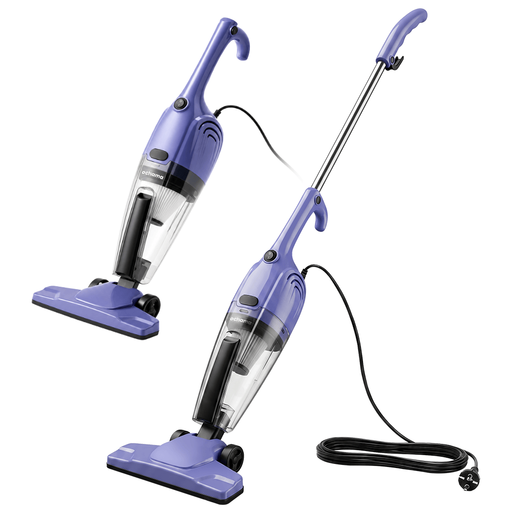
Why it suits this profile: This model has a 4.5-metre cord and works without relying on a battery. That makes it suitable for small homes, student rooms and quick cleaning jobs.
The constant power supply means cleaning time does not depend on maximum battery life. The visible dust container makes it easy to empty it in good time.
550 W according to the product description, 2-in-1 use as a stick and handheld vacuum cleaner, and a washable filter.
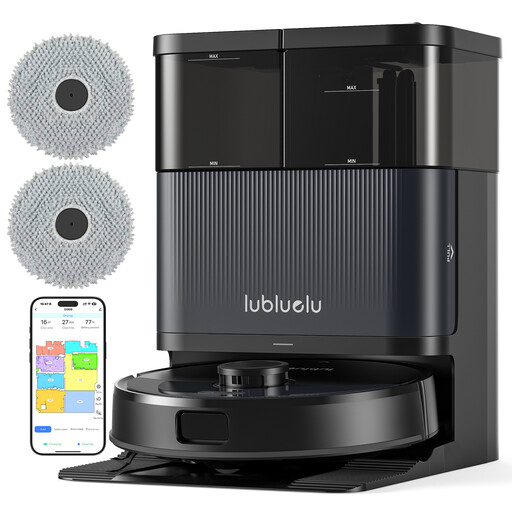
Why it suits this profile: Suitable for households that want to combine automatic routes, app control and mopping with everyday maintenance of hard floors and carpets.
According to the product information, the app allows you to adjust the suction power and cleaning mode. The mop module can be lifted automatically when the robot detects carpet.
Up to 10,000 Pa according to the product description, LiDAR mapping, app control and a combination of vacuuming and mopping.
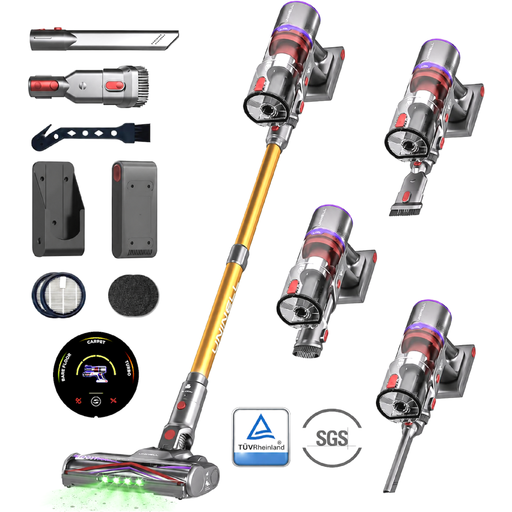
Why it suits this profile: A practical choice for pet owners who regularly clean carpets, hard floors, furniture and stairs.
The anti-tangle brush is designed to reduce hair wrap. The removable battery and remaining-runtime indicator make it easier to plan around battery limitations.
According to the product description, up to 65 minutes of use, a 7-stage filtration system and conversion to a handheld vacuum cleaner.
We’ve put together a complete, up-to-date list of products that fully meet these strict selection criteria and the applicable European safety regulations.
A vacuum cleaner remains useful when you don’t put off maintenance. Empty the dust container before it becomes completely full and check the filters according to the manual. Washable filters must be completely dry before you put them back. With a robot vacuum cleaner, also clean the wheels, sensors, side brushes and mop.
Do not use a vacuum cleaner for liquids, hot ash, burning materials or sharp objects unless the appliance is specifically designed for this purpose. Keep the area around a robot’s charging station clear and remove loose cables from its route.
It can be, especially if the model has a motorised brush, anti-tangle function and adjustable suction power. However, check daily that the brush remains free of hair. A robot vacuum cleaner is an addition to thorough cleaning; furniture, stairs and crevices often require a handheld or stick vacuum cleaner.
For a small home, 30 to 45 minutes may be sufficient for everyday maintenance. For a large house, several floors or lots of carpet, a model with a longer stated runtime or removable battery is more practical. Bear in mind that the maximum setting reduces battery life.
In addition to the purchase price, dust bags, filters, brushes and mop cloths can create ongoing costs. A model with a reusable dust container may have different maintenance requirements from a station with disposable bags. Before buying, check which parts are available and how often they need to be replaced according to the manual.
