
Film fan who sits further away
You want to follow musical scenes easily from a regular seat some distance from the screen. So, measure the viewing distance and the space where you plan to put the TV.


First, measure the distance between your seat and the screen, then choose a size that will also fit your room. Without taking this measurement, there’s no one-size-fits-all screen size for long-distance viewing. Next, compare OLED and LCD or mini-LED models based on light levels and viewing angles, and assess vocals and dialogue separately from the picture specifications. If you’d like extra sound, check that the TV and audio system support the connections you need.
You want to follow musical scenes easily from a regular seat some distance from the screen. So, measure the viewing distance and the space where you plan to put the TV.
Voices and music matter to you. You want to assess the sound of the specific TV model or check whether you can connect a separate audio system.
You often watch with light coming into the room or from different seats, and want to compare reflections and the viewing angles of different models.
Best for: watching in a room you can darken, if contrast in dark scenes is a priority.
Also consider: reflections in your room, the space available and image retention when displaying a static image for a long time.
Best for: comparing large screen sizes when natural light or reflections are a factor.
Also consider: viewing angles and visibility in incoming light vary between models; compare them in similar viewing conditions.
Best for: when clear vocals, dialogue or music are your main priorities.
Also consider: a soundbar needs extra space and budget, and won’t necessarily improve every aspect of the sound.
Consumentenbond uses the viewing distance divided by 2.4 as a starting estimate for the screen diagonal, and gives 55–77 inches as a guide for a distance of 4 metres. Use this to compare sizes, not as a hard-and-fast rule. Also check the width and height, including the stand.
| What to consider | What should you check? | Who should give this more weight? |
|---|---|---|
| Screen size and viewing distance | Measure from your eyes to where the screen will be, and check that the dimensions, including the stand, will fit your furniture or wall. | I want to follow musical scenes easily from my regular seat and make sure the screen fits the room. Around 36% of consumers prioritise screen size. |
| Vocals and dialogue | Assess both voices and music on the specific model. If you’re considering a soundbar, check the connections on the TV and audio system. | I want voices to remain clear above the music, so I need to assess the sound of the exact combination. Around 29% of consumers prioritise clear vocals and dialogue. |
| Light levels and viewing angle | Compare reflections and visibility in incoming light, and consider the viewing angle if you won’t be sitting directly in front of the screen. | I want to know how well the picture works in a bright room or from a seat to the side. Around 21% of consumers prioritise light levels and viewing angle. |
| Total running costs | Compare the EU energy labels for the exact models, and consider whether you’ll need a separate audio system. | If I’m considering extra sound as well as a TV, I want to look at the purchase and running costs together. Around 14% of consumers make total running costs their main priority. |
Your viewing distance affects which screen size will feel comfortable. The TV’s width and height, including the stand, also need to fit the available space.
Measure from your usual seat to where the screen will be, then compare nearby screen sizes.
A larger TV may need a different position or piece of furniture.
Support for an audio format doesn’t, by itself, tell you how a TV’s speakers reproduce voices and music. Sound quality also varies between soundbars.
Assess the sound of the exact TV model and, if you’re considering a soundbar, the audio system you plan to use.
A separate audio system takes up extra space and may mean an additional purchase.
OLED pixels produce their own light; mini-LED is an LCD type with a backlight. Reflections, viewing angle and visibility in incoming light need to be assessed for each model.
Compare specific models in lighting conditions and from seats that are similar to those in your living room.
According to the Dutch government, if a product is faulty, the seller must provide a solution. A paid extension may overlap with rights you already have.
Before buying, read exactly what the additional cover includes and what terms and conditions apply.
So, a paid extended warranty could cost you more without providing entirely new cover.
The OLED77C5ELB is a 77-inch OLED model to include when comparing large screens.
The QE75QN90FATXXN is a 75-inch Neo QLED mini-LED model to compare with large LCD TVs.
The 75C7K is a 75-inch QD-mini-LED model to compare with a large OLED screen.
The BRAVIA 7, model K75XR70PAEP, is a 75-inch 4K mini-LED model to consider.
The 75MLED910/12 is a 75-inch QD-mini-LED model with Ambilight.
This selection of Joybuy products focuses on large LCD and mini-LED TVs for viewing from a distance, with a range of screen sizes and listed audio features.
 No image available
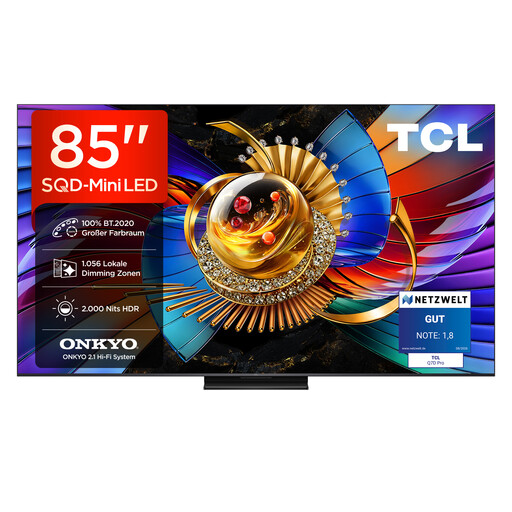
The 85-inch diagonal makes this a large-screen option for viewing from a distance. Check that the TV will fit your available space before buying.
The title lists HDR, 144 Hz, VRR, Google TV and an Onkyo 2.1 audio system.
 No image available
This 85-inch TV is an option to compare with other large screens. Measure the space and viewing distance before choosing a size.
The title lists 144 Hz, anti-reflection, Dolby Vision IQ, Dolby Atmos and Google TV.
 No image available
The 75-inch size offers a different screen diagonal to assess against your viewing distance and available space.
The title lists 4K HDR, 144 Hz VRR, FreeSync Premium and an Onkyo 2.1 audio system.
 No image available
With an 85-inch diagonal, this is a large-screen option. Check the dimensions and placement before choosing.
The title lists a resolution of 3840 × 2160, HDR10+, QLED and energy class E.
 No image available
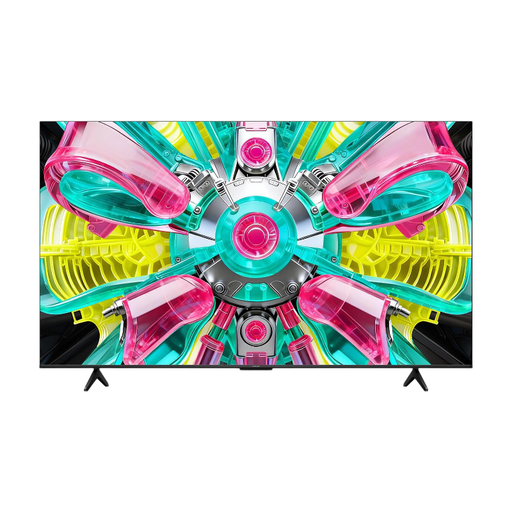
The 85-inch diagonal may suit long-distance viewing, provided it also works with your room and setup.
The title lists 144 Hz; the product description mentions an Onkyo 2.1-channel audio system.
Measure from your eyes in your usual seat to where the screen will be. Consumentenbond uses the viewing distance divided by 2.4 as a starting estimate for the diagonal in the same unit, and gives 55–77 inches as a guide for a distance of 4 metres. Compare nearby sizes too, and check that the TV will fit.
No, not necessarily. First, assess the vocals and music on the specific TV. Consumentenbond points out that sound quality varies between soundbars. If you want to use eARC, check that both the TV and audio system support the connection and the audio formats you need. HDMI Licensing Administrator explains which formats eARC can support.
Compare the EU energy labels for the exact models. The European Commission says the labels also provide information about energy efficiency during HDR playback. Also consider whether you’ll need a separate audio system.
Under the statutory warranty, the seller must provide a solution if there’s a problem with the product, according to the Dutch government. For distance sales, the seller must provide information about the cooling-off period, which is usually 14 days. Check the information and terms for your specific order.
The Dutch government lists options including the shop or online service where you buy a new, similar appliance, a collection point or your local recycling centre. Check the practical arrangements for collection or delivery with the seller.