
当日/次日达

品质保障

开启新人专享福利: 全场免邮 | 低至 2 折 | 免费试用 30 天 JoyPlus 会员
下载 Joybuy
A new frying pan, cookware set or electric cooking pot may seem easy to choose. Yet there are clear differences in material, heat distribution, maintenance and suitability for induction. A low price may look attractive, but a pan that warps, does not fit your hob properly or is difficult to clean will ultimately cost you more.
Joybuy Product Recommendation Officer lists the key points to consider. This helps you compare cookware based on verifiable specifications rather than eye-catching marketing claims alone.
A pan may be described as suitable for gas, electric, ceramic and induction hobs. Even so, always check that your type of hob is explicitly mentioned. Induction, in particular, requires a magnetic base. For example, a separate saucepan with a wooden handle may work on an induction hob but not in the oven.
A non-stick pan will not automatically remain in the same condition for years. Sharp metal spatulas, high temperatures and scouring pads can damage the coating. Some pans are described as dishwasher-safe, while hand washing is recommended for a longer service life. These two pieces of information are not the same.
A 28 cm frying pan has a larger cooking surface, but it also requires more storage space and a suitably sized cooking zone. For a cooking pot, the capacity in litres is at least as important. A 1.5 to 2.5-litre pan is suitable for small portions; for a family or meal prep, 5 to 7 litres is more practical.
Stainless steel pans are suitable for everyday cooking and generally do not have a non-stick coating. According to the product description, a multi-layer construction with an aluminium core can provide faster and more even heat distribution. For example, the PURECOOK 304 Triple-Ply frying pan combines two layers of stainless steel with an aluminium core.
Aluminium pans are often lighter and heat up quickly. With non-stick pans, the coating used and the care required are particularly important. According to the product information, the 24 cm Brabantia Nocta frying pan has a ceramic, PFAS-free coating. Check the current product details for each version, as features may vary by model.
Use these guidelines as a practical starting point:
A smaller pan is not always more economical: if you need to cook several batches, the total preparation time increases. However, a large pan is inconvenient if the cooking zone is small.
As well as checking your hob, look at oven compatibility, whether a lid is included and the type of handle. Bakelite often feels cooler to the touch, while stainless steel handles can become hot. For electric cooking products, the power rating, capacity, plug and cleaning instructions are also important.
Also pay attention to the difference between a standard cooking pot, a steamer and an electric cooking pot. A steamer insert can be useful for vegetables and dumplings, but it makes the pan taller and requires more storage space. An electric cooking pot is handy in a student room or small kitchen, but according to the instructions it generally must not be immersed in water.
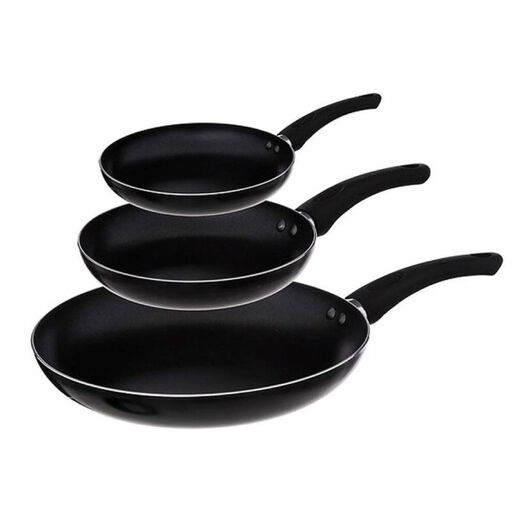
Why it suits this profile: Three sizes offer a practical starting point for students, first-time renters and households preparing different portion sizes without having to buy a complete cookware set straight away.
The diameters are clearly stated: 20, 24 and 28 cm. According to the product description, the set is suitable for gas, electric, ceramic and induction hobs. Hand washing is recommended to help protect the two non-stick layers.
Set of three aluminium frying pans, without lids, with a stated capacity of 3 litres and dishwasher compatibility.
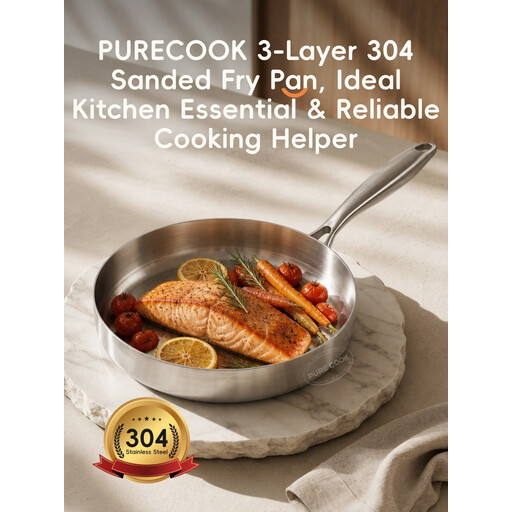
Why it suits this profile: This compact frying pan is designed for anyone looking for an uncoated stainless steel pan with a multi-layer construction for eggs, dumplings, meat and everyday frying.
The construction is clearly described as 304 stainless steel with an aluminium core. According to the product information, the pan is suitable for gas and induction hobs. No lid is included, so you can take this into account before making your choice.
20 cm diameter, three-layer design, smoothly finished rim and an uncoated pan that can be cleaned with a soft sponge.

Why it suits this profile: This spacious electric cooking pot is designed for larger portions and multiple cooking methods, including stewing, steaming, frying and keeping food warm.
The 7.1-litre capacity and four functions are clearly specified. According to the instructions, the inner pot must not be used on gas or induction hobs or in the oven; this helps prevent incorrect use.
Large capacity, adjustable time and temperature, keep-warm function, and a dishwasher-safe inner pot and lid according to the product information.
We have put together a complete, up-to-date list of products that fully meet these strict selection criteria and the applicable European safety regulations.
A practical basic collection consists of a frying pan measuring 24 or 28 cm, a saucepan of around 16 to 18 cm and a cooking pot with a capacity of 3 to 5 litres. If you enjoy stir-frying, you can add a wok pan. A cookware set is useful if you need several sizes at once, but buying individual pans avoids duplicate models.
No. In the product specifications, look for “induction” or “all-cooktops-compatible”. A thick or magnetic base is generally required. Also check that the diameter matches the cooking zones. Electric cooking pots use a different connection: check the stated voltage and use an earthed socket when the instructions require it.
Do not leave a non-stick pan empty on high heat, and use wooden, plastic or silicone utensils. Allow the pan to cool before washing it and avoid scouring pads. Even when a pan is dishwasher-safe, hand washing may be the gentler option according to the product information. Stainless steel pans require a different approach: use medium heat and do not rinse a hot pan immediately with cold water.
