
Baking one large cake
Your main priorities are making sure your cake tin fits and that the cake bakes through properly. Measure your tin and the oven’s interior, and check the available settings rather than looking only at the capacity in litres.


Choose an oven that fits your cake tin and lets you select the setting specified in the recipe; the stated capacity in litres alone won’t tell you whether your tin will fit. If you’re baking for more guests, also check the space between the oven shelves and, where available, look at Consumentenbond test results for cakes and cupcakes baked on two levels. A built-in oven needs a suitable housing unit, a freestanding oven needs a safe worktop space, and a combination oven is most useful if you also want to use the microwave function.
Your main priorities are making sure your cake tin fits and that the cake bakes through properly. Measure your tin and the oven’s interior, and check the available settings rather than looking only at the capacity in litres.
You want to bake for more guests in as few batches as possible. Check the shelf positions, the space between tins and any test results for baking on two levels.
You’re looking for a spot for a freestanding oven or an appliance that combines baking with heating food. The space available and the oven functions you want will determine which option suits you.
Decide what matters most for your coffee morning: the baking results, the number of cakes per batch, the space you have or how you’ll use the oven afterwards.
| What to consider | What to look for when buying | Who is this important for? |
|---|---|---|
| Evenly baked cake | Check that the oven has the setting your recipe calls for and, where available, look at independent baking results for the exact model. | If I’m baking one large cake, I want my tin to fit and the cake to bake through properly. Around 36% of consumers give evenly baked results top priority. |
| Space per batch | Measure your largest tin and check the internal dimensions, baking tray and shelf positions. | I want to bake enough cake for my guests without needing too many batches. Around 29% of consumers prioritise the quantity they can bake per batch. |
| Positioning and extra uses | Measure the housing unit or available worktop space, and check the installation instructions, ventilation and individual oven functions. | If my kitchen has limited space, I want to know which type of appliance will fit and whether I can also use it to heat food. Around 21% of consumers put positioning and dual use at the top of their list. |
| Energy use and cleaning | Compare energy consumption on the same measurement basis and check the cleaning method. | After the coffee morning, I also want to keep energy use and cleaning in mind. Around 14% of consumers give running costs and maintenance top priority. |
The usable space may be smaller than the stated capacity, which means your cake tin might not fit.
Measure your tin and compare it with the internal dimensions and the position of the shelves or baking trays.
Some combination microwaves don’t have a bottom-heat setting or multiple shelf positions. The oven settings available vary from model to model.
Check the individual oven settings for the exact model and make sure there’s enough space around your cake tin.
Milieu Centraal points out that a small oven with an A+ energy label can use less energy than a large oven with an A+++ rating. So the label alone won’t tell you which model will use less energy for your baking.
Where possible, compare energy consumption on the same measurement basis and don’t choose more oven space than you need.
The features listed below apply to the specific models mentioned and aren’t an assessment of every oven made by these brands.
The Inventum OV607B is a freestanding oven for anyone without a suitable built-in space.
The Beko BBIE12100BD is a built-in oven for a suitably designed kitchen.
The ETNA CM450RVS combines an oven with a microwave function and fits into a 45 cm-high built-in space.
The Bosch HBA534BB3 is a 60 × 60 cm built-in oven with several cooking settings.
This selection includes built-in ovens, a combination microwave and a freestanding oven; check that your cake tin and the space available are suitable for each model.
 Image unavailable
This built-in oven is suited to a kitchen with a suitable housing unit.
3 kW, grill and pizza functions, AquaClean steam cleaning, timer display and ECO Mode.
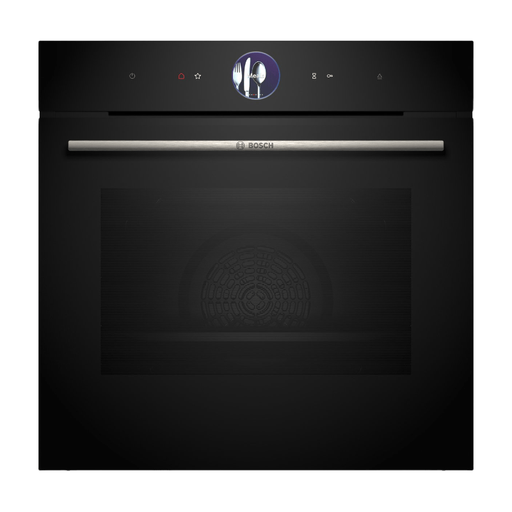 Image unavailable
This built-in steam oven is an option if you’re looking for a suitable built-in setup.
Dimensions: 60 × 60 cm.
 Image unavailable
The four-level baking rack makes this model worth considering if you want to bake on several levels; check that your tins fit.
35 L capacity, thermometer and LED display.
 Image unavailable
A good fit if you want a microwave function as well as an oven; check that the available oven space is suitable for your cake tin.
Grill and fan-assisted cooking functions.
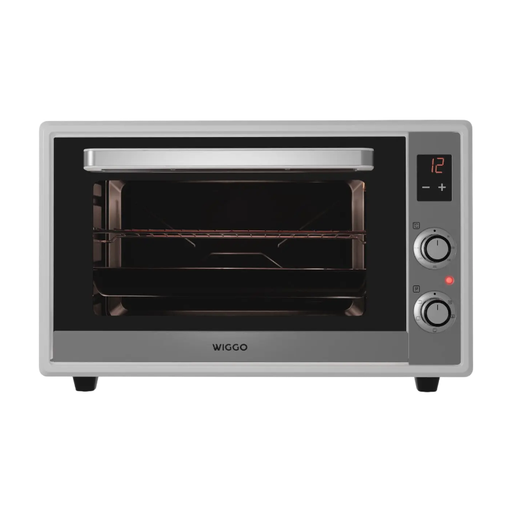 Image unavailable
A freestanding option if you don’t have a suitable built-in space, provided you have enough safe worktop space.
2000 W, stainless steel.
Follow your recipe and the oven manual first. Consumentenbond recommends top and bottom heat for foods including cake; fan-assisted cooking can be useful if you’re baking on several levels. Don’t use the temperature for one setting with another setting unless you adjust it.
Measure the housing unit and the oven, and follow the installation instructions. Also check the ventilation and the specified electrical connection, as these can vary between models.
For plain cake, Voedingscentrum recommends storing it in a kitchen cupboard for up to seven days. Don’t automatically apply this advice to cakes with perishable fillings or toppings: Voedingscentrum advises keeping perishable foods at 4 °C and throwing them away if they’ve been out of the fridge for more than two hours.
This depends, among other things, on how the cake is provided and how often. The NVWA sets out information requirements for anyone selling or supplying unpackaged products, and registration requirements for anyone selling food several times a year. Ask the organiser how the coffee morning is being run; these sales rules don’t automatically apply to a one-off, free contribution.
Not necessarily. According to the Dutch government, there’s no fixed statutory warranty period in the Netherlands; if a product isn’t fit for purpose, the retailer is your point of contact. Compare the cover offered by an extended warranty with the rights you already have.