
Calorie-conscious snackers
You want to know how much energy is in the amount you eat. The Netherlands Nutrition Centre lists 164 kcal for a 25 g handful of unsalted nuts; this is a figure for the category as a whole.


Don’t assume ordinary nuts are low in calories. Choose them by comparing the energy per 100 g with the amount you actually eat. For solid foods, the European Commission sets a maximum of 40 kcal (170 kJ) per 100 g for a ‘low-calorie’ claim. Weigh your portion and check the nutrition information and ingredients on the exact pack.
You want to know how much energy is in the amount you eat. The Netherlands Nutrition Centre lists 164 kcal for a 25 g handful of unsalted nuts; this is a figure for the category as a whole.
You compare ingredients and preparation methods, and check allergen information. The Netherlands Nutrition Centre recommends eating a variety of unsalted nuts. If you have a specific allergy, it’s important to check the ingredients on the exact pack.
You’re looking for a pack that suits your snacking routine and how quickly you’ll use it. Compare the net weight with the stated portion size, and follow the storage instructions on the pack.
| What to consider | What to look for | Who might find this useful? |
|---|---|---|
| Energy per portion | Compare the kcal per 100 g on the label, then calculate the amount for the weight you actually eat. | If I want to snack mindfully, I want to know how much energy is in my weighed portion. Around 42% of consumers prioritise energy per snack portion. |
| Ingredients and allergens | Check the ingredients, salt per 100 g and specific allergens. If buying loose nuts, ask which types of nuts are included. | If I want to avoid added salt or a particular type of nut, I check the ingredients and allergen information. Around 25% of consumers prioritise these checks. |
| Portion size and storage | Check the net weight, stated portion size and storage instructions. Weigh out your snack separately. | If I use a pack over several snacking occasions, I want to be able to portion it out and store the rest properly. Around 17% of consumers prioritise this convenience. |
| Pack size | Choose an amount that suits how quickly you’ll use it and how you’ll store it; a bag isn’t a portion size. | If you’re stocking up on nuts for several shopping trips or snacking occasions, you’ll want a pack size that suits how quickly you’ll use it. Around 16% of consumers prioritise choosing the right amount. |
Salt content and preparation method don’t tell you how much energy is in a portion. AH Unsalted Almonds list 627 kcal per 100 g, according to Albert Heijn.
Consider energy, salt and preparation method separately, and check the label on the exact pack.
AH Unsalted Almonds come in a 190 g pack and list a portion size of 25 g, according to Albert Heijn. So the pack contents aren’t the same as one portion.
Weigh out the amount you want to eat and use that as your portion, rather than taking an unmeasured handful from the bag.
For loose nuts, it matters which specific types are in the mix. The NVWA stresses that this information must be clear for unpackaged foods sold loose.
Before buying, ask which types of nuts are included and what allergen information is available.
A useful option if you’re comparing unsalted peanuts with other preparation methods.
AH Unsalted Almonds are a single-nut product with information about ingredients and portion size.
The range includes unsalted cashew nuts and several product variations.
A Lidl Netherlands product listing features unsalted almonds.
The ALDI product listing features an unsalted nut mix with several types of nuts.
The PLUS nut mix is an option if you’re looking for an unroasted, unsalted mix.
These products are suited to anyone choosing nuts or nut mixes and comparing the energy per weighed portion. The selection includes single-nut products and mixes; the J.ZAO mix also contains dried fruit.
 No image available
A good choice if you’re looking for almonds with no added salt and want to weigh out your own portion.
Raw and unsalted; 591 kcal per 100 g; ingredients: almonds.
 No image available
For anyone who likes roasted, unsalted cashew nuts and wants to calculate the energy per weighed portion.
596 kcal per 100 g; ingredients: cashew nuts.
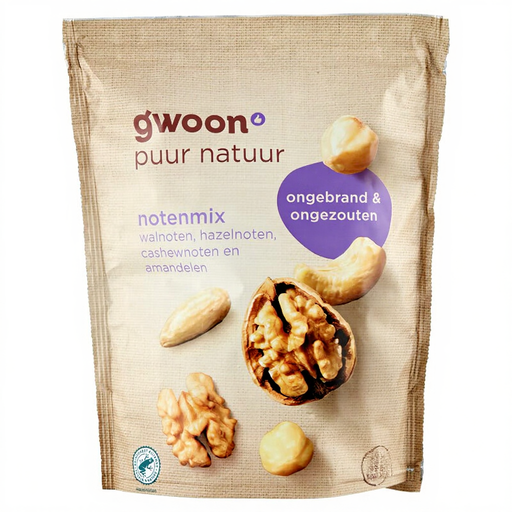 No image available
A good choice if you want a mix of different nuts and prefer to weigh out your own portion.
Unroasted and unsalted; 663 kcal per 100 g; contains hazelnuts, walnuts, almonds and cashew nuts.
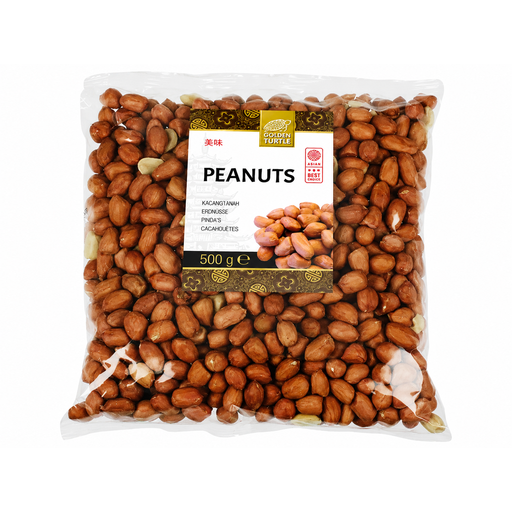 No image available
For anyone who wants to weigh out peanuts and roast them at home for a crunchy snack.
Unroasted; 567 kcal per 100 g; peanuts as the ingredient. The product description suggests roasting before eating.
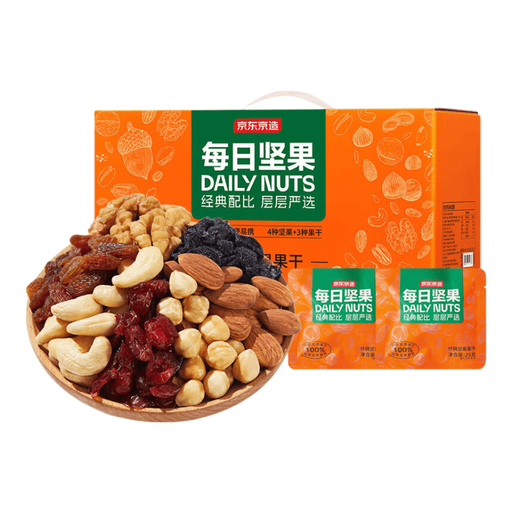 No image available
For anyone looking for individually wrapped portions; check the ingredients if you only want nuts.
30 portions of 25 g; 564 kcal per 100 g. Also contains raisins, sweetened cranberries and blackcurrants.
For solid foods, the European Commission sets a maximum of 40 kcal (170 kJ) per 100 g for a ‘low-calorie’ claim. Eating a small portion doesn’t change the energy per 100 g.
These terms describe the salt content or preparation method; they don’t indicate the energy value on their own. For example, AH Unsalted Almonds list 627 kcal per 100 g, according to Albert Heijn. Compare the nutrition information for the exact product variation.
Multiply the kcal per 100 g on the label by the weight of your portion in grams, then divide the result by 100. The Netherlands Nutrition Centre’s general figures are 154 kcal per 25 g of unsalted cashew nuts and 176 kcal per 25 g of unsalted walnuts. These are category figures, not values that apply to every pack.
Ask which specific types of nuts are in the mix and what allergen information applies. The NVWA says it must be clear which types of nuts are included in unpackaged foods; under certain conditions, this information can be given verbally.
No. The net weight of a pack doesn’t automatically equal one portion. Weigh out the amount you want to eat and follow the storage instructions for the rest of the pack.