
Cook with limited cupboard space
You want to be able to put the appliance away and usually cook smaller quantities. Check the external dimensions, as well as how much you can actually cook within the fill limit.


Start by considering the space you have for the appliance and the clearance it needs to be used safely. Then choose a pot with a sauté setting and enough usable capacity for the amount of chilli you want to make. Pressure cooking can offer extra flexibility, but tinned beans only need heating through, so a pressure function isn’t essential. Before you buy, check the fill limit for the exact model, along with the product information on electrical safety and CE marking.
You want to be able to put the appliance away and usually cook smaller quantities. Check the external dimensions, as well as how much you can actually cook within the fill limit.
You want to brown turkey mince in the inner pot, then cook the chilli without having to switch to another pan between those steps.
You want to make several portions at once and weigh up the quantity you need against the storage space available and room for leftovers in the fridge.
First, decide how much chilli you want to make at a time and where you’ll keep the appliance. Then compare the cooking settings and fill limits of models that fit in that space.
Choose this when: you have limited cupboard space and usually cook smaller quantities.
The trade-off: its capacity limits how much you can cook at once; when pressure cooking, you also need to follow the fill limit for that specific model.
Choose this when: you want to make more chilli at a time and have enough space for a larger appliance.
The trade-off: a larger stated capacity usually takes up more space; check the external dimensions and permitted fill level.
Choose this when: pressure cooking isn’t a requirement and you mainly want to sauté, stew or slow cook.
The trade-off: check which functions the exact model offers; a large number of programmes doesn’t, by itself, mean it’s right for your recipe.
| Consideration | What should you check? | Who is this important for? |
|---|---|---|
| Storage and cooking space | Measure the space in your cupboard and on your worktop; check the external dimensions, clearance above the steam vent and the fill marking. | If I have limited cupboard space, I want an appliance that fits when put away without the pot being too small for my recipe. This matters to around 36% of consumers who prioritise storage. |
| Browning and cooking on in one pot | Check whether the exact model has a sauté setting and how the inner pot can be cleaned according to the manual. | I want to brown the turkey mince and then finish cooking the chilli in the same inner pot. This matters to around 29% of consumers who prioritise one-pot cooking. |
| Cooking time and settings | Compare the available settings. When pressure cooking, allow for the time needed to build and release pressure, and check the mince is cooked through separately. | If I want the choice of pressure cooking or simply cooking on, I want to know which settings I’ll actually use. This matters to around 21% of consumers who prioritise cooking flexibility. |
| Portions and appliance size | Decide how much you want to make and compare it with the fill limit; also make room in the fridge for any leftovers. | I’d rather make enough chilli for several portions, but I don’t want to store a larger appliance than necessary. This matters to around 14% of consumers who prioritise making more portions per cooking session. |
According to the Netherlands Nutrition Centre, tinned beans only need to be heated through. A bean or chilli programme can be a useful setting, but it doesn’t replace checking that the turkey mince is cooked through. So a pressure-cooking function isn’t essential for the beans themselves.
When pressure cooking, always follow the manual for the exact appliance. The Instant Pot Duo manual states a maximum of two-thirds of the pot’s capacity, or a maximum of half for ingredients that expand during cooking. Don’t assume these limits apply to another model without checking.
Before you buy, also check the product information on electrical safety and the CE marking required for the appliance in question. The European Commission outlines the applicable low-voltage rules for household electrical appliances, while the Dutch government explains CE marking for products that are required to carry it.
When pressure cooking, the permitted fill level may be lower than the pot’s total capacity. This means your recipe might not fit in a single batch.
Compare the quantity of ingredients with the fill marking and the manual for the exact model.
If the pot is too small, you may need to make the recipe in several batches.
The Netherlands Nutrition Centre advises that tinned beans only need to be heated through. Turkey mince must be cooked through, though; selecting a programme doesn’t confirm that by itself.
Choose based on the cooking methods you’ll actually use and check that the meat is cooked through separately.
For this dish, the relevant steps are sautéing and cooking on; an air fryer lid isn’t necessarily needed.
Compare the included accessories and how much space they take up before choosing a version with an extra lid.
An extra lid or separate accessories also need storage space.
ACM ConsuWijzer distinguishes between a manufacturer’s or seller’s guarantee and your statutory rights.
Keep your proof of purchase and contact the seller if a product develops a fault too soon under normal use.
The Duo 3L Mini and Classic Mini 3,8L are compact models to compare if you’re looking for pressure cooking and sautéing.
According to Tefal, the Turbo Cuisine CY7548 combines pressure cooking and stir-frying; the RK8121 offers functions such as baking, stewing and slow cooking.
The HD2616/70 is a 6 l model to compare if you’re looking for greater capacity and pressure- and slow-cooking functions.
This selection includes small electric pots and multicookers for sautéing, stewing or pressure cooking; check the settings and fill limits for each model.
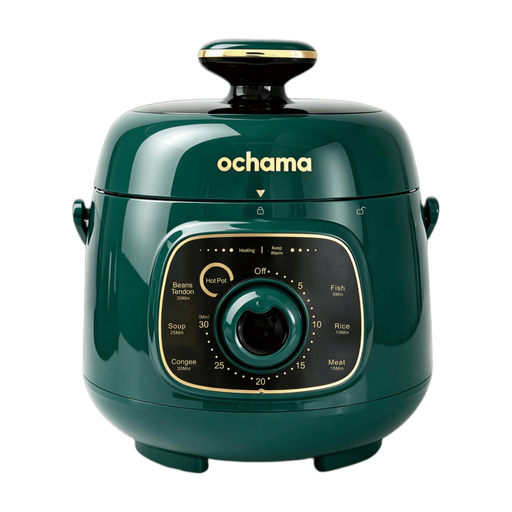 No image available
A compact pot for smaller quantities; the product information lists pressure cooking and stewing.
Capacity: 1,8 L, stated as suitable for 1–3 people. The title specifies 70 kPa and a ceramic-coated inner pot.
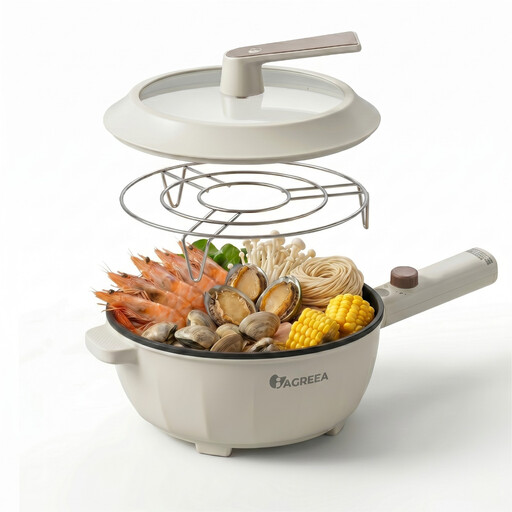 No image available
An option to compare if you want to sauté and then continue cooking in the same pot.
Capacity: 2,3 L. Sautéing and slow cooking are listed; the stated power settings are 600 W, 1.000 W and 1.600 W.
 No image available
The product information lists stir-frying and stewing; compare this pot if those are the cooking methods you’re mainly looking for.
Capacity: 2,6 L. Power: 1.000 W; three manual heat settings are listed, including 800 W for stir-frying. The product information advises against cooking at high temperatures to protect the non-stick coating.
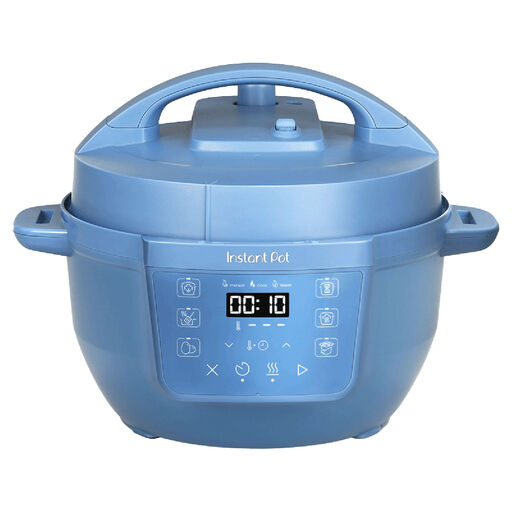 No image available
A compact multicooker to compare if you want to sauté and have the choice of pressure cooking or slow cooking.
The title specifies 3,8 L and 7-in-1. The product information lists functions including pressure cooking, slow cooking, sautéing and steaming. According to the product information, when pressure cooking you should fill the pot to around two-thirds at most, or half full for ingredients that expand, such as beans or rice.
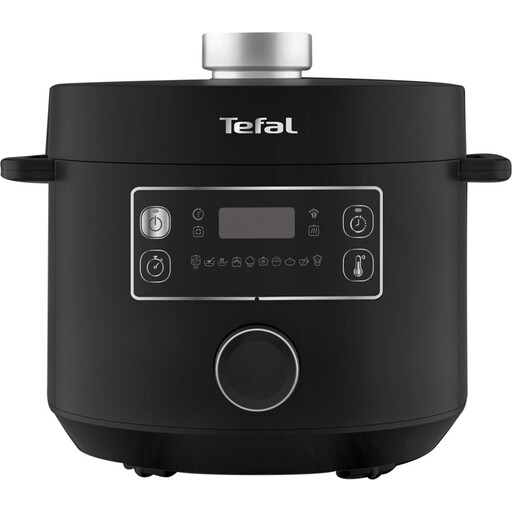 No image available
A larger option to compare if you want to make more chilli at a time and have space for a bigger appliance.
Capacity: 5 L. The product information lists ten automatic programmes, a ceramic non-stick pot and external dimensions of 28,70 × 31 × 33,60 cm. Tefal lists stir-frying and pressure cooking for this model.
No, according to the Netherlands Nutrition Centre, tinned beans only need to be heated through. Also make sure the turkey mince is cooked through; an appliance programme doesn’t confirm this by itself.
Follow the manual for the exact model. For the Instant Pot Duo reviewed, the manual states a maximum of two-thirds of the pot’s capacity, or a maximum of half for ingredients that expand during cooking. Check the limit separately for other models.
The Netherlands Nutrition Centre advises covering leftovers and keeping them separate from raw foods, then refrigerating them within two hours of cooking; keep your fridge at 4 °C. When reheating, heat leftovers thoroughly until piping hot.
No, ACM ConsuWijzer distinguishes between a manufacturer’s or seller’s guarantee and your statutory rights. With normal use, a product must meet what you could reasonably expect; contact the seller if it develops a fault too soon.
Check the product information and markings on the exact appliance. Electrical appliances covered by the applicable European low-voltage rules must meet safety requirements; CE marking is required for products covered by rules that specify it.