
Vandaag of morgen in huis

Kwaliteit gegarandeerd

Welkomstaanbiedingen ontgrendelen: GRATIS bezorging | Tot 80% korting | Gratis 30 dagen JoyPlus-proefperiode
Download de app
Switching to LED lighting is a smart move. It lowers your energy bill, and the bulbs last significantly longer. But the search for the right LED bulb can feel like navigating a maze. Between promises of eternal lifespans and a jungle of light colours, it's easy to make the wrong choice. We'll outline the most common pitfalls and provide practical advice to help you make the right decision.
Before you invest in new lighting, it's wise to know what often goes wrong. Many marketing claims sound too good to be true, and sometimes they are.
You don't need to be a technical expert to avoid a bad purchase. By focusing on three key points, you can easily filter the options and find the right bulb for your situation.
This is the first step. Before you even look at colour or power, check which fitting you need. The two most common in households are:
Unscrew the old bulb and check what's written on it. This is the most reliable method.
The ambiance of a room is directly influenced by the light's colour temperature, expressed in Kelvin (K). Don't be guided solely by the term "warm white."
We're used to estimating a bulb's brightness based on its wattage. With an energy-efficient LED bulb, this works differently. Wattage measures energy consumption, while Lumen (lm) indicates the actual light output.
A rough guide to replace your old incandescent bulbs:
So, look at the lumen count to determine the desired brightness, and the wattage to see how energy-efficient the bulb is.
To help you get started, we've highlighted a few popular choices that suit different needs and situations.
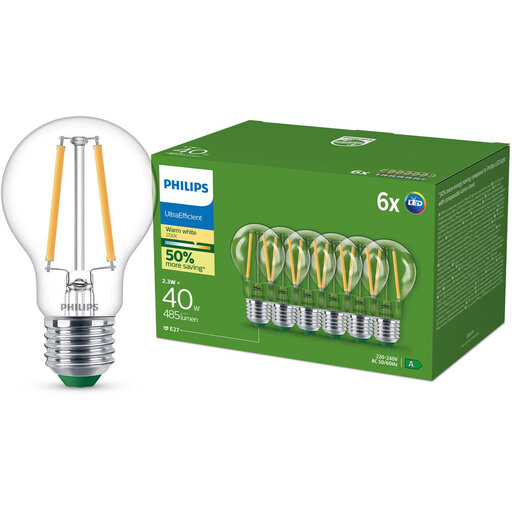
Why This Fits Their Persona: For those who want to maximise their savings immediately. This value pack of E27 bulbs is ideal for replacing multiple lights in your home at once. The focus is on extremely low energy consumption and a long lifespan, which drives down long-term costs.
Tackles the misleading lifespan pitfall. According to Philips, these bulbs have a lifespan of up to 50,000 hours. The A-label is an objective, verifiable measure of energy efficiency.
Energy Label A: Very low consumption (2.3W). Warm white light (2700K): Standard, atmospheric colour for living spaces.
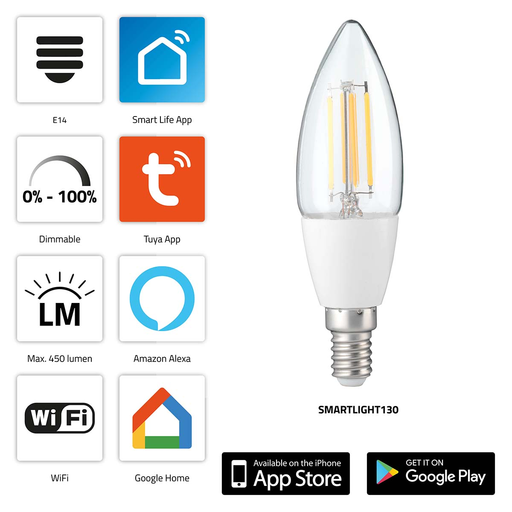
Why This Fits Their Persona: Perfect for those who want complete control over the atmosphere. This smart lighting with an E14 fitting is ideal for table lamps. You can easily adjust the brightness and colour temperature with an app, from functional white light to a warm, romantic glow.
Solves the "warm white lottery." You're not stuck with a single colour temperature. With a range from 1800K to 3000K, you decide the mood, at any time of day.
Fully dimmable: Adjust brightness via the app. Adjustable colour temperature: Choose the warmth of the light yourself. Works directly via Wi-Fi, no bridge needed.
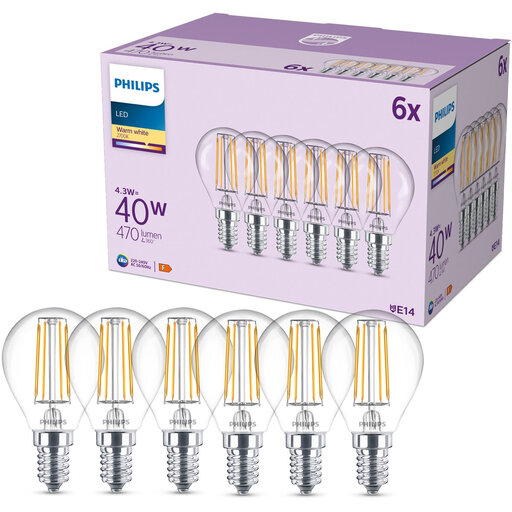
Why This Fits Their Persona: For those who just need a reliable replacement for old candle bulbs. This set of six E14 led bulbs is a no-nonsense solution. No smart features, no fuss, just a solid, energy-efficient bulb with a pleasant light colour.
Avoids the pitfall of the wrong fitting. This product is specifically aimed at the common E14 fitting, making the chance of a wrong purchase small. The specifications are clear: 2700K and 470 lumens.
E14 Candle Shape: Fits many table lamps and chandeliers. Value Pack: Convenient for replacing multiple bulbs at once.
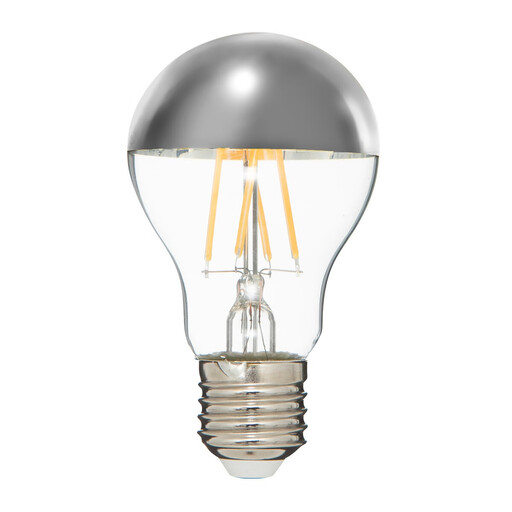
Why This Fits Their Persona: For those who see the light source itself as a design object. This bulb is meant to be seen, for example in an open fixture or a minimalist pendant light. The silver-tipped look provides a unique, modern effect and prevents direct glare.
This is the opposite of a purely functional bulb. It bypasses the pitfall of an ugly bulb in a designer fixture. Here, aesthetics are the main feature, perfect for a contemporary interior.
Decorative design: The silver tip provides a chic look. Indirect light: Ideal for ambient lighting where the light source should not be in direct view.
We have compiled a complete, up-to-date list of products that fully meet these strict selection criteria and safety standards.
An LED bulb uses up to 90% less energy than an incandescent bulb. For example: replacing a 60W incandescent bulb with a 7W led lamp that's on for 4 hours a day saves about 30 kWh annually. With current energy prices, this can easily save you more than 10 euros per bulb per year. Just imagine the savings if you replace all the bulbs in your home.
In principle, yes, as long as the fitting and size are correct. However, be careful with fully enclosed fixtures. As mentioned earlier, the heat from the LED bulb cannot dissipate properly, which can shorten its lifespan. For enclosed fixtures, choose bulbs that are specifically designed for them or ensure there is some ventilation.
A dimmable led lamp requires a compatible LED dimmer. Connecting a non-dimmable bulb to a dimmer can cause flickering, buzzing, or even damage the bulb. Conversely, a dimmable bulb works fine on a regular on/off switch, but you won't be able to adjust the brightness. So, always check if you have a dimmer and if the bulb you're buying is dimmable.
