
Vandaag of morgen in huis

Kwaliteit gegarandeerd

Welkomstaanbiedingen ontgrendelen: GRATIS bezorging | Tot 80% korting | Gratis 30 dagen JoyPlus-proefperiode
Download de app
A good kitchen knife should suit the way you cook. If you prepare vegetables, meat or fish every day, your requirements will be different from someone who only cooks occasionally. Yet many kitchen knives are sold with vague terms like “professional”, “extremely sharp” or “indestructible”. Such words mean little without verifiable product specifications.
Instead, pay close attention to blade length, steel type, handle, maintenance and intended use. This way, you can avoid buying an expensive knife that is too heavy, goes blunt quickly or isn’t suitable for your chopping board and ingredients.
A cook’s knife or chef’s knife of 20 cm offers room for large vegetables and broad cutting motions. In a small kitchen, however, such a knife can feel awkward. For herbs, fruit and smaller vegetables, a 16 cm kitchen knife is often easier to control.
So don’t just look at the appearance; compare the blade length with your worktop, hand size and daily cutting tasks.
A stainless steel kitchen knife is less prone to corrosion than some carbon steel knives, but that doesn’t mean it requires no maintenance. Moisture, food residue and a dishwasher can eventually damage the blade edge and handle.
When buying, check:
A forged kitchen knife is shaped from a single piece of steel. This can contribute to a sturdy construction, but performance also depends on the grind, geometry and maintenance.
A cleaver typically has a heavier, wider blade. That is useful for tough ingredients and certain bones, but less suitable for fine cutting work. Use a carving knife for portioning cooked or raw meat, a santoku knife for vegetables and fish, and a cleaver for heavy chopping tasks.
Do not use an ordinary kitchen knife on bones or frozen products. For that, you need a suitable cleaver, and even then a stable chopping board remains important.
A serrated edge is particularly useful for bread and products with a hard exterior and soft interior. For precise cutting of vegetables and meat, a smooth edge is usually more suitable.
Product information may state the steel type, hardness in HRC or grind angle. A higher hardness can keep the edge sharp for longer, but may also require more care when sharpening. A grind angle of, for example, 14 degrees per side is a concrete specification; just check whether this value is provided by the manufacturer.
According to the product description from Wüsthof, the Classic kitchen knife has a blade made of X50CrMoV15 stainless steel and a grind angle of 14 degrees per side. These are verifiable details. The practical lifespan still depends on use, chopping board, sharpening method and cleaning.
A full-tang construction runs through to the handle and can provide a sturdy connection. Also pay attention to:
A dishwasher can be convenient in a busy kitchen, but hand washing and immediate drying are generally a cautious choice for preserving the blade and handle. Use a wooden or plastic chopping board and avoid glass, stone and metal as cutting surfaces.
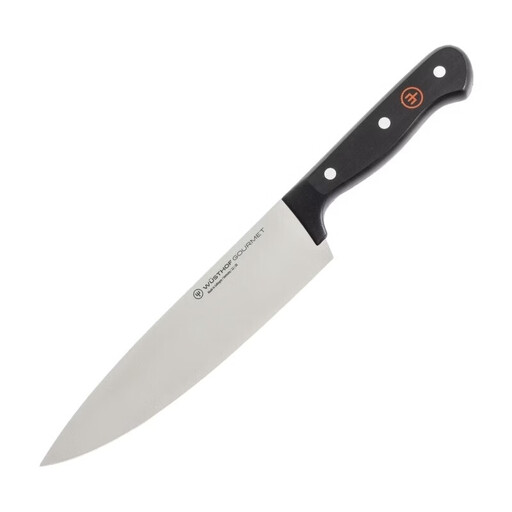
Why this fits the profile: A versatile chef’s knife for slicing, dicing and chopping, without needing to buy several different knives.
The product information states a 20 cm blade, a full-tang construction and stainless steel. This means you can check the most important features in advance.
20 cm blade, weight of 184 grams and suitable for everyday cutting. Hand washing is recommended for a longer lifespan.
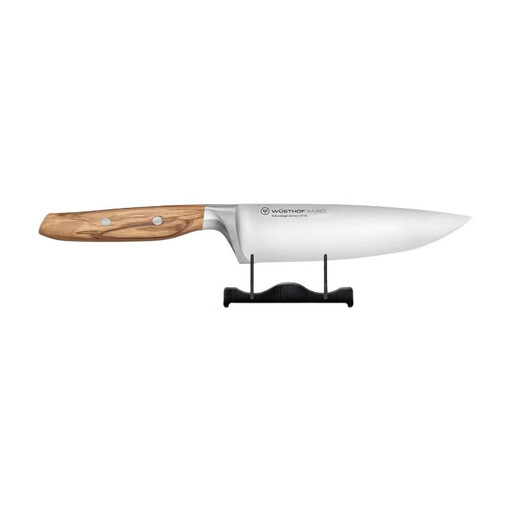
Why this fits the profile: For home cooks and catering professionals who value a broad, balanced handle and a forged blade.
According to the product description, the knife is forged from a single piece of X50CrMoV15 steel. A grind angle of 14 degrees and a hardness of 58 HRC are also stated.
20 cm blade, half bolster and olive wood handle of 9.5 cm. Suitable for vegetables, herbs, tomatoes and meat.
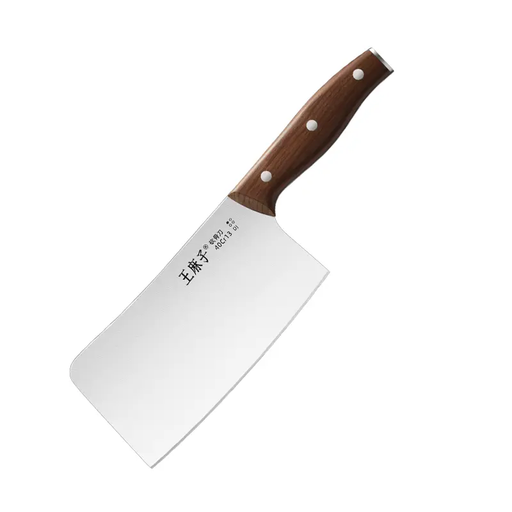
Why this fits the profile: For those who regularly process tough ingredients, poultry or certain bones and need a separate cleaver for the job.
This type of product is designed for heavy chopping tasks and not as a universal chef’s knife. Use it on a sturdy chopping board and check the product specifications before purchase.
Forged construction and a weight-oriented design according to the product description. Aimed at bones, ribs and poultry.
We have compiled a full, up-to-date list of products that fully meet these strict selection criteria and comply with current European safety regulations.
A chef’s knife of 16 to 20 cm is practical for many tasks. Choose 16 cm for control and smaller ingredients; 20 cm offers more cutting surface for large vegetables and bigger pieces of meat. For bones, you will need a separate cleaver.
That depends on use, steel, grind angle, chopping board and maintenance. Do not use glass or stone, do not cut through frozen food with a regular chef’s knife, and use a honing steel or whetstone according to the manufacturer’s instructions. Replacing a blunt knife is not always necessary: professional sharpening or correct maintenance can extend its useful life.
Some models are marketed as dishwasher-safe, such as certain santoku knives. However, manufacturers recommend hand washing for many knives. Check the product page and dry the knife immediately. Store it in a knife block, protective sheath or drawer insert to avoid contact with other cutlery.
