
If you want to iron a few dresses quickly
You want to iron a few cotton dresses after a busy school week, then store the appliance away neatly. The Consumentenbond recommends a steam iron if you do little ironing or have limited storage space.


If you only iron a few dresses after a busy week, a compact steam iron is often a better fit. For a large pile of washing, you may find a steam generator with a separate tank more convenient. The Consumentenbond discusses this trade-off in its buying advice dated 11 June 2026. First, check the ironing symbol on each dress, then compare the steam settings, tank, storage space and maintenance requirements. A higher stated steam output alone does not prove that a particular model will deliver better results.
You want to iron a few cotton dresses after a busy school week, then store the appliance away neatly. The Consumentenbond recommends a steam iron if you do little ironing or have limited storage space.
You iron dresses along with plenty of other washing and want to refill less often during a long session. The Consumentenbond suggests a steam generator for people who iron a lot and do so frequently.
You pay attention to the different ironing symbols and want to handle pleats, seams and delicate details carefully. Check that the temperature and steam settings on your chosen model are suitable for the dress.
Best for: ironing a few dresses, getting started quickly and making the most of limited storage space.
Bear in mind: the water tank is built into the handheld appliance, so you may need to refill it sooner during a long session.
Best for: regularly ironing a large pile of clothes in one go.
Bear in mind: the separate base takes up more space, and the appliance may take longer to heat up.
| What to consider | What to look for when buying | Who should pay particular attention? |
|---|---|---|
| Getting a small job done quickly | Compare the size, built-in tank and whether the steam output is adjustable. | After a busy school week, I want to iron a few dresses quickly and put the appliance away easily. Around 40% of consumers prioritise compact, quick ironing. |
| Refilling less often | Check the tank capacity and whether the reservoir is separate from the iron; compare continuous steam output separately from the steam boost. | If I’m also ironing a large pile of washing, I don’t want to keep topping up the water. Around 30% of consumers prioritise long ironing sessions and fewer refills. |
| Ironing dresses and details carefully | Follow the ironing symbol and check the temperature control, steam settings and shape of the soleplate tip. | For dresses with different care labels, seams or pleats, I want to adjust the settings to suit the fabric. Around 20% of consumers prioritise fabric and detail control. |
| Maintenance and ease of use | Check which anti-scale system the model uses and what the manual recommends for water and cleaning. | I want to know in advance what maintenance the appliance needs and whether any parts have to be replaced. Around 10% of consumers give ease of maintenance top priority. |
The Consumentenbond advises following the care label and sorting clothes from the lowest to the highest ironing temperature. Assess continuous steam and a short steam boost separately; for actual ironing performance, look for tests of the specific model.
A steam boost is short-lived and is not the same as continuous steam. The Consumentenbond’s testing approach also assesses how well an appliance smooths fabrics.
Compare the two steam specifications separately, and look for test results for the specific model if its performance on cotton is a deciding factor.
The separate base takes up space and may be awkward if you have limited storage or a small ironing board.
Measure the space where you plan to store the appliance and check that your ironing board is suitable before choosing a larger tank.
You may need a more suitable ironing board for a steam generator.
An anti-scale system slows the build-up of limescale, but it does not eliminate the need for maintenance. Cleaning steps and any consumable parts vary by model.
Check the manual to see whether the appliance has a cleaning function, a limescale collector or a replaceable cartridge.
Philips offers both compact steam irons and steam generators for longer sessions.
The Ultragliss Anti-Calc Plus FV6830 is an example of a steam iron designed with limescale maintenance in mind.
The TexStyle 5 SI5256BL is an example of a model with manual temperature control and a precision tip.
This selection includes compact steam irons for smaller jobs and steam generators for longer sessions. Compare the tank, controls and storage space required with the amount of clothing you usually iron.
 No image available
Manual temperature selection and adjustable steam output are useful if you want to tailor the settings to your dress.
350 ml reservoir; slim tip, non-stick soleplate and Calc-Clean maintenance.
 No image available
The precision tip is useful if you want to work around seams and pleats.
300 ml reservoir; continuous steam output of 50 g/min, self-cleaning and anti-drip system.
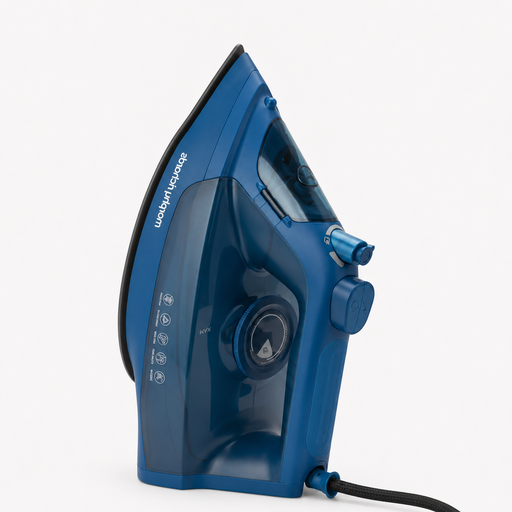 No image available
Adjustable steam output and a precision tip are useful if you want to tailor the steam and work around details.
350 ml reservoir; ceramic soleplate, self-cleaning and anti-scale functions.
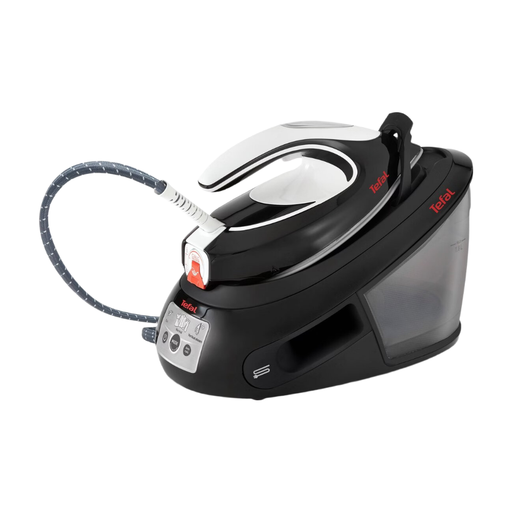 No image available
The separate base makes this type a good option if you have longer ironing sessions and want to refill less often.
Continuous steam output of 120 g/min; steam boost and removable limescale collector. The product title lists 6.5 bar.
A steam generator generally needs more storage space than a steam iron.
 No image available
The removable 1.4-litre reservoir is useful if you have longer ironing sessions and want to refill less often.
Continuous steam output of 120 g/min and a 350 g steam boost; up to an hour of use in ECO mode, according to the product description.
A steam generator generally needs more storage space than a steam iron.
No. Follow the ironing symbol on each dress rather than basing the temperature on the word ‘cotton’ alone. The Consumentenbond lists maximum temperatures of 110 °C, 150 °C and 200 °C for the ironing symbols. Check the care label before ironing.
The Consumentenbond recommends first ironing with suitable steam, then finishing with a dry iron. Let the dress cool while dry, and avoid using the steam boost repeatedly in quick succession so the fabric does not become too damp.
The Consumentenbond says that tap water in the Netherlands is generally suitable. Follow your model’s manual for advice on water and descaling, and do not add scented ironing water or other products.
According to the Dutch government, the retailer is your point of contact if a product is faulty. Subject to the applicable conditions, you can request a free repair or replacement. Online purchases from a business also usually come with a 14-day cooling-off period, subject to statutory exceptions.
Electrical products covered by the relevant European requirements must carry a CE marking. The Netherlands Food and Consumer Product Safety Authority and the Dutch Business.gov.nl website explain that the manufacturer uses this marking to declare that the product meets the applicable requirements; it is not an independent performance test.