
Cooking sauce in one pan
You want to be able to adjust the heat quickly while your sauce simmers, and don’t always need a second zone. Milieu Centraal explains that induction lets you adjust the temperature quickly.


A portable induction hob could be a good fit for a single saucepan, provided your pan is compatible and you don’t need a second cooking zone. If you want to cook pasta at the same time, compare hobs with two independently controlled zones. Only choose a built-in hob if the recess and electrical connection are suitable for the specific model. Before buying, also check the product documentation required for that model.
You want to be able to adjust the heat quickly while your sauce simmers, and don’t always need a second zone. Milieu Centraal explains that induction lets you adjust the temperature quickly.
You want to use two pans at once, so look for independently controlled cooking zones and check their dimensions. The options reviewed include both portable two-zone hobs and built-in hobs with multiple zones.
Your choice may depend on the available socket, the space on your worktop or an existing built-in recess. Check the installation details for the exact model before deciding.
First decide whether one saucepan is enough or whether you want to cook sauce and pasta at the same time. Then compare the pan requirements, cooking zones and connection with your kitchen.
A good fit if: you usually use one saucepan, have a suitable pan and don’t want to cut a recess into your worktop.
The trade-off: one zone can’t heat sauce and pasta at the same time; induction requires a magnetic pan base.
A good fit if: using two independently controlled pans at once is important and you don’t want to rely on having an induction-compatible pan.
The trade-off: the rings heat the hob itself and may stay hot after cooking; check the size of the zones.
A good fit if: you want a permanent cooking area with several zones and can accommodate the recess and electrical connection.
The trade-off: ceramic hobs heat the surface first and retain residual heat; installation requirements vary by model.
| What to consider | What should you check? | Who should pay particular attention? |
|---|---|---|
| Adjusting the heat | Check the controls and cooking zone on the exact model; a power rating alone doesn’t prove how well it simmers. | When I’m simmering sauce, I want to be able to turn the heat down quickly. Around 33% of consumers put heat control for sauces first. |
| Using two pans at once | Check how many independently controlled zones there are, their diameter and how the model distributes power. | I want to cook sauce and pasta at the same time, so I need room for two pans. Around 25% of consumers prioritise cooking several things at once. |
| Connection and space | Compare the connected load, plug type, installation instructions and any recess dimensions with your kitchen. | If my socket, worktop or built-in recess determines my choice, I want to know in advance what will fit. Around 25% of consumers say the connection or installation is a deciding factor. |
| Existing pans | For induction, test the pan base with a magnet and compare the zone and pan dimensions. | I want to keep using my current pans rather than having to plan unnecessary replacements. Around 17% of consumers prioritise pan compatibility and avoiding extra purchases. |
An induction hob can also have a glass surface. Induction heats the pan directly; a ceramic hob uses an element to heat the surface first.
Check the cooking technology and pan-base requirements in the specifications for the exact model.
What a hob can do depends, among other things, on its power and electrical connection. On 4 September 2026, Consumentenbond reported that, in the category it reviewed, low-powered freestanding induction hobs offer fewer benefits than powerful built-in hobs connected to two or three phases.
Decide whether you want to use one pan or several at once, then compare the power and connection requirements of the models you’re considering.
Pan requirements, available space and the electrical connection can be just as important as the cooking surface when choosing a hob.
Before buying, note which pans you want to use and check the connection and built-in dimensions of your chosen model.
The KI120T is a portable induction hob with one cooking zone, designed for use with a compatible pan.
The DK 1014 is a portable hob with two conventional electric heating rings, not an induction hob.
The KC260ZT is a built-in ceramic hob with four zones for a permanent cooking area.
This selection includes portable electric hobs and built-in hobs for one pan or cooking several things at once. Compare the zones, pan requirements and installation details with your kitchen. For electrical equipment covered by the relevant EU rules, also check the required CE marking and EU declaration of conformity; Business.gov.nl and EUR-Lex describe these requirements.
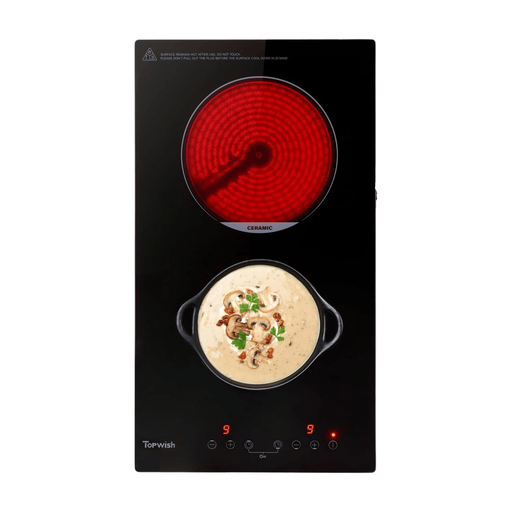 No image available
The two independently controlled zones make this a good option if you want to cook sauce and pasta at the same time.
Specifications: 1200 W and 1800 W zones, nine settings, timer, residual heat indicator and total power of 3000 W.
The specified cut-out is 26 × 49 cm; check that it fits your worktop and that the connection is suitable.
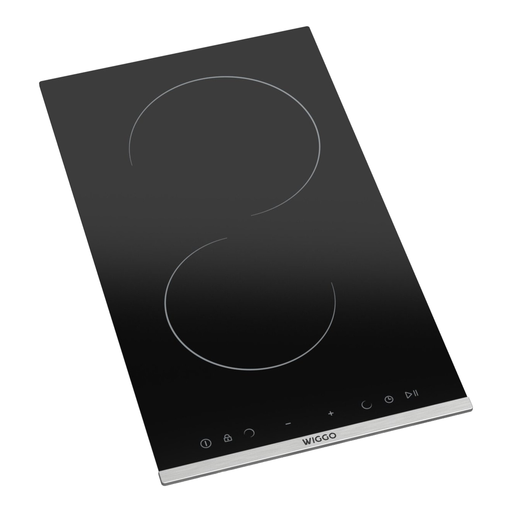 No image available
The two zones are designed for a built-in setup where you want to use more than one pan.
Specifications: induction, 1400 W and 1800 W zones, individual timers and single-phase connection with plug-and-play setup.
Use induction-compatible pans. The product description advises people with a pacemaker to consult a doctor before use.
 No image available
This portable hob has one zone, making it suitable for cooking with one saucepan; you can’t heat a second pan on it at the same time.
Specifications: 2000 W, XL zone with a diameter of Ø 26 cm, ten power settings and a timer of up to three hours.
The specified pan size is 12–26 cm. Use a flat, induction-compatible pan and check that its base is suitable for the zone.
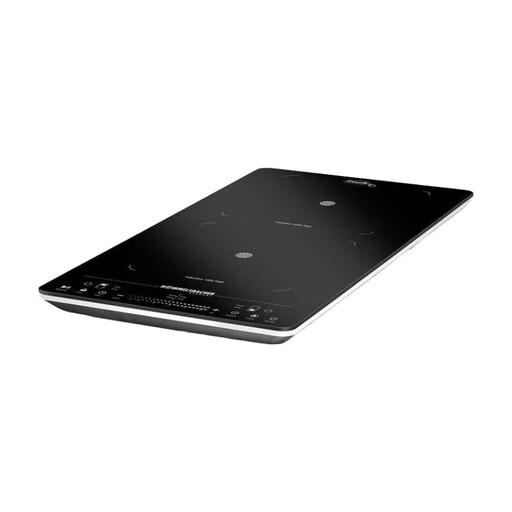 No image available
The two vertically arranged induction zones give you the option of using two pans at once on a portable hob.
Specifications: ten power and temperature settings and a timer of up to 180 minutes.
Use flat, induction-compatible pans with a magnetic base and a specified diameter of 120–260 mm. The product description advises people with a pacemaker to seek medical advice before use.
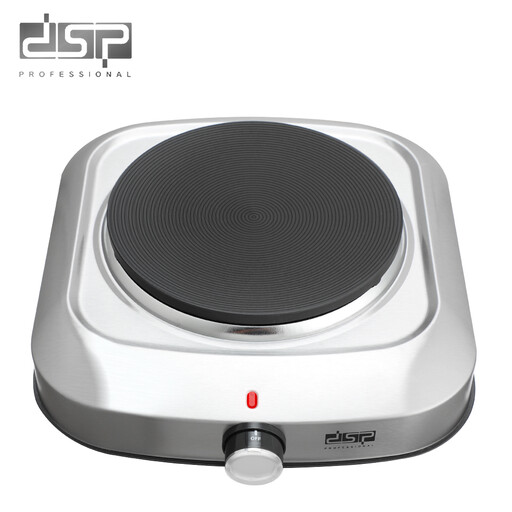 No image available
This portable single-ring hob is designed for one pan and can be used as an additional cooking surface.
Specifications: 1500 W, a fixed plate with a diameter of 185 mm and adjustable temperature control.
The product description notes that a slight smell or smoke may occur the first time it’s used. It recommends running the hob for 3–5 minutes in a well-ventilated room.
Use a magnet to check whether the pan base is magnetic, then compare its size with the cooking zone. Inventum specifies a pan size of 15–20 cm for the KI120T.
It depends on the connection required by the exact model. According to ETNA, the KC260ZT has a two-phase connection and is supplied without a plug; Inventum describes the KI120T as a single-phase plug-and-play model. Ask a qualified professional to assess any modifications that may be needed.
For electrical equipment covered by the relevant EU rules, the required CE marking and EU declaration of conformity are relevant. Business.gov.nl and EUR-Lex describe these requirements; check the documentation for the specific model.
Stay nearby while cooking and keep flammable materials away from the hob, as advised by Brandweer Nederland. Watch out for hot rings and residual heat, and follow the chosen model’s instructions for installation and use.
No. According to the Dutch government, there is no fixed statutory warranty period in the Netherlands. You’re entitled to a product that works properly, and the retailer is your point of contact if something goes wrong. A manufacturer’s warranty is in addition to this.