
Reader of ePub essays in cafés
You want to read continuous text on an easy-to-carry device, even when the light at your table changes. Kobo describes the Clara BW as having a glare-free screen and adjustable lighting.


If you mainly read reflowable ePub essays, look for a compact e-reader with a front light. For PDFs with fixed page layouts, screen size matters more. If you want to annotate passages, also check that the stylus is compatible with the model and that your files allow writing. Library books and your own unprotected files may have different transfer and compatibility requirements.
You want to read continuous text on an easy-to-carry device, even when the light at your table changes. Kobo describes the Clara BW as having a glare-free screen and adjustable lighting.
You want to see an essay’s fixed page layout and footnotes without constantly zooming in. The Consumers’ Association notes that zooming is faster and smoother on a tablet.
You want to highlight passages or comment on them with a stylus. Kobo lists stylus compatibility for specific models; also check whether your file’s permissions allow annotations.
First, check the file type and where your essays come from. Then decide how much screen space you need and whether you want to annotate with a stylus.
| What to consider | What should you check? | Who is this important for? |
|---|---|---|
| Portable text reading | Compare screen size and lighting; if possible, open one of your own ePub files. | If I mainly read continuous text at a café table, I want a compact screen I can use in changing light. Around 40% of consumers prioritise reading text on a compact device. |
| Viewing PDFs | Check whether your essay is a text-based PDF or a scan, and view a page with footnotes on the screen you’re considering. | If you want to see the fixed page layout and footnotes, a small screen can quickly feel cramped. Around 30% of consumers say viewing PDFs is their main priority. |
| Annotating with a stylus | Check stylus compatibility, what’s included and whether your file allows annotations. | If I want to comment on arguments by hand, the stylus needs to work with the file I’m reading. Around 20% of consumers prioritise annotation. |
| Files and library access | Check ePub, PDF and Adobe DRM separately; also look at the steps for transferring library books. | If you want to read essays from your own collection or the Dutch online Library, it’s worth checking how files are protected and transferred. Around 10% of consumers say file access is their main priority. |
A device may open a PDF, but a document with a fixed page layout can require a lot of zooming on a small screen. The Consumers’ Association notes that zooming is faster and smoother on a tablet.
Before choosing, try one of your own essays with footnotes or a scanned page on the screen size you’re considering.
The fact that a file type is listed for a delivery service doesn’t prove that a device can open books from the Dutch online Library. The service uses Adobe DRM, so your device and transfer method need to be compatible.
Check how your files are protected and how library books are transferred before choosing a model.
According to BOOX, the standard BOOX Go 10.3 (Gen II) has no front light, while the Lumi version does.
Check the full model name and the lighting on the specific version.
These model ranges differ in screen size, stylus features and stated file support. Always check the version and your own files.
The models mentioned range from compact e-readers to a larger device for reading and note-taking.
The Verse Pro is compact, while the InkPad 4 has a larger screen for anyone who wants to see more of the page at once.
The Go 10.3 (Gen II) series is designed around a larger e-ink screen and note-taking with ePub and PDF files.
These product picks are designed for reading essays at a café table, from compact e-ink readers to larger e-ink note-taking devices.
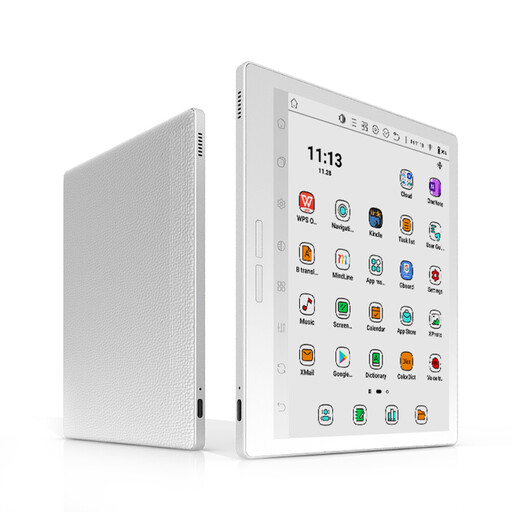 Image unavailable
Worth a look if you’re after a 7-inch e-ink screen with a front light for reading at a café table.
7-inch colour e-ink screen; 4+64 GB; 300 ppi; front light with 36 levels.
Supplied without a power adapter; the product information recommends a CCC-certified adapter if required.
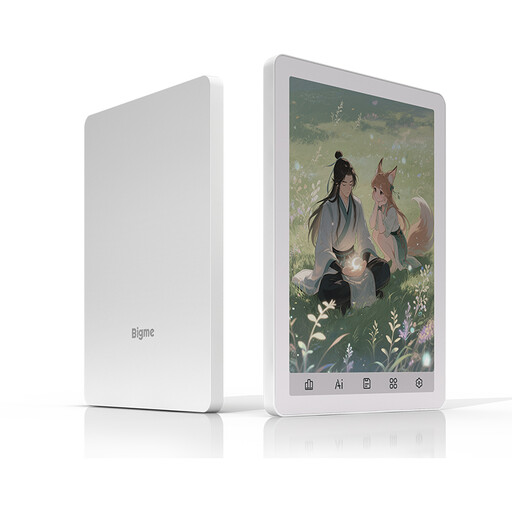 Image unavailable
A compact option to consider if you mainly want to read text on a small e-ink screen.
6 inches; front light with 36 levels; Android 14; 4+64 GB.
 Image unavailable
A handy size to consider if you want to read essays on an e-ink screen.
6.13-inch colour e-ink screen; Android 14; 8 GB+256 GB.
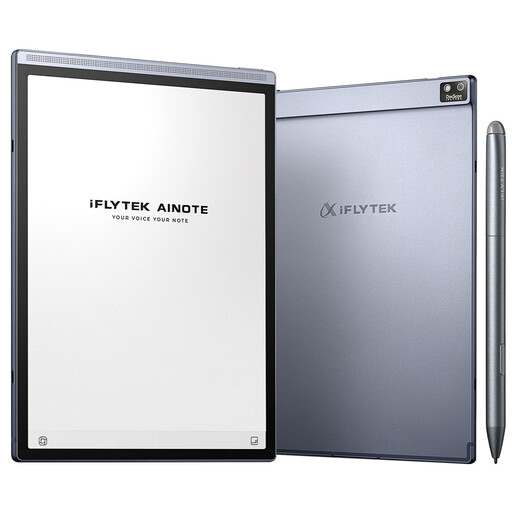 Image unavailable
Worth considering if you want to read PDFs and e-books and take notes as you read.
8.2-inch E Ink tablet with stylus; this version includes a protective case.
 Image unavailable
A larger e-ink screen to consider if you want to write and take notes while reading.
10.65-inch E Ink tablet; 4.2 mm thick.
Follow the battery warnings provided: don’t replace or dismantle the battery yourself, and keep the device away from extreme temperatures and open flames.
First, check whether the title is available for e-readers and whether your device supports the required formats and Adobe DRM. The online Library explains how to transfer books using a computer, Adobe Digital Editions and USB. Since 23 June 2026, the service has required new users, and anyone who needs to log in or authorise their device again, to use a ByteBooks account.
No. Stylus compatibility doesn’t automatically mean you can write in every borrowed file. Kobo’s manual limits the PDF pen annotations it mentions to unprotected PDFs without DRM; check the permissions and test your own file.
According to ACM ConsuWijzer, statutory warranty applies in the Netherlands if a product doesn’t do what you could reasonably expect under normal use; the retailer is your point of contact. For a standard online purchase, you’re also generally entitled to a 14-day cooling-off period after delivery, subject to the statutory exceptions described by ACM. Changing your mind during the cooling-off period is different from your rights if a product is faulty.