
Vandaag of morgen in huis

Kwaliteit gegarandeerd

Welkomstaanbiedingen ontgrendelen: GRATIS bezorging | Tot 80% korting | Gratis 30 dagen JoyPlus-proefperiode
Download de app
The dog food aisle can be overwhelming. Dozens of brands, flavours, and formulas all promise the best for your dog. But how do you know what's truly important and what's just marketing hype? If you can't see the forest for the trees, you've come to the right place. We'll help you make the right choice by debunking a few common pitfalls and misconceptions.
Before you put a bag of food in your shopping cart, it's wise to consider a few misconceptions that can unnecessarily drive up costs:
To make an informed choice, it's better to focus on a few objective criteria that directly match your dog's needs.
A dog's nutritional needs change throughout its life. The wrong diet can negatively affect its development or health.
Additionally, the size of the breed is important. Kibble for a small dog has a smaller pellet size to make chewing easier. Kibble for a large dog, on the other hand, has larger pellets to discourage rapid eating and often contains specific nutrients to support their more heavily burdened joints.
Just like people, dogs can have specific dietary requirements.
The ingredient list is ordered by weight. The first ingredient is therefore the most abundant in the product. Pay attention to the following points:
Based on these objective criteria, we have selected a number of products that suit different profiles of dogs and their owners.
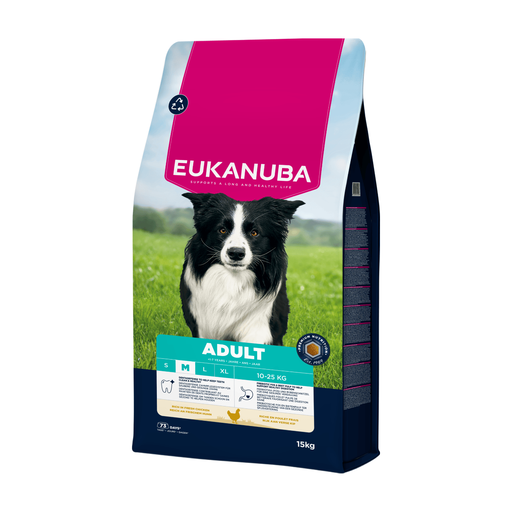
Why This Fits Their Persona: This food is formulated for adult dogs of medium-sized breeds with a normal to active lifestyle. It provides complete and balanced nutrition to maintain condition and a healthy weight.
Instead of vague claims, the manufacturer specifies ingredients like L-carnitine, which aids in fat metabolism, and prebiotics (FOS) and beet pulp for healthy digestion.
The formula focuses on weight maintenance and healthy digestion. According to Eukanuba, the unique hexagonal kibble with the DentaDefense system helps keep teeth clean.
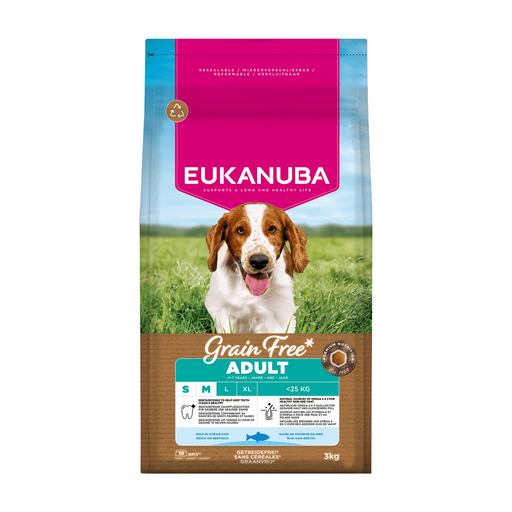
Why This Fits Their Persona: Ideal for owners of dogs with a sensitivity to grains or chicken. This food offers an alternative with ocean fish as the protein source and sweet potato and peas as the carbohydrate source.
This product doesn't present 'grain-free' as a general trend, but as a targeted solution for a specific problem. It's a low-allergen recipe for dogs that benefit from it.
Chicken- and grain-free formula with fish as the animal protein source. Contains prebiotics (FOS) and beet pulp to support healthy digestion.
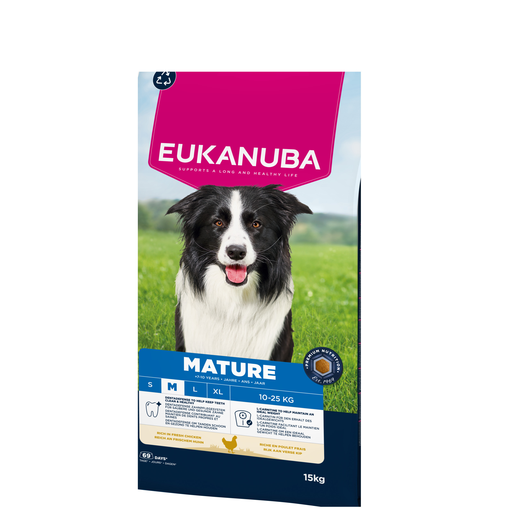
Why This Fits Their Persona: Specially formulated for the needs of older dogs (7-10 years) of medium-sized breeds. The focus is on supporting a healthy ageing process, mobility, and vitality.
This food goes beyond the 'senior' label. It contains specific, functional ingredients like L-carnitine for weight management and glucosamine and calcium to support joints and bones.
Targeted support for older dogs with ingredients for joints, bones, and weight management. Helps maintain vitality in later life.
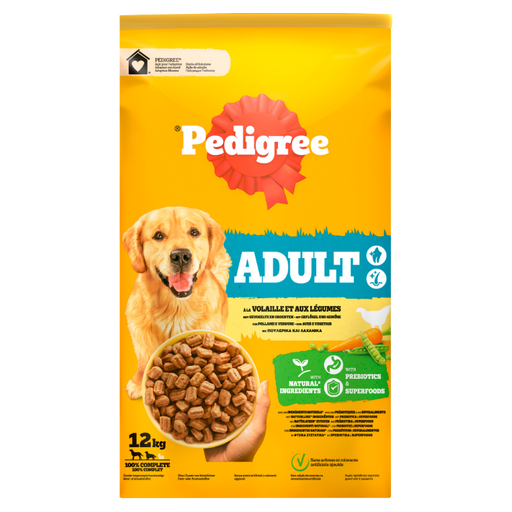
Why This Fits Their Persona: For owners seeking a reliable and affordable option for their adult dog with no specific health issues. Pedigree offers complete nutrition that covers the basic needs.
This product doesn't make expensive promises but focuses on the essential benefits: supporting digestion, the immune system, and dental care. It's an honest choice for a good price.
Complete and balanced nutrition from a well-known brand. According to Pedigree, the specially designed kibble texture helps with dental care.
We have compiled a complete, up-to-date list of products that meet these strict selection criteria.
1. How do I safely switch to new dog kibble?
Switching to a new food should be done gradually to avoid digestive issues. Over a period of 7 to 10 days, mix increasing amounts of the new food with the old food. Start with 25% new and 75% old, and slowly increase the ratio until your dog is fully on the new kibble.
2. How much kibble should I feed my dog?
The correct portion size depends on the brand and type of food, as well as your dog's weight, age, and activity level. Every package has a feeding guide as a guideline. Monitor your dog's condition and adjust the amount if necessary. When in doubt, it's always wise to consult your veterinarian.
3. Is grain-free kibble really necessary for my dog?
Not necessarily. Grain-free food is primarily intended for dogs with an allergy or intolerance to grains, which can manifest as skin problems or digestive complaints. For most dogs, good quality grains are an excellent source of energy. If your dog has no issues, there is no urgent reason to switch to grain-free.
