
Vandaag of morgen in huis

Kwaliteit gegarandeerd

Welkomstaanbiedingen ontgrendelen: GRATIS bezorging | Tot 80% korting | Gratis 30 dagen JoyPlus-proefperiode
Download de app
Ordering a bag of dog food seems straightforward, until you have to choose between dry dog food, wet dog food, puppy food, grain-free recipes and dozens of flavours. Marketing copy often highlights terms such as “natural”, “premium” or “high protein”, but these terms do not always tell you whether a product is suitable for your dog.
As a Joybuy Product Recommendation Officer, I therefore focus mainly on verifiable information: life stage, suitability for breed size, composition, analytical constituents, pack size and the legal product designation.
Dog food with chicken, lamb or beef may sound appealing, but first check whether it is complete pet food or complementary pet food. A complete product is intended to be fed as a daily meal according to the feeding guidelines on the packaging. Dog treats, such as INABA Fun Bites and Churu, are complementary and do not replace a meal.
Also pay attention to the difference between the flavour name and the actual proportion of an ingredient. “With chicken” does not automatically mean that chicken is the main ingredient. Check the ingredients list and analytical constituents.
Grain-free dog food contains no grains, but that does not automatically mean it is a better fit for every dog. Ingredients such as peas, chickpeas or sweet potato may be used instead of grains. So look at the recipe as a whole and monitor how your dog responds.
If you suspect a food sensitivity, it is sensible to discuss any changes with a vet. A marketing claim about a sensitive stomach or allergy is not a medical guarantee.
A 11.4, 12 or 15 kg pack may seem good value, but it is not always suitable for a small dog or a dog that is a fussy eater. An opened bag also gradually loses freshness if it is not sealed properly. Calculate the expected daily portion, check the use-by date and store dry food somewhere cool and dry.
Wet food follows a different practical rule: keep an opened tin or tray covered in the fridge and follow the storage period stated on the packaging. Different products advise using the food within 24 hours or a maximum of two days.
Puppy food is formulated for growth and has different feeding guidelines from adult dog food. Senior dog food is often intended for older dogs within a specific weight range. Also check the breed size:
Age ranges vary by brand. Eukanuba Life Care, for example, lists separate varieties for medium-breed puppies, adult dogs and small senior dogs. Always follow the label for the variant you have chosen.
Look for the legal product name, such as “complete pet food” or “complementary pet food”. The INABA Churu Dog Multipack and INABA Fun Bites Dog Chicken Wraps are described as complementary pet food in the product information. They are intended as rewards, toppers or training treats.
The CESAR Classic varieties, RENO Dog Chunks Sauce Beef and various dry foods are described as complete food for adult dogs. Even so, portion size remains important: nutritional requirements depend on weight, activity, age and body condition.
Do not compare protein percentages alone. Also check fat, fibre, ash, moisture and the first ingredients in the list. Dry food generally has a lower moisture content than wet food. A wet food product containing 81 or 82% moisture therefore has a different nutritional density per gram from dry dog food.
Also look at:
When it comes to claims about benefits, remember that, according to a brand’s own research or the product description, ingredients may support certain nutritional functions, but such claims are not a guarantee of the individual results your dog will experience.
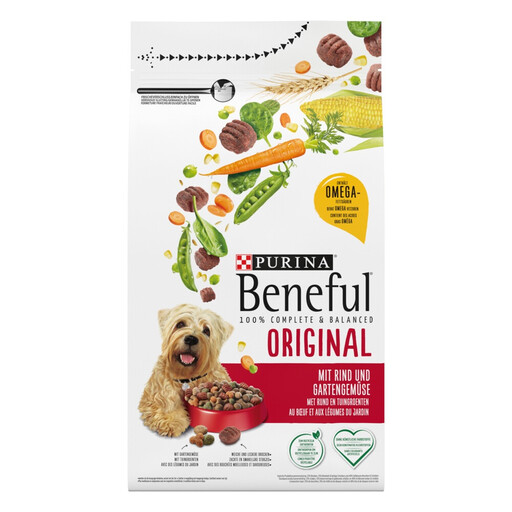
Why it suits this profile: The 1.4 kg bag is a manageable choice for a first purchase or a household with a small to medium-sized dog.
The product information describes it as complete and balanced food for adult dogs of all weights. Check the feeding table before ordering.
Dry food with 15% crude protein, 8% fat and a feeding table covering dogs from 5 to 30 kg.
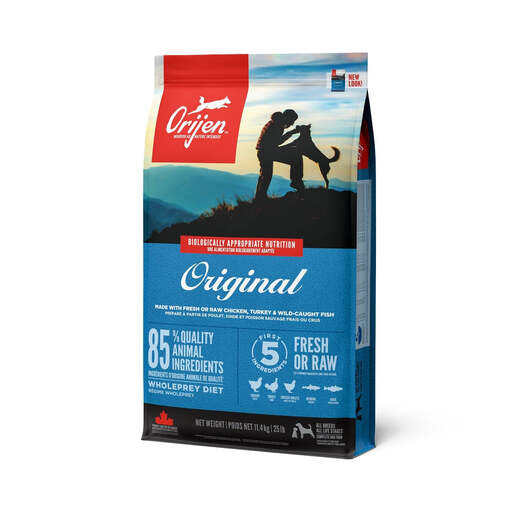
Why it suits this profile: Suitable for those considering a dry food made with several animal protein sources and a large pack.
The product page lists the ingredients and analytical values separately. This allows you to compare the claim about animal proteins with the full composition.
38% crude protein, 18% crude fat and a recipe containing chicken, turkey, herring, cod and egg.
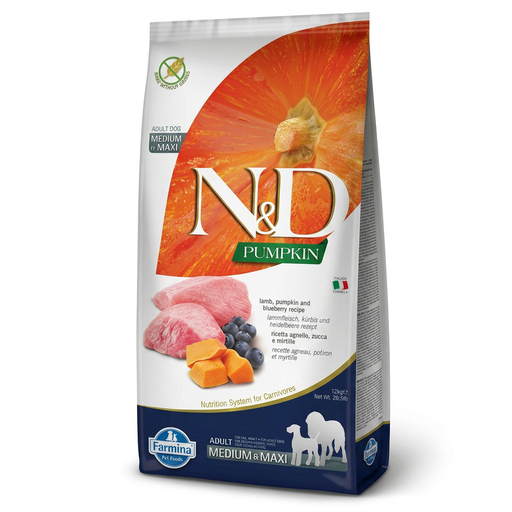
Why it suits this profile: An option for adult medium and large-breed dogs whose owner is looking for a grain-free lamb formula.
The product information states that it is suitable for adult medium and large dogs and lists lamb, herring, pumpkin, peas and chickpeas among the ingredients.
Grain-free composition, 12 kg pack size and a stated proportion of 96% protein from animal sources according to the product description.
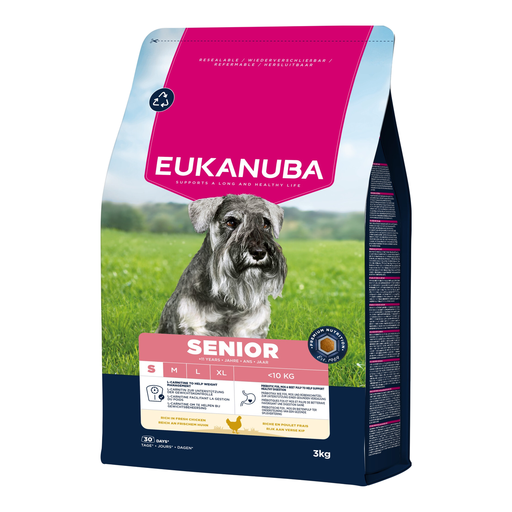
Why it suits this profile: The product description is aimed at small senior dogs aged 11 and over, while the 3 kg pack is practical for keeping stock under control.
The age range and size are clearly specified. This helps prevent you from accidentally choosing adult dog food or a variety intended for a different size.
Chicken as the stated protein source, a fibre blend, and glucosamine and chondroitin listed in the product description.
We have put together a complete, up-to-date list of products that fully meet these strict selection criteria and the applicable European safety regulations.
Dry food contains little moisture and is easy to portion and store. Wet food generally contains much more moisture and is often sold in individual portions. Compare nutritional values not only per pack, but also based on the recommended daily allowance.
Gradually mix the new food with the old food over approximately seven to ten days, unless the packaging gives different instructions. Monitor your dog’s appetite, stools and body condition. If problems persist or your dog has specific nutritional needs, consult a vet.
Follow the guidance on the packaging and take your dog’s weight and activity level into account. The INABA Fun Bites product information states that treats should make up no more than 10% of your dog’s daily calorie intake. Deduct the amount of treats from the total daily food allowance and always provide fresh drinking water.
