
People keeping an eye on fat
You want to keep eating crisps, so you compare the fat content per 100 g. Having less fat than another variety doesn’t automatically mean a product meets the requirements for a ‘low fat’ claim.


If you want to eat less fat and avoid certain allergens, don’t choose crisps based only on terms such as ‘oven baked’ or ‘free from’. Compare fat, energy and salt per 100 g, and check the current packaging for the allergen you need to avoid. Albert Heijn lists 13 g of fat per 100 g for Lay's Oven Baked Naturel, compared with 30 g for Lay's Naturel. Under EU Regulation 1924/2006, a solid food can only be described as ‘low fat’ if it contains no more than 3 g of fat per 100 g.
You want to keep eating crisps, so you compare the fat content per 100 g. Having less fat than another variety doesn’t automatically mean a product meets the requirements for a ‘low fat’ claim.
You may need to avoid wheat, milk, soya or sulphites, for example. In that case, check the ingredients and allergen information for the specific variety, including any warnings on the current packaging.
As well as fat, you check saturated fat, energy and salt per 100 g. Then you use the per-portion nutrition information to assess the amount you plan to eat.
Start with what matters most to you: a lower fat content or avoiding a specific allergen. Then compare the other nutritional values on the same basis, per 100 g.
| What to consider | What to check when buying | Who it matters to |
|---|---|---|
| Fat content | Compare total and saturated fat per 100 g. Under EU Regulation 1924/2006, solid foods can only be described as ‘low fat’ if they contain no more than 3 g of fat per 100 g. | If I want to keep eating crisps while watching my fat intake, I want to compare the amounts rather than rely on ‘oven baked’. Fat reduction is the top priority for around 40% of consumers. |
| Allergens | Check the ingredients, listed allergens and any warnings on the packaging of the variety you’ve chosen. | If you need to avoid wheat or milk, you’ll want to know whether this particular flavour suits your requirements. Avoiding specific allergens takes priority over other crisp characteristics for around 30% of consumers. |
| Energy, salt and portion size | Compare energy and salt per 100 g; only then use the per-portion information to assess how much you eat. | If I’m watching energy and salt as well as fat, I want to understand what my portion adds to my intake. This is the main consideration for around 20% of consumers. |
| Ingredients and dietary information | Check the ingredients and specific claims, such as gluten-free or vegan, on the packaging you’ve chosen. Also check the fat content per 100 g. | If I’m choosing a plant-based or gluten-free option, I want to know what’s in the crisps without assuming that a short ingredients list means less fat. For around 10% of consumers, the ingredients are the main factor in their choice. |
Albert Heijn lists 13 g of fat per 100 g for Lay's Oven Baked Naturel and 30 g for Lay's Naturel. The oven-baked variety therefore contains less fat than the plain variety it’s compared with, but it exceeds the limit of 3 g per 100 g for a ‘low fat’ claim under EU Regulation 1924/2006.
Compare the actual amount of fat per 100 g, and bear in mind the difference between a comparison and a nutrition claim.
According to Albert Heijn’s product information, Pringles Original contains wheat and may contain milk and soya. Jumbo lists milk and sulphites for Smiths Sticks Paprika. Other varieties may contain different ingredients.
If you need to avoid an allergen, check the ingredients and warnings on the packaging of the exact variety before buying.
Less fat doesn’t automatically tell you about energy or salt. The Netherlands Nutrition Centre advises comparing nutritional values per 100 g, as portion sizes can vary between products.
As well as fat, compare energy, carbohydrates and salt per 100 g; then consider how much you want to eat.
If you have strict dietary requirements, the information on the packet you buy is what matters: ingredients and warnings can differ between varieties or recipes.
Use a product page to compare options, then check the current label before buying.
The plain and oven-baked varieties make it easy to compare fat and energy within this brand.
Pringles Original shows why you should check the ingredients for the specific variety of formed potato snack.
With Smiths Sticks Paprika, both the flavour and the allergen information are relevant to your choice.
AH Chips naturel is a supermarket own-brand variety with clearly stated dietary information and a short ingredients list.
Snack Day Naturelchips is a 250 g plain variety listed by Lidl as a store product.
These two oven-baked crisp varieties are worth considering if you want to compare the fat content of crisps. If you need to avoid a specific allergen, always check the current packaging; the product type alone won’t tell you whether it’s suitable.
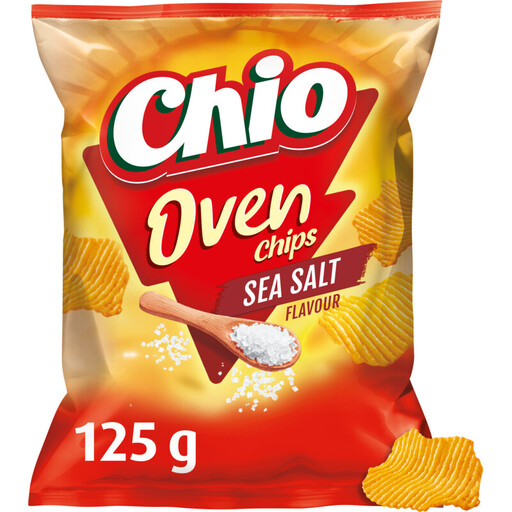 Image unavailable
For anyone looking for oven-baked crisps with a sea salt flavour and wanting to compare the nutritional values per 100 g. The pack contains 125 g; if you need to avoid an allergen, also check the ingredients and warnings on the current packaging.
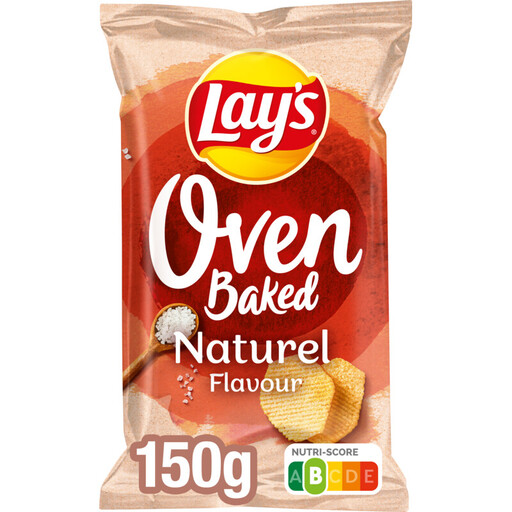 Image unavailable
For anyone looking for an oven-baked plain variety and wanting to compare fat and other nutritional values. The pack contains 150 g; if you need to avoid an allergen, check the ingredients and any warnings on the current packaging.
No, not automatically. Under EU Regulation 1924/2006, the ‘low fat’ nutrition claim can only be used for solid foods containing no more than 3 g of fat per 100 g. Albert Heijn lists 13 g of fat per 100 g for Lay's Oven Baked Naturel, compared with 30 g for Lay's Naturel.
No: first consider which difference matters to you. The Netherlands Nutrition Centre points out that light crisps may contain less fat but more carbohydrates than regular crisps. So compare energy and salt per 100 g too, rather than relying on the word ‘light’ alone.
Only if the current packaging for the specific variety confirms it’s suitable for the allergen you need to avoid. The Netherlands Food and Consumer Product Safety Authority explains how allergens must be listed on the labels of prepacked foods. Check any warnings too: according to Albert Heijn, Pringles Original contains wheat and may contain milk and soya.
Compare crisps per 100 g first, so products in different pack sizes are measured on the same basis. The Netherlands Nutrition Centre points out that portion sizes can vary; use the per-portion information afterwards to assess how much you actually eat.