
People who strictly avoid gluten
You’re looking for a product explicitly labelled gluten-free, rather than ordinary crispbread made with rye, wheat, barley or spelt. The Netherlands Nutrition Centre lists these grains as containing gluten.


If you have a food allergy, first choose crispbread whose current label suits your diet; only then compare pack sizes. Ordinary rye crispbread is not gluten-free, and varieties from the same brand can list different allergens. If you often replace ordinary bread with crispbread, don’t assume it provides the same amount of iodine.
You’re looking for a product explicitly labelled gluten-free, rather than ordinary crispbread made with rye, wheat, barley or spelt. The Netherlands Nutrition Centre lists these grains as containing gluten.
You first rule out varieties containing an allergen you need to avoid, such as sesame, milk, soya, lupin or mustard. Product information from Jumbo and Albert Heijn shows why you need to check each variety individually.
As well as checking allergens, you want to look at the nutritional information per 100 g. If crispbread replaces a large part of your usual bread intake, the Netherlands Nutrition Centre advises not to assume that your sources of iodine will stay the same across your overall diet.
Start by checking the ingredients and allergens for the exact variety. Then look at the pack size and, if you often use the product as a bread replacement, its nutritional information.
| What to consider | What to check | Who is this important for? |
|---|---|---|
| Allergens and gluten | Read the ingredients, listed allergens and any warnings. If you eat strictly gluten-free, look for an explicit gluten-free label. | If I need to avoid an ingredient strictly, I want to rule out a pack before considering its other features. For around 42% of consumers, suitability in terms of allergens or gluten comes first. |
| Pack size | Compare the pack weight of varieties that meet your allergen requirements. | If I buy it regularly, I want to know how much crispbread I’ll get in each pack, without including a variety that isn’t suitable. Around 33% of consumers say this practical comparison is their top priority. |
| Everyday use | Check the type of grain and the nutritional information, including fibre per 100 g. If crispbread often replaces bread, consider sources of iodine across your overall diet. | If I regularly eat crispbread instead of bread, I also want to know how it fits into my usual diet. For an estimated 25% of consumers, everyday use matters most. |
Rye contains gluten, as the Netherlands Nutrition Centre points out. Ordinary rye products are therefore not gluten-free.
If you follow a strict gluten-free diet, check that the current packaging explicitly says the product is gluten-free, and read the other allergen information too.
According to Wasa, Thin Rye Wholegrain contains sesame and may contain milk. The allergen information listed by Jumbo for Wasa Wholegrain is different.
Check the label of the exact variety every time you buy it; terms such as “wholegrain” don’t tell you which allergens it contains.
The Netherlands Nutrition Centre describes bread made with iodised baker’s salt as a source of iodine, but using this salt is not compulsory. You need to assess the ingredients of crispbread separately.
If you often replace ordinary bread, check the available packaging information and consider your other sources of iodine.
Wasa offers several rye and wholegrain varieties, and allergen information varies from product to product.
Albert Heijn offers several own-brand crispbread varieties.
For Wasa Wholegrain, Jumbo lists product-specific ingredients and allergens.
On its UK brand page, Ryvita describes Original Crispbread as being made with wholemeal rye flour, rye flour and salt.
This selection includes three plain wholegrain varieties and one filled snack variety. For each one, check whether the current packaging suits your allergen requirements.
 Image unavailable
A plain wholegrain variety for breakfast or lunch.
If you avoid gluten or sesame, check the current label carefully. Also look for information about the possible presence of other allergens.
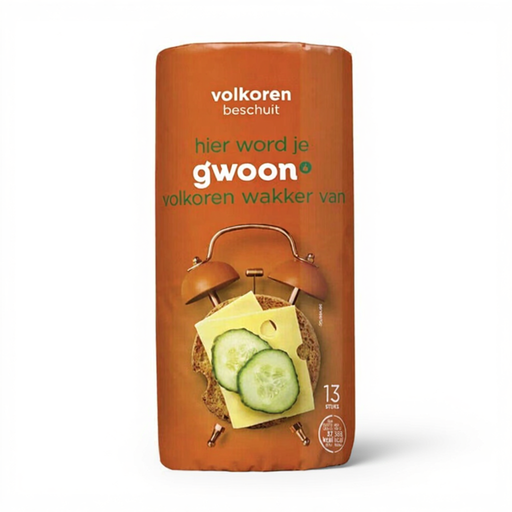 Image unavailable
A plain variety to consider if you’re looking for a smaller pack of wholegrain crispbread.
When checking the label, pay particular attention to any gluten-containing grains and egg, and read any warnings about other allergens.
 Image unavailable
A plain rye variety for anyone who can eat rye and is looking for a simple crispbread base.
Rye contains gluten. Also check the current packaging for warnings about the possible presence of sesame and milk.
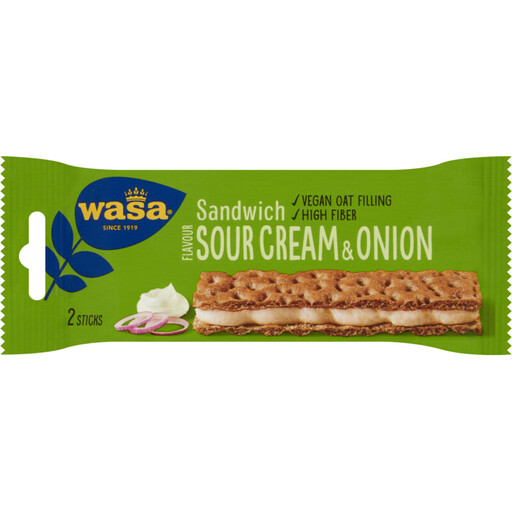 Image unavailable
This filled crispbread sandwich is a snack, not a plain base for toppings.
This variety contains rye and oats, so it isn’t suitable if you need to eat strictly gluten-free. Check the current packaging too if you avoid sesame, milk, soya or lupin.
No. Rye contains gluten, as the Netherlands Nutrition Centre points out. If you strictly avoid gluten, look for a product explicitly labelled gluten-free on the current packaging, and check the other ingredients too.
Read the ingredients list and allergen information on the packaging for the exact variety. The Netherlands Food and Consumer Product Safety Authority describes the labelling requirements for 14 allergens; also check for any warnings about possible presence.
No. Even a short list may include an ingredient you need to avoid. For example, Jumbo’s information for Wasa Wholegrain lists rye, as well as the possible presence of other allergens.
If the allergen mentioned is relevant to you, take the warning into account when assessing the exact product. An ingredients list and a warning about possible presence provide different information, so read both.
You can’t assume that it does. According to the Netherlands Nutrition Centre, bread made with iodised baker’s salt is a source of iodine, but using this salt is not compulsory. If you often replace bread with crispbread, check the available product information and consider your other sources of iodine.