
Vandaag of morgen in huis

Kwaliteit gegarandeerd

Welkomstaanbiedingen ontgrendelen: GRATIS bezorging | Tot 80% korting | Gratis 30 dagen JoyPlus-proefperiode
Download de app
An air purifier can help to reduce airborne particles, dust, and certain odours in your home. However, many people buy a model based on a single eye-catching number or a promising marketing claim. This can lead to a device that's too small for the living room, too loud for the bedroom, or requires expensive filters.
That's why it's important to look at the combination of filter type, CADR, noise level, maintenance, and room size coverage. Below, you'll find out what to look for and which models are best suited for different situations.
A manufacturer might state a large maximum area, but that doesn't always mean the air will be cleaned at the same speed. You should also look at the CADR, or Clean Air Delivery Rate. This value indicates how much purified air the device can deliver per hour.
An air purifier for a small bedroom typically needs a lower CADR than one for an open-plan living room. Also, check whether the stated coverage is based on one, two, or multiple air changes per hour.
An air purifier with a HEPA filter is a good choice for fine particles like pollen and house dust. However, its effectiveness also depends on the airflow, the filter's seal, and the testing method used.
Note the difference between a pre-filter, a HEPA filter, and an activated carbon filter:
A brand claim like “99.97% filtration” should therefore be understood as a claim made under specific test conditions. According to the brands' own product information, results can vary depending on the model and how it's used.
A quiet air purifier for the bedroom shouldn't just have a low noise level on its lowest setting. The noise can be significantly louder on the highest setting, so be sure to check both values if they are available.
The filter is also a recurring cost. Product information might mention replacement after 6 to 9 months, 6 to 12 months, or approximately 3,000 hours of use. The actual lifespan depends on usage, smoke, pets, and the amount of dust in your home.
Use the stated room size coverage as a guideline, not as your only deciding factor. For a small room, models like the Blueair Mini Max with a CADR of 117 m³/h or the Homintell Kilo with around 130 to 150 m³/h are a good starting point. For larger spaces, higher values such as 360 m³/h, 450 m³/h, or 550 m³/h are more relevant.
An air purifier for pollen or dust is only effective if the air in the room can circulate properly. For this reason, avoid placing the device directly behind a sofa or curtain.
For everyday use in a home, a combination of a pre-filter, a fine particle filter, and activated carbon is often the most practical. If you're looking for an air purifier for smoke and odours, it's wise to check the amount and presence of activated carbon. A HEPA filter alone is not automatically designed for odour reduction.
If you have pets, an easily accessible pre-filter and a replaceable combination filter are useful. Pet hair can clog the pre-filter more quickly. Of course, an air purifier for pets is no substitute for regular vacuuming and ventilation.
A model with a sleep mode can be a great feature for the bedroom. The Philips PureProtect Mini 900 Series, for example, lists a range of 20.5 to 49 dB(A). The Jafända JF268N states 20 dB on the low setting and a maximum of 53 dB, according to its product data.
An air purifier with a PM2.5 sensor will display the measured fine particle level or use a colour indicator. This is useful for monitoring changes in the room, but the sensor is not a substitute for official air quality measurement. A smart air purifier can also be controlled via an app, Wi-Fi, or a voice assistant. Before you buy, check that the app is compatible with your mobile phone and network.
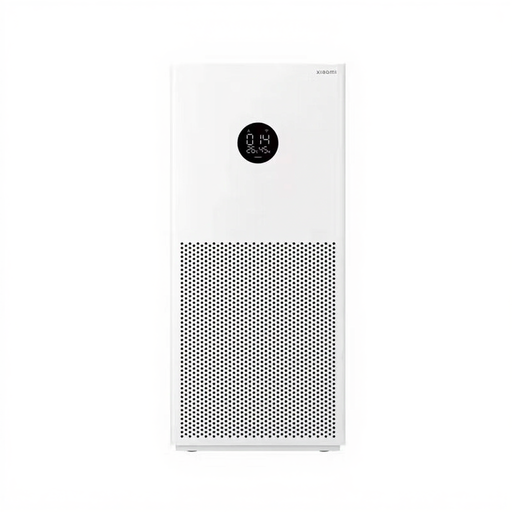
Why it's a good fit: This Xiaomi model combines a PM2.5 sensor, an automatic mode, and control via the Mi Home app. Its stated coverage is 25–43 m² and the PM-CADR is 360 m³/h.
The combination of room size coverage and CADR makes it easier to compare than relying on a single big marketing claim. Do check the price and availability of replacement filters.
PM2.5 and temperature/humidity sensors, app control, voice support for Google Assistant and Amazon Alexa, plus a stated noise level from 33.4 dB.
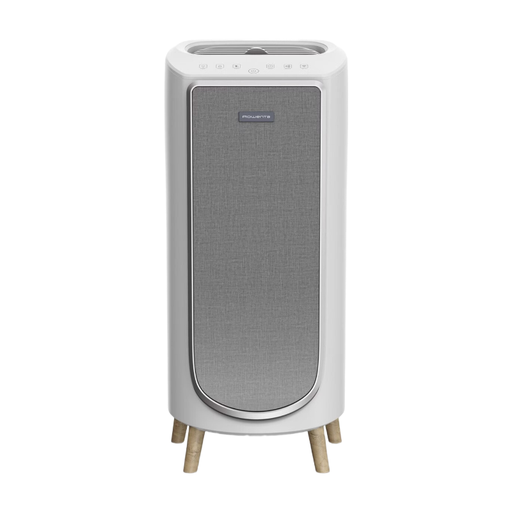
Why it's a good fit: The combination of a 360 m³/h CADR, Wi-Fi, app control, and four modes is ideal for users who value control and automation.
The product specifications mention both the CADR and a minimum noise level of 32 dB(A). Compare this quiet mode with the noise level when using the boost function.
HEPA, carbon, and nano filters according to the product information, automatic pollution detection, app control, and a power rating of 60 W.

Why it's a good fit: This model is aimed at homes with pets and features a 360° filtration system, a PM2.5 sensor, app and voice control, and a coverage area of 16–27 m².
The product specification explicitly mentions a pre-filter, HEPA filter, and activated carbon. This allows you to check the filter configuration instead of just relying on a "pet-friendly" claim.
CADR of 230 m³/h, 27 W power rating, child lock, and tool-free filter replacement, according to the product information.
We have compiled a full, up-to-date list of products that meet these strict selection criteria and comply with current European safety regulations.
Place the air purifier on a stable, flat surface with about 30 cm of clear space around the air intake and outlet. Always remove the plastic packaging from the filter before first use. Do not run the device in a humid bathroom or right next to a heat source.
Clean the pre-filter according to the manual and replace disposable filters on time. A saturated filter can restrict airflow. If you frequently use the device to combat smoke, cooking smells, or pet dander, you may need to replace the filter sooner.
According to the product specifications for many models, a HEPA filter is designed to capture fine airborne particles, including pollen and dust particles. Choose a model with a sufficient CADR for your room, and continue to ventilate and clean your home as usual.
This varies by model and usage. Manufacturers often state intervals of around 6 to 12 months or a certain number of operating hours. Smoke, pets, and high levels of dust can shorten the filter's lifespan. Follow the filter indicator and the manual for your chosen device.
Consumption depends on the rated power and how many hours it's running. Models in our range, for example, vary from 21 W to 60 W. The automatic or sleep mode can reduce average consumption, but always check the energy label, power rating, and your own usage patterns before making a comparison.
