
Vandaag of morgen in huis

Kwaliteit gegarandeerd

Welkomstaanbiedingen ontgrendelen: GRATIS bezorging | Tot 80% korting | Gratis 30 dagen JoyPlus-proefperiode
Download de app
A movie night in the garden, a gaming marathon on your bedroom ceiling, or a presentation without cumbersome equipment. The demand for a flexible, big-screen experience is growing, and a portable projector is the perfect solution. But with so many specifications and models, choosing the right one can be a challenge.
As a Joybuy Product Recommendation Officer, I'm here to help you cut through the marketing jargon. This article provides practical tips and a selection of popular models to help you buy a projector that truly fits your needs.
Before we dive into the products, here are a few key points to consider. These specifications largely determine the quality and ease of use of your future home cinema projector.
Image quality depends on two factors: resolution and brightness.
A projector's convenience is defined by its connectivity options. A modern smart projector with Wi-Fi and Bluetooth makes your life much easier.
No one wants to spend minutes fiddling to get the image straight and sharp. Features like auto focus and keystone correction are therefore essential for a 'plug-and-play' experience.
Below is a selection of portable projectors that stand out for their specifications and features.

Why it stands out: This model combines a projector with a built-in touchscreen. This allows you to control the projector directly without a remote, which is convenient for quick adjustments.
Pros:
Who is it for? For the user seeking a powerful, all-in-one solution for both home entertainment and occasional business presentations. Its high brightness and touchscreen make it highly versatile.
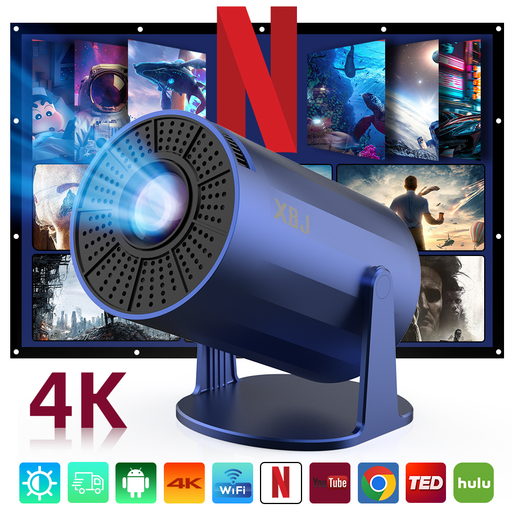
Why it stands out: This mini projector is extremely compact and features a 180° rotating stand, allowing you to effortlessly project onto walls or the ceiling.
Pros:
Who is it for? Perfect for anyone looking for a flexible projector for the bedroom. The focus here is on ease of use and portability, ideal for movie nights in bed or creating an atmospheric backdrop.
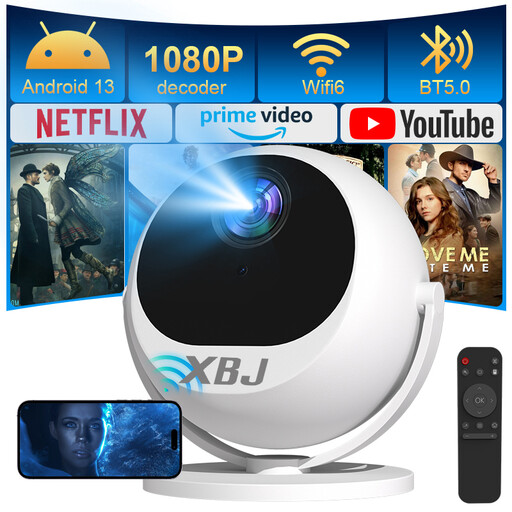
Why it stands out: As the name suggests, this model offers full 360° rotation. This, combined with high brightness, makes it one of the most flexible projectors for virtually any imaginable situation.
Pros:
Who is it for? For the demanding user who wants maximum placement freedom without compromising on image quality. Ideal for creative setups, parties on the balcony, or camping trips.
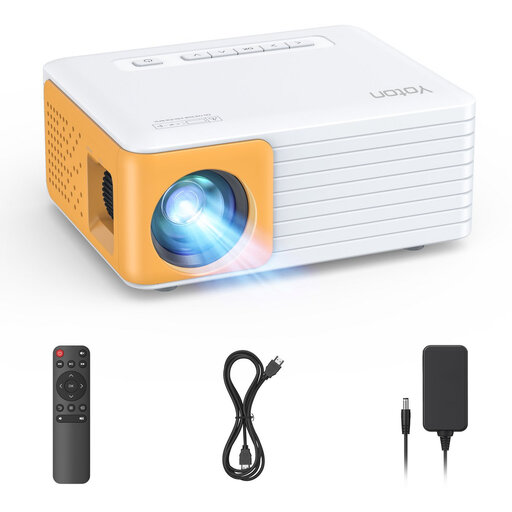
Why it stands out: This is a no-frills mini projector that focuses on the basics: a compact size and an affordable price.
Pros:
Who is it for? For the entry-level user or someone on a tight budget looking for a simple, wired projector for occasional use. It's a functional choice for movie nights where wireless features aren't a priority.
This selection represents several popular options, from advanced smart projectors to simple, portable models. However, everyone's needs are different. If your ideal projector isn't listed here, be sure to check out our wider assortment.
? Discover more options in our slide projectors category
1. What's the difference between a mini projector and a regular portable projector? The terms are often used interchangeably. A mini projector is typically extremely compact and lightweight, with an emphasis on maximum portability. As a result, its brightness and features might be somewhat limited. A 'regular' portable projector is still designed to be easily moved, but it may be slightly larger and often offers higher brightness and more advanced features.
2. Can I use a portable projector outdoors? Yes, using an outdoor projector is a popular application. Pay close attention to the brightness (ANSI lumens). A model with at least 500-800 ANSI lumens is recommended for a clearly visible image after sunset. Also, ensure the projector is protected from moisture and placed on a stable surface.
3. Do I need a special projection screen? Not necessarily. A smooth, white or light-grey wall can serve as a perfectly good projection surface. However, a dedicated screen often improves contrast and colour reproduction, as it's designed to reflect light optimally. For the best home cinema experience, a screen is a worthwhile investment, but for casual use, a wall is often sufficient.
