
Vandaag of morgen in huis

Kwaliteit gegarandeerd

Welkomstaanbiedingen ontgrendelen: GRATIS bezorging | Tot 80% korting | Gratis 30 dagen JoyPlus-proefperiode
Download de app
A desk may seem simple to choose, until your home office lacks depth, your monitor wobbles or cables are constantly getting in the way. Marketing copy often focuses on modern design, a quiet motor or a high load capacity. However, these terms do not always tell you what you actually need in practice.
Pay particular attention to three common pitfalls:
Start by measuring the available space. Leave room for cables, a chair and opening drawers or doors. For a compact bedroom or student room, a computer desk measuring 80 x 50 cm may be sufficient. If you work with two screens, a printer or study materials, you will probably benefit more from a large desk measuring 160 x 70 or 160 x 80 cm.
Also consider the depth. A deep desktop provides more distance between your eyes and the screen and prevents accessories from sitting right at the edge. The ideal distance depends on your equipment and personal preference; a desk is not automatically ergonomic simply because it has a large desktop.
A standard desk is often around 75 cm high. This is straightforward and usually more affordable, but you cannot adjust the height to suit different users or chairs.
A height-adjustable desk, electric desk or sit-stand desk offers greater flexibility. The models in this selection have an adjustment range of approximately 72 to 120 cm. When choosing an electric model, check:
According to JOYFURNOS product information, the adjustable models have overheating protection. If you adjust the desk continuously for more than two minutes, the instructions state that you must wait 18 minutes. Do not place the desk directly against a wall while it is moving, and keep liquids away from electrical components.
Chipboard with a steel frame is a common combination for a home office desk. Do not just check the material; also look at the finish, leg construction and adjustable feet. These feet help compensate for minor unevenness in the floor and can help reduce scratches.
The stated load capacity is generally a maximum static load. This is the weight resting still on the desk, not necessarily the load applied when pushing, leaning on or moving it. Distribute monitors, speakers and other equipment evenly, and do not exceed the stated limit.
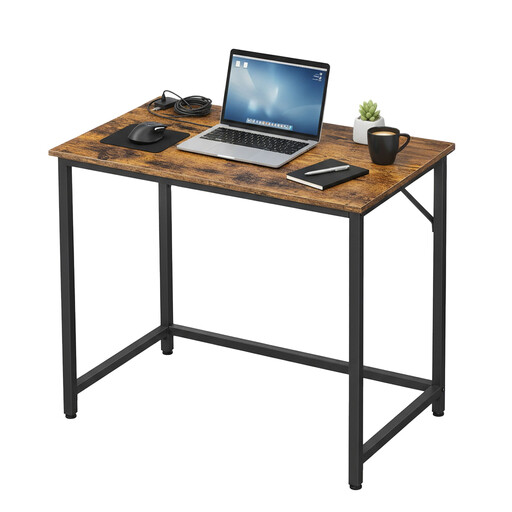
Why it suits this profile: This compact desk is suitable for a laptop, textbooks or a simple home-working setup. Measuring 80 x 50 cm, it takes up relatively little space.
The adjustable feet help prevent a wobbly desktop on a slightly uneven floor. The load capacity is clearly stated as 50 kg.
Compact size, steel frame and assembly instructions with labelled components.
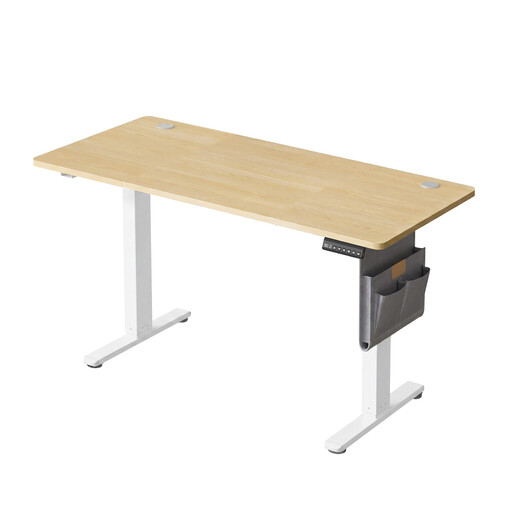
Why it suits this profile: The generous dimensions provide space for several screens, a laptop and accessories. The memory function and USB-C connection are practical for a permanent workstation.
The height can be adjusted from 72 to 120 cm. Cable holes, an organiser and a hook help keep loose accessories off the desktop.
160 x 70 cm, 70 kg static load capacity, memory function and USB-C port according to the product information.
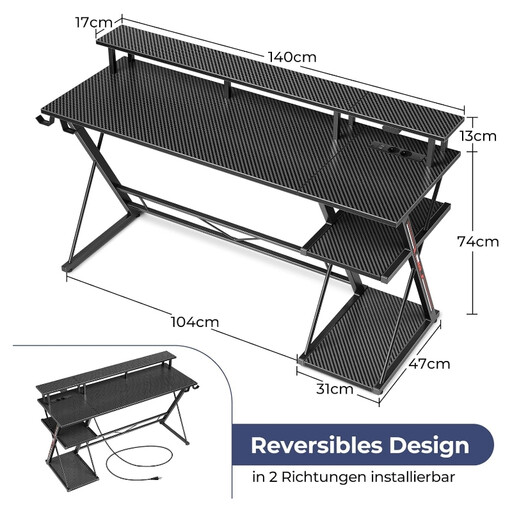
Why it suits this profile: This 140 cm gaming desk is designed for a PC setup with a monitor stand, headphone hook and adjustable CPU stand.
The accessories are clearly specified: two power sockets, two USB ports, a monitor stand and a CPU stand. Check the total weight before use.
Metal frame, carbon-look desktop, cable-free setup with integrated accessories and RGB lighting according to the product description.
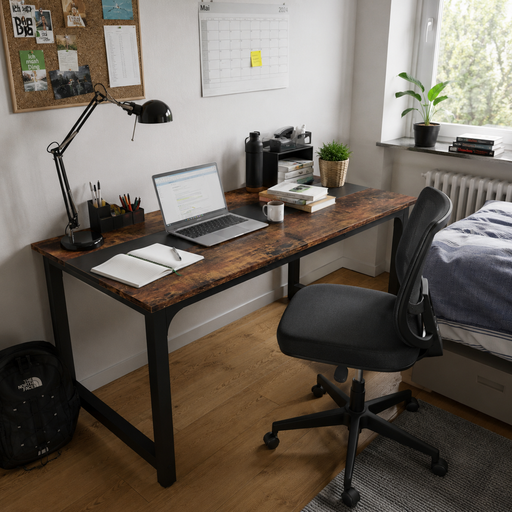
Why it suits this profile: The wide, deep desktop is suitable as a home workstation, study desk or shared work table for several devices.
The construction specifies a powder-coated steel frame, additional supports and adjustable feet. The stated maximum static load capacity is 400 kg; always use the current product specifications as your guide.
160 x 80 cm of workspace, metal frame and adjustable foot pads. According to the description, the desk weighs 26 kg.
We have put together a complete, up-to-date list of products that fully meet these strict selection criteria and the applicable European safety regulations.
Measure the space not just at floor level, but also check skirting boards, radiators and power sockets. With an electric desk, the cable must be long enough when the desktop is at its highest setting. Check that your chair fits beneath the frame and that the legs will not hit a cupboard or wall.
Also think about assembly. Desks with a steel frame are usually delivered flat-packed. Check that all parts are numbered and allow plenty of time for assembly. Ideally, position a large desk with two people. With electric models, use only the supplied adapter and follow the warnings about liquids, voltage and overheating protection.
A fixed desk is often around 75 cm high, but the correct height depends on your height, chair and equipment. Your forearms should rest comfortably on the desktop without raising your shoulders. An adjustable desk makes it easier to achieve the right setup.
Its lifespan depends on the materials, assembly, load and daily use. A steel frame and well-supported desktop can contribute to greater stability. Distribute heavy equipment across the surface and tighten the fixings after assembly according to the instructions.
Power consumption depends on the type of motor, how often you adjust the desk and its standby mode. Some models specify an energy-saving mode. Check the power rating in the product specifications or manual, and unplug the desk when appropriate according to the instructions for use.
