
Vandaag of morgen in huis

Kwaliteit gegarandeerd

Welkomstaanbiedingen ontgrendelen: GRATIS bezorging | Tot 80% korting | Gratis 30 dagen JoyPlus-proefperiode
Download de app
Chinese pickled mustard greens are a handy flavour booster for rice, noodles, congee and stir-fries. In Chinese shops and online stores, you’ll come across names like zha cai, pickled mustard tuber, mustard stem and Chinese pickles. The products look similar, but they differ clearly in salt content, spiciness, texture and packaging.
So don’t just rely on words like “authentic” or “crispy”. The ingredients list, nutritional information and portion size give you a more reliable picture.
A product labelled “light preserved” may taste milder than a traditional version, but it can still contain a relatively high amount of salt. Always compare the nutritional values per 100 grams. Across the range, the stated values vary from 3.4 grams to 11 grams of salt per 100 grams, for example.
If you’re using the greens as a small topping, a high salt content might matter less. But if you plan to serve a generous portion, a milder flavour or individually packed portions are more practical.
A multipack is convenient, but check that the weight per sachet and the total net weight are clearly stated. An 80-gram sachet is suitable for one or a few servings; a jar or pack of 400 grams is better for regular use.
Also pay attention to storage instructions. Many products can be stored unopened in a cool, dry place, but once opened they need to be refrigerated and consumed quickly.
Sichuan pickled greens can be mild, sour, savoury or spicy. Some varieties contain chilli, garlic and spices; others are plainer in flavour. So check the ingredients and product description rather than just the front of the packaging.
Also look out for allergens. Mustard is common, and some products also contain soya, wheat or sesame. This way you avoid a purchase that doesn’t suit your dietary preferences.
The texture depends on the cut and processing. Products with “crisp”, “crispy” or “fresh-pressed” in the name are designed to have a distinct bite. Sliced strips are handy as a topping for noodles or congee. Coarser pieces work well in a stir-fry.
A product description may indicate a crunchy texture, but this remains a product characteristic as described by the manufacturer. So treat it as an expectation, not a guaranteed experience.
Compare these points on the label:
A short ingredients list doesn’t automatically mean the flavour suits your dish better. For an authentic seasoning, it’s all about the right balance of salt, sourness, spiciness and umami.
Mustard greens in a sachet are convenient for lunch, travel or a quick meal. Individual sachets reduce waste and make it easier to serve a small portion with rice or noodles. A larger pack is more interesting if you’re also using the greens in soup, stir-fries or fillings.
Most selected products are ready to eat. Just open and serve, although a quick rinse can reduce the salty taste in some varieties. Always check the usage instructions on the packaging.
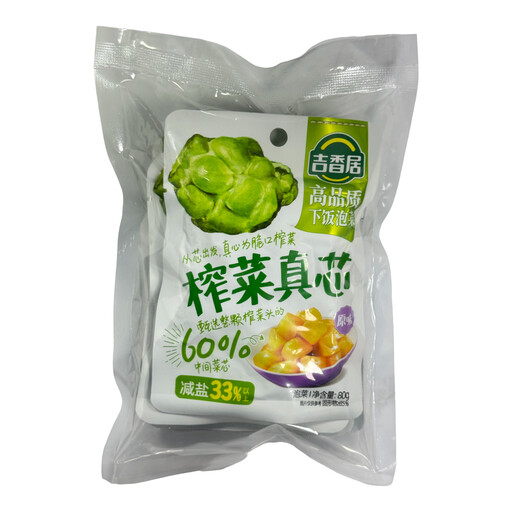
Why this fits the profile: The five individual sachets let you try Chinese pickled mustard greens at your own pace without opening a large pack straight away.
The product information states 80 grams per sachet, five portions and 4.1 grams of salt per 100 grams. This makes the portion size and nutritional values easy to check.
Original flavour, strips with a crunchy texture and individually packed portions.
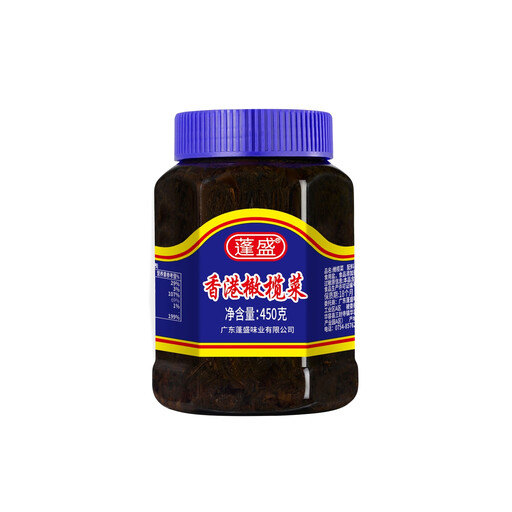
Why this fits the profile: This larger pack combines pickled mustard greens with green olives and is aimed at fans of a distinctive Chaozhou-Shantou flavour.
The product description clearly mentions the combination with green olives, the 450-gram content and the allergens present: mustard, soya and sesame.
Large jar for regular use; suitable with congee, rice and noodles or as a seasoning in hot dishes.
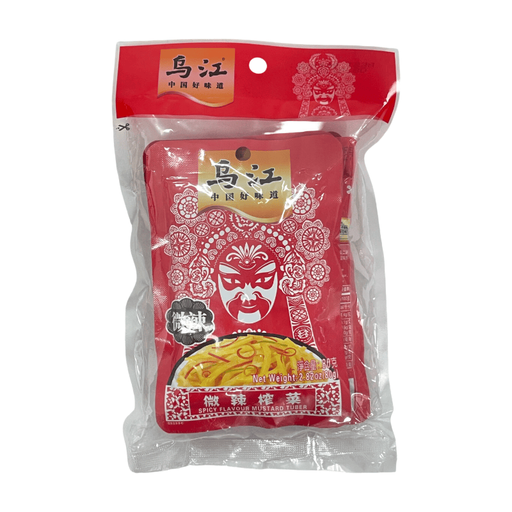
Why this fits the profile: The four 80-gram sachets are handy for regular meals, lunchboxes or use in several dishes.
The product information states a mildly spicy flavour, 3.4 grams of salt per 100 grams and clear usage suggestions for rice, noodles, soup and stir-fries.
Individual portions, Sichuan-Chongqing style according to the product description and a stated allergen declaration for soya and wheat.
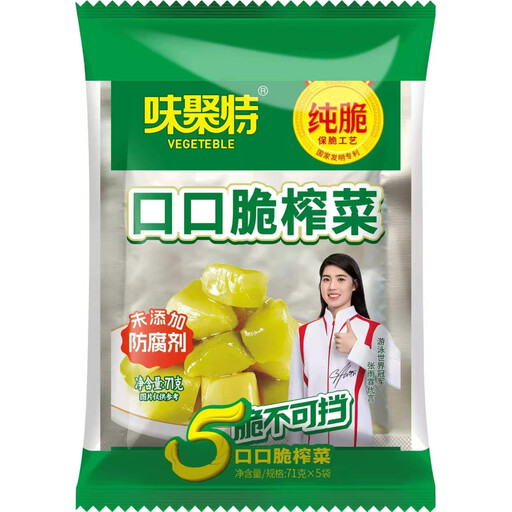
Why this fits the profile: Five 71-gram sachets are ideal for a quick portion with congee, rice, noodles or as a ready-to-eat Chinese vegetable on the go.
The portion size, ingredients and allergens are specified. The product information also states that the product can be eaten straight after opening.
Crispy mustard stem, five individual packs and no preparation needed.
We’ve put together a full, up-to-date list of products that fully meet these strict selection criteria and comply with current European safety regulations.
Zha cai is a Chinese pickled vegetable usually made from the thickened stem or tuber of mustard greens. The vegetable is salted and further seasoned. Depending on the product, the flavour can be mild, sour, spicy or savoury. If you have allergies, always check for the “contains mustard” statement on the label.
No, ready-to-eat varieties can usually be eaten straight from the sachet. Rinsing is optional and can reduce the salty taste. Pat the greens dry afterwards if you’re using them in a stir-fry, so that excess moisture doesn’t affect the texture and cooking process.
Follow the instructions on the packaging. In many cases, an opened sachet must be stored in the fridge and consumed quickly. Individual packs are therefore handy if you only use a small portion of Chinese pickled mustard greens occasionally.
