
Vandaag of morgen in huis

Kwaliteit gegarandeerd

Welkomstaanbiedingen ontgrendelen: GRATIS bezorging | Tot 80% korting | Gratis 30 dagen JoyPlus-proefperiode
Download de app
Wholemeal crackers might seem straightforward at first glance: you pick a pack, add your toppings and you’re done. But in reality, they differ significantly in ingredients, fibre content, flavour, size and allergens. A packet labelled “multigrain”, “light” or “with seeds” doesn’t automatically tell you how much wholemeal flour or fibre it actually contains.
As Joybuy’s Product Recommendation Officer, I focus on verifiable information on the label. That way, you avoid paying for attractive packaging when the contents don’t really suit your meal occasion or dietary needs.
Multigrain crackers can contain several types of grain, but that doesn’t mean all the grains are wholemeal. Always check the ingredients list. If wholemeal wheat flour, wholemeal rye flour or a similar term appears at the top, then this ingredient makes up a significant part of the product.
In some breakfast products, the base is actually refined flour, sugar syrup or oil, with only a small amount of wholemeal flour. That can still work as a snack, but it’s a different choice from wholemeal crispbread.
Crackers with seeds, such as sesame, linseed or pumpkin seeds, often have a distinctive flavour and crunchy texture. However, seeds also change the nutritional values. So compare fats, saturated fats, salt and fibre per 100g.
Also check the allergens. Sesame, wheat, rye, barley, milk, soya and egg are common in crackers, crispbreads and wholemeal biscuits. Recipes can change, so if you have an allergy, always use the current packaging as your guide.
A thin cracker may feel light or weigh less per piece, but per 100g the energy content can be similar to other crackers. So don’t just look at the calories per cracker. Also check the portion size and how many crackers you typically eat.
A short ingredients list is easy to read, but it isn’t necessarily better. Pay attention to the order of ingredients – they are usually listed in descending order by quantity.
For a solid base at breakfast and lunch, look for:
A product with plenty of wholemeal flour can still contain sugar, oil or salt. So assess the full label.
If you’re looking for fibre-rich crackers, it’s worth comparing products directly. In the available product information, the fibre content ranges from 9g per 100g for Wasa Sesame to 26g per 100g for Wasa High-Fiber Crackers.
Bolletje Light Whole Grain Crackers also lists 15g of fibre per 100g. G'woon Wholemeal Crispbread and Bolletje Whole Grain Crispbread both list 14g per 100g. These figures aren’t directly comparable per cracker, because the weight of each piece can vary.
Thin breakfast crackers are handy for light toppings, while sturdy wholemeal crispbread works better with hummus, cottage cheese, peanut butter or vegetables. A variety with sesame or rye has more flavour of its own. A plainer cracker is easier for a family with different preferences.
For on-the-go, packs with individual portions or resealable bags are practical. For everyday use at home, a larger pack is often more convenient – as long as you store the crackers in a dry, airtight container.

Why this fits the profile: The 375g pack is practical for regular use at breakfast, lunch or as a quick snack. The flavour base is wholemeal rye and wheat.
The product information lists 14g of fibre per 100g and states the grain base. So you don’t have to rely solely on terms like “multigrain” or “light”.
48% wholemeal rye flour, 38% wheat flour and 16% wholemeal wheat flour according to the product description. Do check the listed allergens, including gluten, sesame and milk.
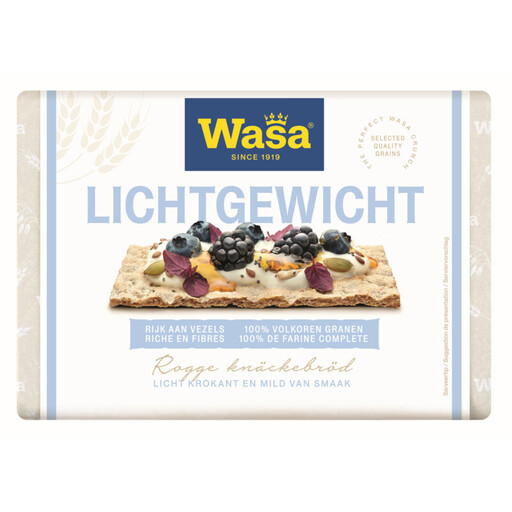
Why this fits the profile: According to the product information, this variety is made from 100% wholemeal rye and has a thin, crunchy texture. That suits anyone looking for a simple base for both sweet and savoury toppings.
The grain type and wholemeal content are clearly stated. The term “lightweight” refers to the thin shape, so compare the nutritional values per 100g.
20% fibre according to the product description, 10g of protein per 100g and a short ingredients list. Contains rye and milk; sesame may be present.

Why this fits the profile: If you’re specifically looking for a high stated fibre content, this is a clear option. The cracker contains rye, wheat, oats and sesame for a sturdy texture.
The product information lists 26g of dietary fibre per 100g and specifies the grain and seed types. This makes it easy to compare directly with other fibre-rich crackers.
70g of whole grains per 100g according to the product description, 13g of protein and 2g of sugar per 100g. Contains gluten, oats and sesame.
We’ve put together a full, up-to-date list of products that fully meet these strict selection criteria and comply with current European safety regulations.
That depends on your preference for flavour, texture and toppings. Thin crackers work well with light toppings, while rye crackers or sturdy multigrain crackers can carry more weight. Combine them as you like with cheese, vegetable spread, hummus or fruit. If you have allergies, always check the current label.
Store crackers in a dry place, out of direct sunlight and in an airtight container. After opening, moisture from the air can soften the texture. A resealable pack or a well-sealing storage tin helps keep them crunchy for longer. Also check the best-before information on the packaging.
No. Wholemeal biscuits and breakfast crackers may contain wholemeal flour, but they often differ in sugar, fat, portion size and when you’d eat them. For example, LOTTE Koala’s March Whole Wheat Biscuit with Choco lists wholemeal flour, but the product also contains chocolate cream and 243 kcal per 46g pack. So it’s more of a sweet snack than a neutral base for breakfast or lunch.
