
Vandaag of morgen in huis

Kwaliteit gegarandeerd

Welkomstaanbiedingen ontgrendelen: GRATIS bezorging | Tot 80% korting | Gratis 30 dagen JoyPlus-proefperiode
Download de app
Buying a new vacuum cleaner seems simple, until you have to choose between a cordless vacuum cleaner, stick vacuum, handheld vacuum, robot vacuum or a classic corded model. Marketing often focuses on high suction power, a UV lamp or a HEPA filter. However, these terms don’t always tell you how well a machine will work in your home.
Look out for these three common pitfalls:
A stick vacuum can be practical for a flat or smaller home. It’s quick to grab and you don’t need a socket while you clean. Be sure to check the run time, charging time, weight and dust container capacity.
A corded model is often a good choice if you want to clean for longer without stopping. A bagless vacuum cleaner means you don’t have to buy dust bags, but emptying the container can release more dust. A bagged vacuum cleaner keeps dirt sealed away until you replace the bag, but comes with ongoing costs.
A robot vacuum is particularly useful for regularly maintaining hard floors. It won’t take care of every task: stairs, edges, furniture and thick carpets usually call for a conventional vacuum cleaner. For a robot model, also check the threshold height, navigation, mapping function and availability of filters and brushes.
A mattress vacuum cleaner is a targeted addition for mattresses, cushions and sofas. It isn’t intended to replace a regular vacuum cleaner for floors.
Manufacturers quote figures such as watts, Pa or Air Watts. These figures aren’t directly comparable. For example, a motor rated at 600 W doesn’t automatically mean that it has better suction than a model with a lower power consumption.
Instead, consider the following together:
For homes with pets, a motorised brush, an anti-tangle brush and a separate upholstery or pet brush are often more useful than a high figure on the packaging alone.
A vacuum cleaner with a HEPA filter may be worth considering if you want to capture more fine dust particles. Check that it’s a genuine HEPA filter, whether it’s washable and how often the manual says it should be cleaned or replaced.
Look out for conflicting product information. The Xiaomi Dust Mite Vacuum Cleaner is described as having a four-stage filtration system, but the information also explicitly states that it has no HEPA filter. So if you specifically want a HEPA filter, don’t choose this model based on the term “hypoallergenic”.
A clogged filter reduces airflow. If you wash a filter, let it dry completely before putting it back. Don’t use a vacuum cleaner without a correctly installed filter.
A powerful vacuum cleaner may be less pleasant to use if it’s heavy or loud. For everyday cleaning, weight, the handle and manoeuvrability are just as important as the motor.
For corded models, check the cable length and cleaning radius. For cordless models, consider the weight of the battery, charging time and whether the battery is replaceable. A small container needs emptying more often, while a larger one can make the machine heavier.
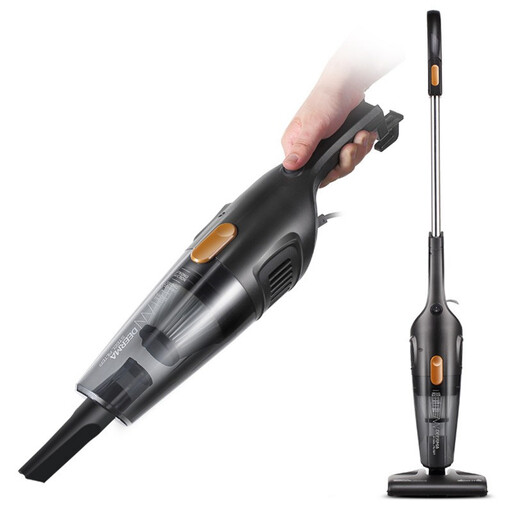
Why it suits this type of buyer: This corded model is suitable for everyday cleaning of hard floors, carpets and furniture, without having to worry about a flat battery.
The product specifications state 600 W, 15 kPa, a 5-metre cable and a 1.2-litre container. This makes the key details about using it clear from the outset.
3-in-1 use, a visible dust container, a HEPA filter mentioned in the product information and a relatively large container.
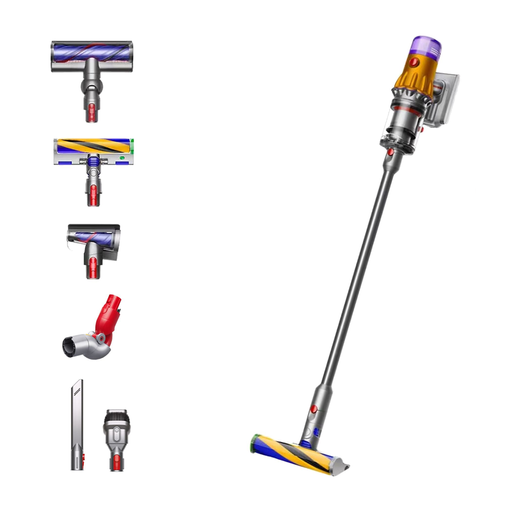
Why it suits this type of buyer: A compact cordless vacuum cleaner for households that value flexibility, different settings and a lightweight design.
The stated run time is 60 minutes on the lowest setting and 10 minutes on the highest. This makes the difference between everyday upkeep and intensive cleaning clear.
150 Air Watts according to the product information, three settings, a 0.35-litre dust container and a stated noise level of 73 dB.
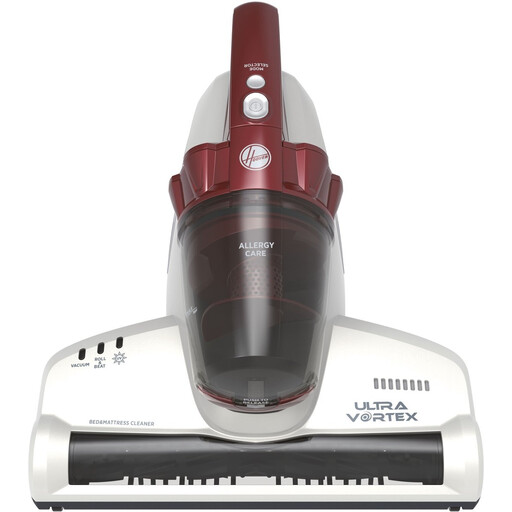
Why it suits this type of buyer: Designed for mattresses, sofas, cushions and other textiles, where a standard floor brush is less practical.
It’s clearly positioned as an additional mattress vacuum cleaner, not an all-purpose vacuum for the whole home. The UV-C lamp must not be directed at people, pets or plants.
500 W power, a Roll & Beat brush and a UV-C function. The claim about reducing bacteria and mites comes from Hoover’s product information.
We’ve put together a complete, up-to-date list of products that meet these strict selection criteria and the applicable European safety regulations.
Its lifespan depends on the motor, battery, filters, brushes and maintenance. Empty the container promptly, remove hair from the brush and clean the filters according to the manual. The battery is an important wear part in a cordless vacuum cleaner, so check whether a replacement battery is available.
A HEPA filter can capture fine particles from the air blown out by the vacuum cleaner, but overall performance also depends on how well the machine is sealed and how it’s maintained. Check that the specifications actually state “HEPA”. Don’t rely on general terms such as “allergy” or “hypoallergenic” instead of specific filter information.
With a corded model, your main costs are electricity, filters and possibly dust bags. A bagless vacuum cleaner doesn’t need bags, but its filters may need replacing. A cordless vacuum cleaner uses electricity to charge and may eventually need a new battery. So compare more than just the purchase price: consider parts, maintenance and how often you expect to use it.
