
Vandaag of morgen in huis

Kwaliteit gegarandeerd

Welkomstaanbiedingen ontgrendelen: GRATIS bezorging | Tot 80% korting | Gratis 30 dagen JoyPlus-proefperiode
Download de app
A thermos mug is handy for coffee on your commute, tea at the office, or cold drinks on a walk. Yet sometimes a purchase can disappoint. The mug doesn’t feel comfortable in your hand, doesn’t fit in the cup holder, or leaks the moment you put it in your bag.
The product name alone doesn’t tell you everything. A thermos mug, travel cup, insulated cup and vacuum flask can differ greatly in capacity, closure and maintenance. So pay particular attention to the following pitfalls.
Brands sometimes mention a long hot or cold retention time. According to the brand’s own research or the product description, that time may apply under specific conditions – for example, with a full cup, a closed lid and a particular starting temperature. In everyday use, the ambient temperature, the amount of drink and how often you open the lid can all have an effect.
So treat the stated hours as a guideline and compare products in the same way. A thermos mug for coffee and tea doesn’t need to offer the same insulation time as a large vacuum flask for a day outdoors.
Calling a thermos mug leak-proof is only useful if the closure is used correctly and kept clean. Check whether there is a silicone sealing ring, screw cap, safety lock or drinking button. A loose or incorrectly placed ring can cause leakage.
Also look at the difference between splash-resistant and fully leak-proof. A drinking cup with a straw can be pleasant at a desk, but it isn’t automatically suitable for lying horizontally in a rucksack.
A thermos mug of 350 ml or 375 ml is compact and often suitable for one coffee or tea. A vacuum flask of 500 ml offers more capacity without becoming too large. For long car journeys, camping or multiple users, a vacuum flask of 1.2 litres may be more logical.
Besides capacity, also check the height and diameter. A mug that is 35 cm tall won’t fit in every bag or fridge door. If in doubt, measure the cup holder in your car or on your bike beforehand.
A vacuum-insulated mug has two walls with a greatly reduced amount of air between them. This limits heat transfer. A double-wall mug can also work with an air layer, like some glass coffee cups. That helps keep the outside more comfortable to hold, but it doesn’t automatically mean the mug is suitable for long-term transport.
Stainless steel is a practical choice for a reusable drinking cup. The material is sturdy and is often used in a stainless steel thermos mug. Do check whether the lid and any straws are made of plastic and how these parts need to be cleaned.
Pay attention to the combination of capacity and portability:
A larger vacuum flask is not only heavier because of the contents, but also because of the insulation wall and closure. A 1.2-litre model can weigh over 1.3 kg when full. That matters for panniers and rucksacks.
A dishwasher-safe mug saves time, but check which parts are actually suitable for the dishwasher. Some models may only go on the top rack, while other thermos mugs must be washed by hand only. A narrow opening can make cleaning more difficult.
Do not use a thermos mug in the microwave. Also, do not fill a mug beyond its maximum capacity and be careful with hot drinks. A well-insulating mug can keep the contents hot for a long time, so drinking slowly remains important.
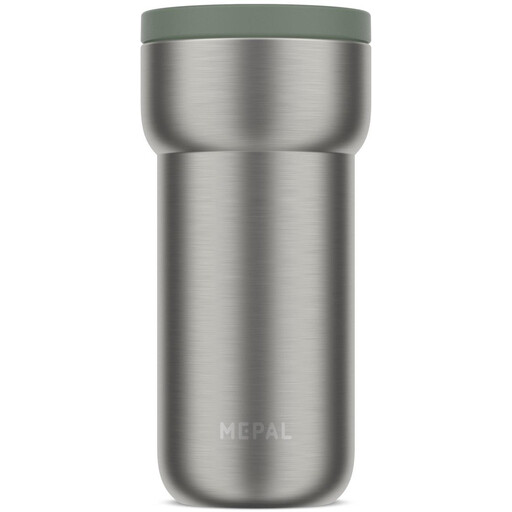
Why this fits the profile: A compact size for daily use at the office, on the go or at home. According to the product information, this insulated mug has a capacity of 375 ml and is dishwasher-safe.
The capacity, dimensions of 17.8 × 8.4 cm and weight of 300 g are clearly stated. The product description also mentions a leak-proof closure; always check the lid before travelling.
375 ml capacity, vacuum-insulated stainless steel, BPA-free according to the product information and dishwasher-safe.
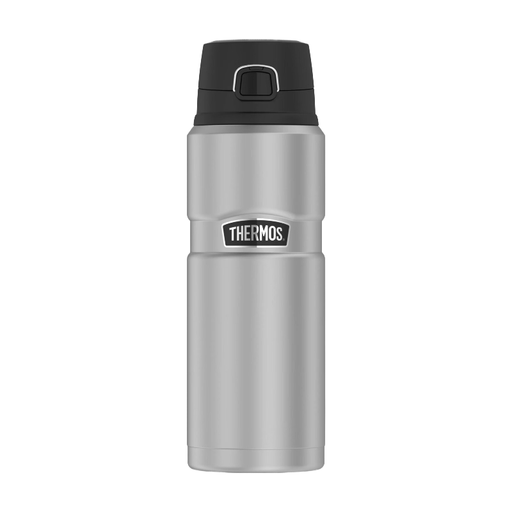
Why this fits the profile: This 700 ml vacuum flask is aimed at longer working days, travel and outdoor use. The one-touch closure can be operated with one hand, according to the product description.
The 0.7 litre capacity offers more margin than a small thermos mug, while the diameter remains 7 cm. The product information mentions a safety lock and leak-proof closure.
Double-wall vacuum insulation, up to 15 hours hot and 24 hours cold according to the product information, plus parts that can go on the top rack of the dishwasher.

Why this fits the profile: A large vacuum flask for camping, long car journeys, outdoor activities or a household where several people drink from it.
The 1.2 litre capacity is clearly tailored to long-term use. The flask is 31.2 cm tall and 9.5 cm in diameter; measure your storage space beforehand.
Stainless steel construction, screw cap with seal and a handle according to the product information. The weight of the flask is 674 g.
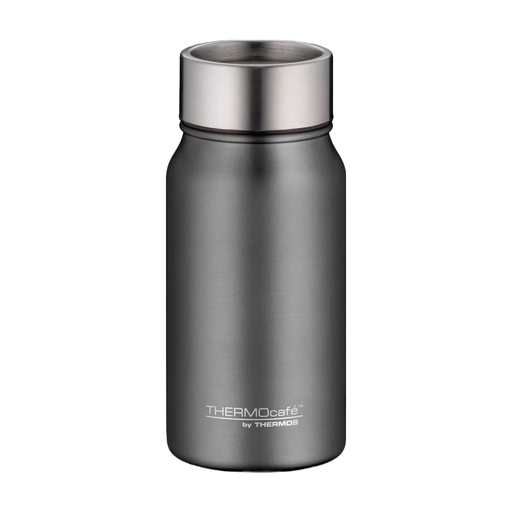
Why this fits the profile: This 350 ml thermos mug is designed for coffee on the go and fits in most cup holders, according to the product information.
The compact dimensions of 16.7 × 7.5 cm make the size easy to check. The removable 360° lid can be taken apart for cleaning.
350 ml capacity, double-wall stainless steel body, dishwasher-safe and leak-proof according to the product information.
Rinse a new mug before first use to remove manufacturing dust and packaging odour. Clean the lid, sealing ring and any drinking opening after use. Let all parts dry completely before closing the mug.
Do not fill a thermos mug with carbonated drinks unless the manufacturer expressly allows it. Pressure build-up can make opening difficult or cause leakage. Check the sealing ring regularly for cracks and replace damaged parts where possible.
We’ve put together a full, up-to-date list of products that fully meet these strict selection criteria and comply with current European safety regulations.
For one coffee, 350 to 375 ml is often enough. If you’re out for longer, you’re better off choosing 470 to 500 ml. Always check whether the diameter fits in your cup holder.
That varies per model and usage. Product information may state a certain number of hours of heat retention, but the actual duration depends on the starting temperature, the amount of drink and how often you open the lid. For longer storage, a vacuum-insulated flask is generally more suitable than a small travel mug.
Some models are fully or partly dishwasher-safe, while others must be washed by hand. Always check the care instructions for the specific product. A coating, silicone ring or straw may need different cleaning.
