
Vandaag of morgen in huis

Kwaliteit gegarandeerd

Welkomstaanbiedingen ontgrendelen: GRATIS bezorging | Tot 80% korting | Gratis 30 dagen JoyPlus-proefperiode
Download de app
A pan might look sturdy in the product photo, but it could be a poor match for your hob, family or cooking style. When buying saucepans and frying pans, purchases often go wrong due to three common pitfalls:
That's why the right choice doesn't start with colour or brand name, but with your heat source, material, size and maintenance.
For an induction frying pan, induction saucepan or stainless steel saucepan, first check if the pan is suitable for your hob. According to their product descriptions, the reference products in this overview are suitable for all heat sources, including induction. This isn't automatically true for every wok: according to the product information, the 5Five 35 cm steel wok is suitable for gas, ceramic and electric hobs, but not for induction.
A suitable induction pan usually has a magnetic, flat base. Pay attention to the diameter as well. A 16 cm pan works most efficiently on a matching cooking zone; a much larger hob won't always heat the entire base evenly.
The material determines how quickly a pan heats up, how well it retains heat and how much maintenance it needs.
A heavy pan isn't automatically more practical. If you often move a pan from the hob to the table, you might be better off with a lighter model that has a sturdy, comfortable handle.
When considering a PFAS-free pan or a ceramic non-stick pan, you need to read the exact product information. "PFAS-free" and "PFOA-free" are not always the same thing. In this overview, it is stated for specific models that the coating is PFAS-free, such as with the Brabantia Onyx, Brabantia Dusk and WMF Durado.
These claims come from the manufacturer's or seller's product information; they have not been independently verified here. According to the product description, the Brabantia Onyx has a ceramic double non-stick coating and a body made of 100% recycled aluminium. The manufacturer recommends hand washing, even though the pan is dishwasher-safe.
For a longer lifespan:
A frying pan of 20 to 24 cm is practical for one or two portions. A 26 to 28 cm model offers more space for a family, but it's also heavier and requires a suitable cooking zone.
A sauté pan with a lid is useful for sauces, stews, vegetables and one-pan meals. The Brabantia Onyx sauté pan has a diameter of 26 cm and comes with a glass lid. For potatoes, rice, pasta or larger quantities of vegetables, a deep saucepan is more suitable. According to its product description, the 24 cm Brabantia Enjoyment saucepan has a capacity of 5.5 litres, a glass lid and measurement markings on the inside.
A casserole pan or deep sauté pan is a logical addition if you regularly sear meat and then cook it further. When using it in the oven, always check the maximum temperature for the pan, lid and handles separately.
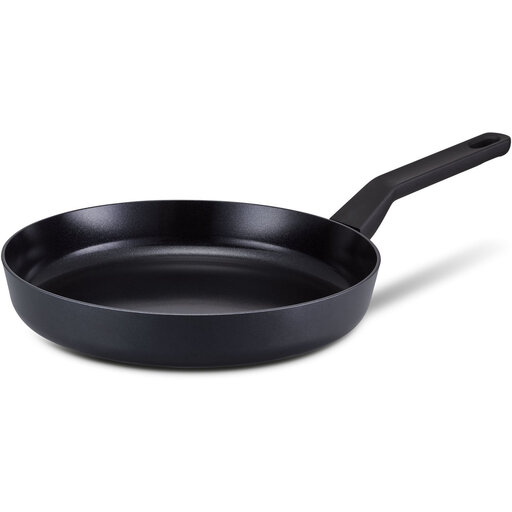
Why it's a good match: A 24 cm pan is suitable for everyday portions and, according to the product description, works on induction, gas, electric, ceramic and halogen hobs.
The product information explicitly mentions a PFAS-free ceramic double coating and recommends hand washing to limit wear and tear.
Recycled aluminium, 24 cm, PFAS-free ceramic coating and dishwasher-safe according to the product specifications.
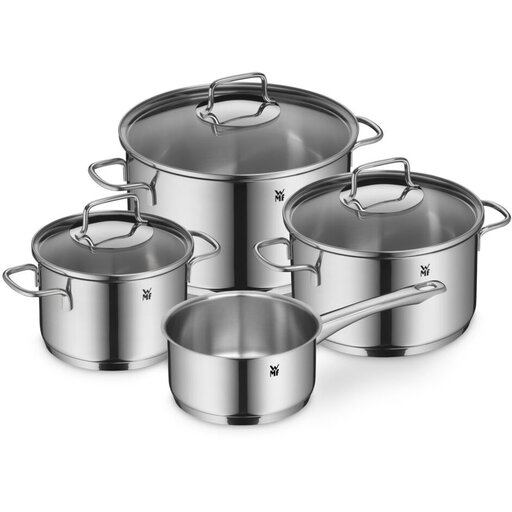
Why it's a good match: This set is aimed at those who need multiple sizes of stainless steel saucepans for daily cooking, sauces and larger portions.
The contents are specific: three saucepans with lids (16, 20 and 24 cm) plus a 16 cm saucepan.
Stainless steel, glass lids, wide pouring rims, suitable for induction and dishwasher-safe according to the product description.
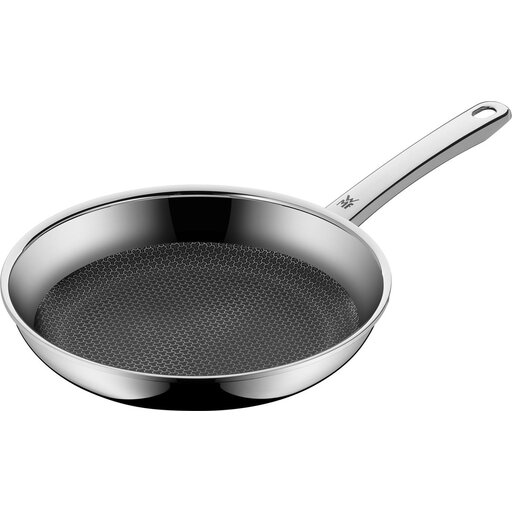
Why it's a good match: The 28 cm size and multi-layer construction are ideal for larger portions and for dishes where getting a good crust is important.
The manufacturer describes an aluminium core, a stainless steel interior and a honeycomb structure that partially protects the non-stick coating. Hand washing is still required.
Three-layer construction, suitable for induction, heat-resistant up to 260 °C and a five-year guarantee according to the product information.
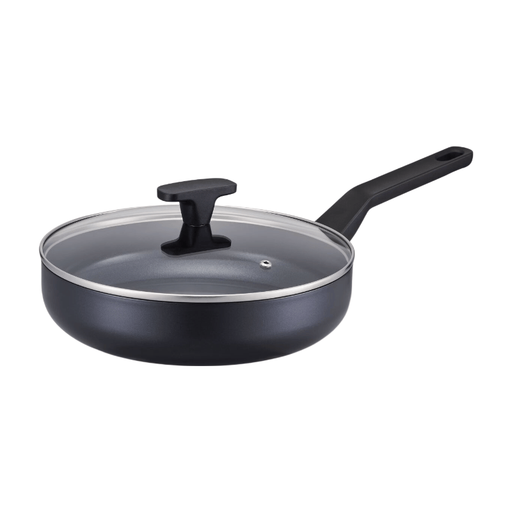
Why it's a good match: The higher sides and the lid make it practical for sauces, stews, vegetables and one-pan meals.
The specifications mention the capacity, the glass lid and compatibility with induction and other common heat sources.
26 cm, recycled aluminium, PFAS-free ceramic double coating, glass lid and suitable for induction according to the product description.
We have compiled a complete, up-to-date list of products that fully meet these strict selection criteria and comply with current European safety regulations.
Before buying, check if the handle is oven-safe. An oven-safe pan might still have a lid or a plastic handle with a lower temperature limit. According to the product information, the Brabantia Dusk is oven-safe up to 200 °C, while the Tefal Duetto saucepan can be used up to 250 °C. Always adhere to the lowest temperature limit of any component.
A stainless steel pan without a coating, like a classic saucepan or the coating-free pan from the WMF Devil set, can be suitable for intensive use and high temperatures. To prevent food from sticking, your technique is more important: preheat the pan slowly, then add oil, and avoid turning the food too early.
For one or two people, 20 to 24 cm is often sufficient. For three or more people, 26 to 28 cm is more practical. Do make sure the base fits the cooking zone on your induction hob.
No, this must be stated explicitly in the product information. For the Brabantia Onyx, Brabantia Dusk and WMF Durado models mentioned, "PFAS-free" is specified. Check the current specifications and instructions for use for every product.
The lifespan depends on use, temperature and maintenance. Don't use metal utensils, don't heat the pan when it's empty, and opt for hand washing if the manufacturer recommends it. Replace the pan if the coating is flaking, it has deep scratches, or the handle is loose.
