
Home baker keen to get the base right
You want the moist vegetable filling to cook through without ending up with a disappointing base. So compare the oven settings and cooking method, rather than focusing only on the words ‘fan oven’.


Choose an oven that your tart tin will actually fit in, and that lets you control the heat for the base; fan cooking isn’t automatically the deciding factor. A freestanding model may suit you if you don’t have a built-in housing unit, while a built-in oven is only suitable if the housing unit and connection are right. The Consumentenbond points out that the usable space is often smaller than the stated capacity. So check the internal dimensions and shelf positions too.
You want the moist vegetable filling to cook through without ending up with a disappointing base. So compare the oven settings and cooking method, rather than focusing only on the words ‘fan oven’.
You want to know whether your tart tin will fit and whether there’s room to cook other dishes as well. Internal dimensions and shelf positions matter more than the capacity in litres alone.
Choosing between a freestanding and built-in model starts with the space available, ventilation and connection.
When to choose it: if you don’t have a suitable built-in housing unit and can place the oven somewhere appropriate.
What to consider: the appliance takes up worktop space; measure the internal space and follow the placement instructions.
When to choose it: if the housing unit and connection are suitable, and you’re looking for heating settings or shelf positions to suit the way you cook.
What to consider: check the exact housing-unit dimensions, internal dimensions and installation requirements; having more features doesn’t prove that your tart will turn out better.
When to choose it: if its individual oven settings, shelf positions and internal dimensions suit your tart tin and cooking method.
What to consider: according to the Consumentenbond, combination microwaves often don’t have a bottom-heat setting and have fewer shelf positions.
Start by checking the size of your tart tin and where the oven will go; then compare the oven settings and any extra features.
| What to consider | What should you check? | Who is this important for? |
|---|---|---|
| Cooking the filling and tart base | Check the fan, top- and bottom-heat settings, shelf positions and the instructions in your recipe. | If I want the filling to cook through without the base disappointing me, I look at the heat setting and where to place the tin. Around 36% of consumers prioritise how the filling and base cook when making this choice. |
| Space for tins and dishes | Measure your tin, including any protruding rim or handles, and compare it with the internal dimensions and available shelf positions. | For a family gathering, I want to know whether my tart tin will fit and whether there’s room for other dishes. Around 29% of consumers give oven space the highest priority. |
| Placement and connection | Measure the available space and refer to the installation diagram, manual and connection details for the exact model. | If I don’t have a suitable built-in housing unit, I want to know whether a freestanding model can be safely placed in the space available. Around 21% of consumers prioritise suitable placement and connection. |
| Energy use, cleaning and running costs | Where an energy label applies, compare energy use per cycle; check cleaning, installation requirements and warranty separately. | I want to understand energy use and maintenance costs in advance, and know which installation or warranty terms apply. Around 14% of consumers consider running costs and maintenance their main concern when choosing. |
The usable space may be smaller than the stated capacity. This means your tart tin might not fit, even if the oven seems spacious.
Measure your tin and compare it with the internal dimensions and shelf positions of the exact model.
Oven settings vary by model. The Consumentenbond reports that combination microwaves often don’t have a bottom-heat setting, which may be relevant to how you bake a tart.
Check the model’s heating settings rather than relying on the product category alone.
A label rating on its own doesn’t tell you which size of oven will use less energy for the way you cook. Milieu Centraal points out that a smaller oven with a lower energy rating may use less energy per cooking session than a larger oven with a higher rating.
For ovens covered by the label, compare energy use in kWh per cycle and consider the setting you’ll use.
Installation terms and additional warranty cover are separate from your statutory rights. ACM ConsuWijzer states that statutory rights apply alongside any seller’s warranty.
Ask in advance what installation includes, and consider additional cover separately from your statutory rights.
Installation may require extra work; additional warranty cover is not the same as your statutory rights.
A freestanding option if you don’t have a suitable built-in housing unit; the OV607B is the model reviewed.
The built-in models reviewed range from the HBF011BA2 to the HBG578EB7.
The OU5PB40WSM is the built-in model reviewed, with several heating settings.
The HB572ABS3 is the built-in model reviewed, with several heating functions.
This selection includes built-in ovens and a combination microwave with oven function for anyone looking for circulating heat, several shelf positions or extra cooking functions.
 Image unavailable
An option if you’re looking for a built-in oven with fan circulation; check that its oven settings suit your recipe.
The product name lists 3 kW, a grill and pizza function, AquaClean steam cleaning, an LED display with timer, an ECO mode and energy class A.
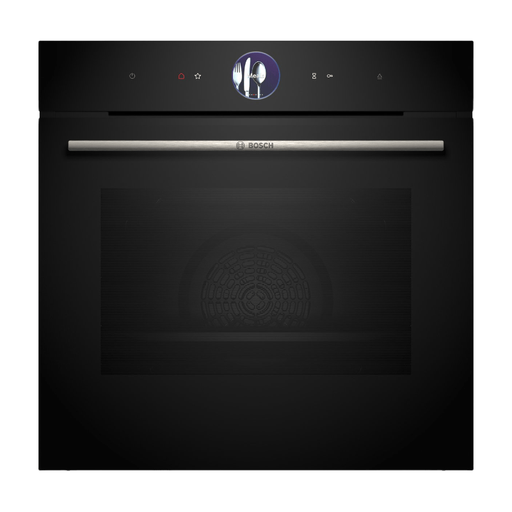 Image unavailable
A built-in steam oven to consider if you’re looking for a range of baking settings; check the exact oven functions for your recipe.
The product name lists 60 cm x 60 cm and an Air Fry function. According to the product information, installation and the housing unit must meet the stated requirements, and installation by a qualified electrician is required.
 Image unavailable
An option if you’re considering a double oven with fan cooking and several shelf positions; check the features and layout of the exact variant.
The product name lists pyrolytic cleaning, 3D fan cooking and Home Connect.
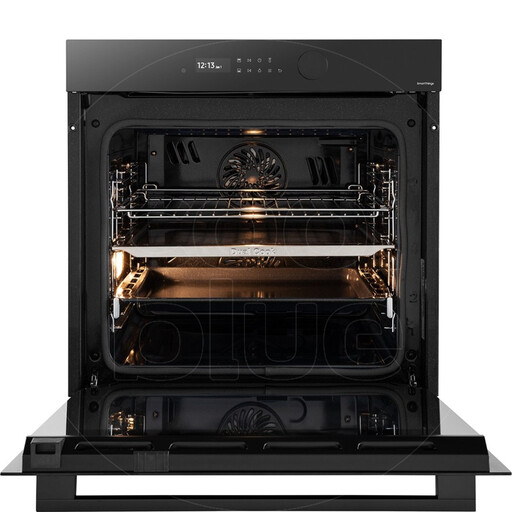 Image unavailable
An option if you want to cook two dishes at once; check that the layout suits the dishes and tins you use.
The product name lists pyrolytic cleaning and an AirFry function.
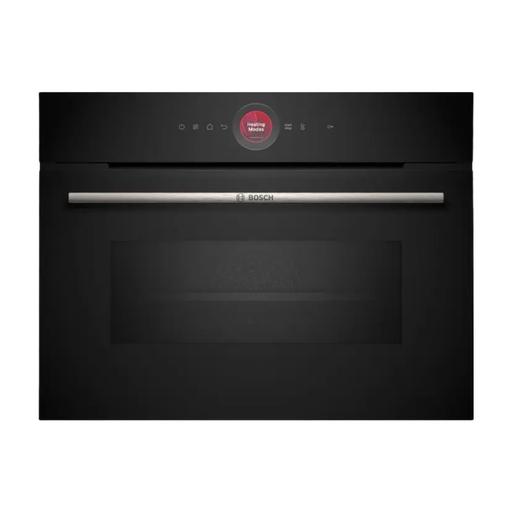 Image unavailable
A combination option if you want microwave and grill functions as well as oven cooking; check that the oven settings suit your tart tin and recipe.
The product name lists a microwave power of 900 W.
No, not necessarily. The Consumentenbond also recommends top and bottom heat as an oven setting for tarts; fan cooking may be suitable when you want to distribute the heat or cook on several shelf levels. Follow your chosen recipe and the oven manual.
Cook the mushrooms and leeks first, then drain them thoroughly before filling the tin. This is a preparation step, not a proven advantage of any particular oven model.
For a built-in oven, measure the housing unit and follow the installation diagram for the exact model. Whatever type you’re installing, check the connection and make sure heat can escape; the Fire Service specifically highlights ventilation for appliances including ovens.
No. Energielabel.nl states that combination microwaves, steam ovens, small ovens and portable ovens don’t have an oven energy label. For ovens covered by the label, compare energy use in kWh per cycle; the absence of a label for an excluded type doesn’t automatically mean that a rule has been broken.
No. Statutory rights apply alongside any seller’s or manufacturer’s warranty, according to ACM ConsuWijzer. Whether a fault must be fixed free of charge depends, among other things, on what you could reasonably expect from the product under normal use; the retailer is your point of contact.