
Vandaag of morgen in huis

Kwaliteit gegarandeerd

Welkomstaanbiedingen ontgrendelen: GRATIS bezorging | Tot 80% korting | Gratis 30 dagen JoyPlus-proefperiode
Download de app
A dark driveway, poorly lit back door or lacklustre balcony calls for a practical solution. However, comparing outdoor lighting is not always straightforward. Manufacturers often focus on lumens, solar technology or a motion sensor, while important details receive less attention.
Three common pitfalls are:
With the right specifications, you can avoid a disappointing purchase and choose outdoor lighting that suits the location, how you intend to use it and the power supply available to you.
The IP code consists of two digits. The first indicates protection against solid particles, while the second refers to water.
Placement is also important for an outdoor wall light. A lamp under a canopy is exposed to less water than a fitting mounted on a completely open façade.
Lumens indicate the amount of light produced. A compact LED outdoor light with around 300 lumens may be sufficient for a door, balcony or small patio. For a driveway or larger garden, a more powerful lamp with multiple light heads may be more practical.
Also consider:
According to the product description, the Philips Capricorn has an integrated 800-lumen LED with a colour temperature of 2700 K. The Philips Fylx, by contrast, has a GU10 fitting, allowing you to select the light source yourself. This means you can compare not only the appearance, but also the long-term flexibility.
Solar outdoor lighting is useful in places without a socket. However, performance depends on the amount of direct sunlight and keeping the panel clean. If you expect a regular charging cycle, do not place a solar lamp under a solid canopy or on a shady north-facing wall.
A battery-powered or rechargeable lamp offers similar flexibility. Check the following:
An outdoor light with a motion sensor only switches on when movement is detected according to the sensor settings. This is practical by a front door or along a garden path, but less suitable if you want constant mood lighting.
Not every outdoor project is solely about lighting. A wireless switch can be used indoors to operate a lamp or decoration remotely. Pay close attention to the stated application: some wireless sockets are intended for indoor use only and must not be exposed to moisture.
For a patio, balcony or workspace, the following features are relevant:
A power strip with USB-C is useful when you want to charge several devices at once. In addition to the number of connections, check the maximum power output. A compact cube with USB-A, USB-C and AC connections is suitable for light household equipment, lighting and chargers, but not automatically for heaters or other high-power appliances.
For the garden, a suitable garden hose connector is a simple but useful addition. Check the hose diameter: 13–15 mm and 19 mm are different sizes. A connector with its own on/off valve allows you to control the water flow directly at the connection point.
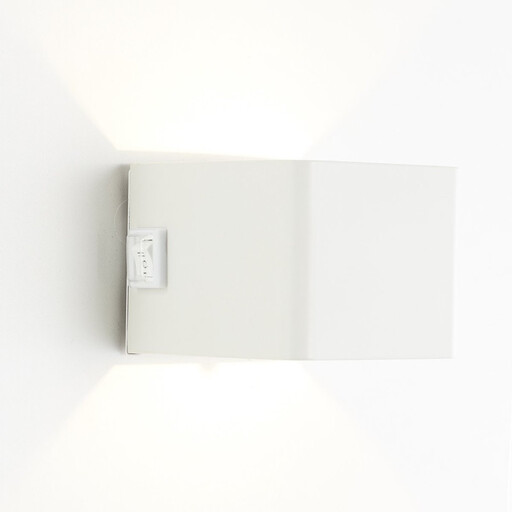
Why it suits this profile: This black, portable wall light runs on a rechargeable battery and does not need to be wired in. That makes it suitable for a balcony, patio or entrance where no power point is available.
The IP44 specification makes the limitation clear: suitable for splashing water, but not for immersion or powerful water jets.
300 lumens, warm white light at 3000 K, integrated motion sensor and magnetic mounting.
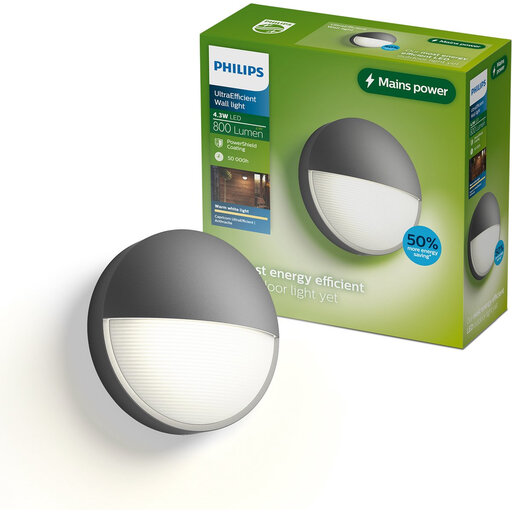
Why it suits this profile: This fixed façade light is designed for anyone looking for an integrated LED solution and who can arrange installation by a qualified electrician.
The fixed installation and non-replaceable LED are clearly stated in the product specifications. So do not choose this model if you want to change the light source yourself regularly.
Integrated LED, 800 lumens, 2700 K, aluminium housing and IP44 rating.

Why it suits this profile: The three adjustable light heads and solar power are designed for larger areas, such as a driveway, garage, garden or patio without a fixed connection.
The product specification states IP65, but also notes that the solar panel needs direct sunlight. The installation location therefore remains crucial to how it can be used.
302 LEDs, stated luminous flux of 3000 lumens, three lighting modes and motion detection.
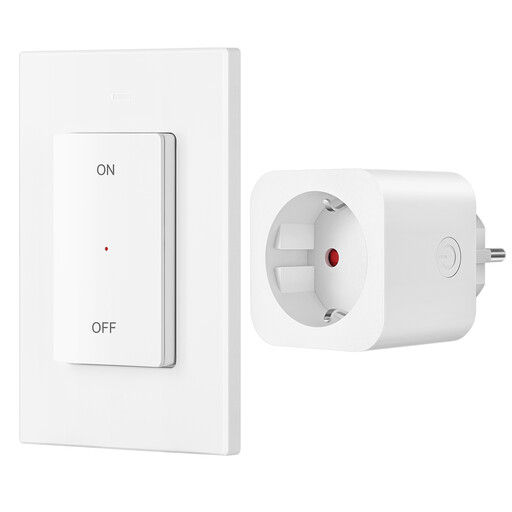
Why it suits this profile: Useful for households that want to switch a lamp, Christmas lights or another appliance remotely without Wi-Fi or fixed wiring.
The product specification states a range of up to 30 metres and a maximum load of 3680 W. This model is for indoor use, so do not place it outdoors in damp conditions.
RF control, detachable wall switch, manual button on the receiver and 16A/3680W rating.
We have put together a complete, up-to-date list of products that fully meet these strict selection criteria and the applicable European safety regulations.
IP44 is intended to protect against splashing water. According to the classification, IP65 offers a higher level of protection against dust and water jets. Neither code means that a lamp can be placed underwater. The installation location and the manufacturer's instructions remain the deciding factors.
That depends on the wattage and how long it is switched on. A 4 W lamp that is on for five hours a day uses approximately 0.02 kWh per day. A motion sensor or timer can limit how long it stays on. With solar outdoor lighting, the power comes from the battery, but charging performance depends on sunlight and maintenance.
A battery-powered or solar lamp with a mounting plate is usually easy to install. For fixed lighting connected to the mains, such as the Philips Capricorn, the product information specifies installation by a qualified electrician. Always switch off the power and follow local safety regulations.
