
Vandaag of morgen in huis

Kwaliteit gegarandeerd

Welkomstaanbiedingen ontgrendelen: GRATIS bezorging | Tot 80% korting | Gratis 30 dagen JoyPlus-proefperiode
Download de app
Good outdoor lighting should suit the location, how it will be used and the Dutch weather. A lamp for a covered balcony has different requirements from lighting along a driveway or mounted on a façade. Yet many buyers focus mainly on appearance and price. This can lead to problems: not enough light, batteries that run out quickly or a lamp that turns out not to be suitable for direct rain.
The number of lumens indicates how much light a lamp produces, but not how that light is distributed. For example, a powerful LED outdoor lamp with a narrow beam illuminates only a small part of the garden. Directional lighting is useful for a path, while patio lighting can often be softer and more evenly distributed.
Also pay attention to the colour temperature. Warm white light around 2700 to 3000 kelvin usually works well in a seating area or entrance. Cooler light around 5000 to 6500 kelvin can be practical for a driveway or security light, but it looks brighter.
Always check the IP rating. An IP44 outdoor lamp is protected against solid objects larger than 1 millimetre and splashing water. This makes IP44 suitable for many sheltered façades, balconies and patios, but not automatically for direct jets of water or immersion.
An IP65 outdoor lamp offers greater protection against dust and water jets. This is relevant for a lamp that is more exposed to rain. Also check the installation instructions: even a lamp with a suitable IP rating must be installed correctly to prevent water from entering through cables or openings.
A solar outdoor lamp or solar-powered outdoor lamp does not need a fixed connection, but its performance depends on the amount of daylight available. Do not place the panel under a canopy, close to a tall fence or beneath a tree if you expect a longer operating time. In the darker winter months, the battery may not charge as fully.
An outdoor lamp with a motion sensor uses less energy when it only switches on when movement is detected. However, check the detection range, adjustment options and whether the lamp also has a dusk sensor.
Use the IP rating as your first selection criterion:
No IP rating means that a lamp can be used underwater indefinitely. Follow the manufacturer's safety warnings and install an outdoor wall lamp on a firm surface.
For atmospheric balcony lighting or a table on the patio, a lower number of lumens may be sufficient. For path lighting, an entrance or a driveway, a directional beam is more important. Products with 170 to 400 lumens are often intended for accent or practical lighting over short distances. A model offering 800 to 1000 lumens provides more light around a façade or entrance. According to the product specifications, a powerful security light can deliver considerably more.
Integrated LEDs are compact and energy-efficient according to the stated product specifications. On some models, the light source cannot be replaced. A lamp with a GU10 or E27 fitting gives you more freedom to choose a different LED bulb or colour temperature later.
Choose between:
A freestanding outdoor lamp must stand securely and should not be placed where it could easily be knocked over. For magnetic mounting, the surface must be flat, clean and sufficiently magnetic.

Why it suits this profile: This solar outdoor lamp is easy to place in the ground and does not need a mains connection. That makes it suitable as a first set of path lights for a garden.
The product specifications state an IP44 rating and recommend positioning it where there is sufficient sunlight. This makes the limitations of solar lighting clear.
Stainless-steel housing, solar panel, NiMH battery, 4 to 6 hours’ charging time and a stated operating time of 8 to 12 hours.
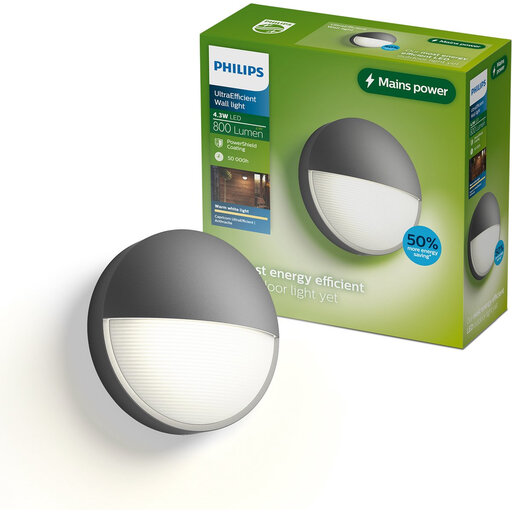
Why it suits this profile: This fixed outdoor wall lamp is designed for a façade, garden or balcony where a permanent warm light source is preferred.
The specifications state IP44, 800 lumens and professional installation. This allows you to assess in advance whether the installation location and light output are suitable.
Integrated LED, 800 lumens, 2700K warm white light and an aluminium housing according to the product description.

Why it suits this profile: This solar wall lamp is designed for a driveway, back garden or entrance where high light output and motion detection are important.
The product specifications explicitly state IP65, a PIR sensor and a detection range. However, check that the solar panel receives direct daylight.
Stated light output of 4000 lumens, IP65 protection, adjustable lamp head and a PIR detection range of up to 16 metres sideways.
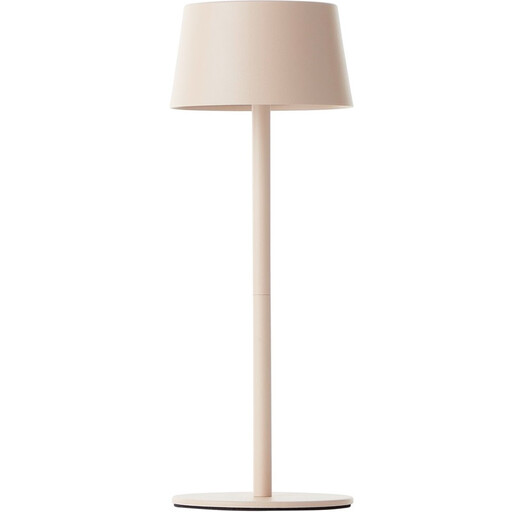
Why it suits this profile: This cordless table lamp is practical for a rented home, balcony or patio where you do not want to drill holes or run cables.
The lamp has both a solar panel and a USB connection. This provides an alternative way to charge the battery when there is little sunlight.
170 lumens, 3000K warm white light, three dimming modes, IP44 and charging via solar power or USB.
We have put together a complete, up-to-date list of products that fully meet these strict selection criteria and the applicable European safety regulations.
For a sheltered façade, balcony or patio, IP44 is often a practical choice. For a location exposed to more dust and direct water jets, IP65 may be more suitable. Always check the installation instructions and use a qualified electrician when a lamp needs to be connected to the mains.
It can be, provided the solar panel receives enough direct daylight. Shade, short winter days and dirt on the panel can affect charging performance. A model with USB charging offers additional flexibility when there are several overcast days.
Consumption depends on the wattage and the number of hours it is lit. A 4-watt lamp that is switched on for five hours a day uses approximately 20 watt-hours per day according to its nominal rating. A motion sensor or dusk sensor can limit the number of hours the lamp operates. With integrated LED lighting, also check whether the light source can be replaced; with some models, the entire lamp must be replaced when the LED reaches the end of its service life.
