
Vandaag of morgen in huis

Kwaliteit gegarandeerd

Welkomstaanbiedingen ontgrendelen: GRATIS bezorging | Tot 80% korting | Gratis 30 dagen JoyPlus-proefperiode
Download de app
A packet with words like “natural”, “protein” or “no added sugar” may look appealing. But such a claim doesn’t tell you everything about a snack. When you buy healthy snacks online, it’s wise to compare the marketing copy with the ingredients list and the nutrition table.
This helps you avoid three common buying mistakes:
Below you’ll find out which information matters and which products suit different occasions.
A fair comparison starts with the nutrition table. The values per 100g make different packets comparable. Look at:
Holie’s Crunchy Muesli Protein Nuts, for example, lists 22 to 23g of protein and 19 to 21g of fibre per 100g, depending on the nutrition table shown. That’s more verifiable than just the word “protein” on the front.
Ingredients are listed in descending order by weight. If sugar, syrup or oil appears near the top, it makes up a relatively large part of the recipe. Also note the difference between:
PCD Peanut Butter 350g lists 100% peanuts, with no added sugar or salt. According to the product information, it contains 598 kcal, 50g of fat and 26g of protein per 100g. So even a product with a simple ingredients list is best enjoyed as a mindful portion.
For anyone with an allergy, the product name alone is never enough. Always check the bold allergens and the “may contain” warning. This applies to:
Also pay attention to the preparation method. HONGWANJIA Wheat Gluten 150g, for example, isn’t a snack to eat straight from the packet: according to the product information, it needs to be soaked and cooked. What’s more, the name “gluten-free” on the product Roasted Gluten-Free 150g isn’t straightforward: the listed ingredients include water and gluten. So always check the physical label, and if you have a gluten allergy, don’t take any risks.
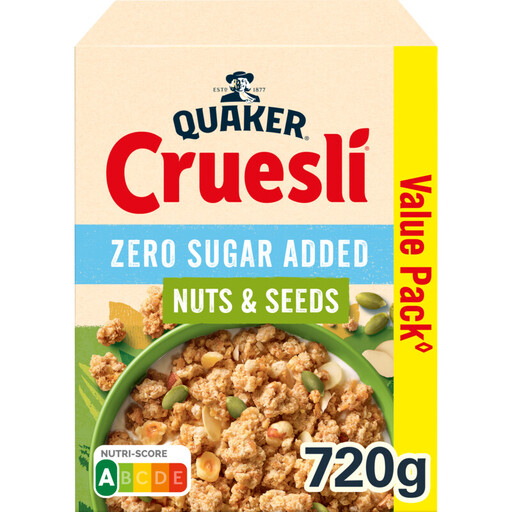
Why this fits the profile: A large pack for breakfast with yoghurt, milk or fruit. The product information states no added sugars and no sweeteners.
The nutrition table makes the claim verifiable: 3.8g of sugars and 23g of fibre per 100g. It does contain gluten and nuts.
720g, 23g of fibre per 100g, and nuts and seeds in the ingredients list.
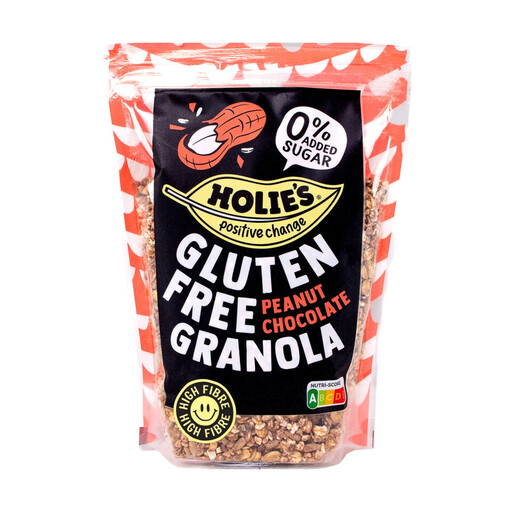
Why this fits the profile: Ideal for anyone looking for a gluten-free granola with peanut butter and cocoa, and who checks the ingredients carefully.
The product information states 0% added sugar, but also 4g of sugars per 100g. This keeps the difference between the two claims clear.
44% gluten-free wholegrain oats, 14g of fibre and 15g of protein per 100g. Contains peanuts and may contain other nuts.
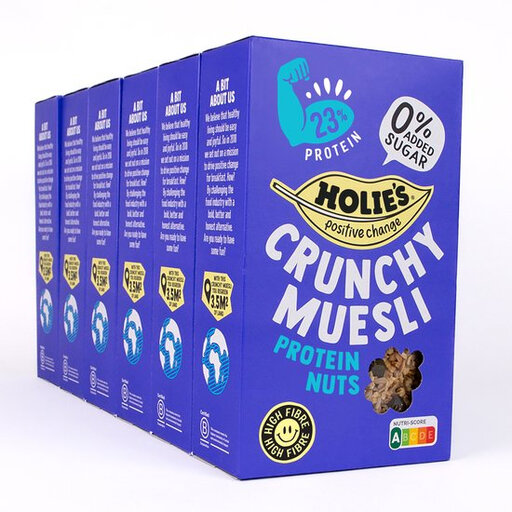
Why this fits the profile: A bulk pack for athletes and households that regularly enjoy a high-protein snack or breakfast option.
It’s not just the name that points to protein: the product information lists 22 to 23g of protein per 100g. The product does contain wheat and gluten.
22 to 23g of protein, 19 to 21g of fibre and 0.02g of salt per 100g according to the product information.
We’ve put together a full, up-to-date list of products that fully meet these strict selection criteria and comply with current European safety regulations.
If you’re not after sweet muesli but prefer savoury snacks, Duyvis Peanuts Japanese Teriyaki contains 28g of protein and 7.2g of fibre per 100g according to the product information. That comes with 1.4g of salt. A serving is listed as 30g, which helps you measure the amount more easily.
For vegetarian snacks and vegan snacks, products with soya or wheat are interesting, but do check the exact composition. Hao Ba Shi Vegetarian Beef Steak Spicy Flavour lists soya, wheat and sesame on the label and provides 20g of protein per 100g. Yuxiniang Vegetarian Chicken 80G contains 15g of protein per 100g, but also 1,500mg of sodium per 100g. These Asian snacks are therefore best suited to anyone looking for savoury, spicy flavours and who takes the salt content into account when choosing.
Choose a product with a clear serving size and packaging that’s easy to take with you. An organic nut bar, unsalted nut mix or small vegetarian snack can be practical. Always check the sugars in bars, because agave syrup and dried fruit count towards the nutrition table.
No. “No added sugar” only tells you about added sugars or sweeteners. Granola can still be high in energy, fat or naturally occurring sugars. So compare the values for sugar, fibre, protein and fat per 100g.
Nuts, sugar-free peanut butter, muesli and soya-based snacks can all fit, depending on your diet. With vegetarian products, always check whether milk, egg, fish or other animal ingredients have been used. For vegan snacks, also look at the full ingredients list and allergen information on the packaging.
