
Vandaag of morgen in huis

Kwaliteit gegarandeerd

Welkomstaanbiedingen ontgrendelen: GRATIS bezorging | Tot 80% korting | Gratis 30 dagen JoyPlus-proefperiode
Download de app
Dog toys should suit the way your dog plays. A puppy has different needs from a powerful chewer, and a toy for indoor use does not need the same features as a toy for playing fetch in water. Yet many owners focus mainly on colour, shape or an appealing product claim.
This can lead to three common poor purchases:
Always use dog toys under supervision. Check them before and after use and replace them if you notice tears, loose threads, exposed squeakers or broken-off parts.
Check the measurements in centimetres and do not rely solely on labels such as “for small dogs” or “for all breeds”. Your dog’s jaw size, the way it carries toys and its chewing behaviour are just as important.
Bear in mind:
For example, a football-shaped ball measuring around 15 cm may be suitable for small and medium-sized dogs according to the product information, but not necessarily for every dog. Take your pet’s individual behaviour into account.
TPR, natural rubber and nylon are commonly used materials for chewing. Each material has different characteristics:
You should interpret a claim such as “dental care dog toy” in practical terms. According to the product descriptions of some models, a ridged surface may come into contact with the teeth and gums while the dog chews. This is not a substitute for dental care or a check-up by a vet.
Think about what you want to use the toy for:
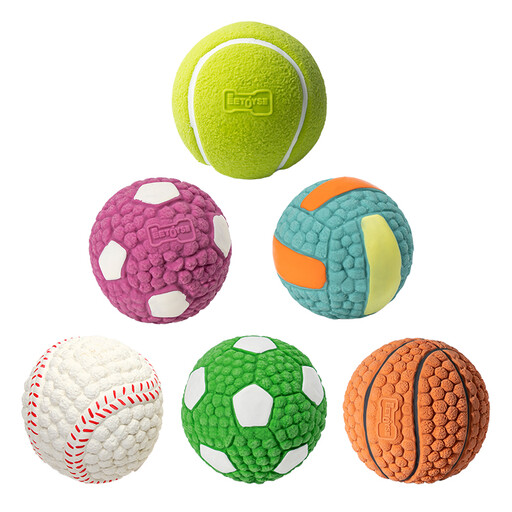
Why it suits this profile: The set contains six soft latex balls for varied indoor play, fetching and simple training.
The sizes are stated clearly: one ball has a diameter of approximately 7.5 cm and the other balls are approximately 6 cm. This makes it easier to judge in advance whether they are suitable for your dog.
Six pieces, washable with water and fitted with a squeaker. According to the product description, the surface has a texture designed for chewing play.

Why it suits this profile: This interactive rubber toy is designed for dogs weighing up to approximately 15 kg and can be filled with kibble or xylitol-free peanut butter.
The recommended target group and maximum weight are described more precisely than general claims for all breeds.
Natural rubber, unpredictable rolling and bouncing and the option to hide food inside. According to the product information, it can be cleaned with warm soapy water or on the top rack of the dishwasher.
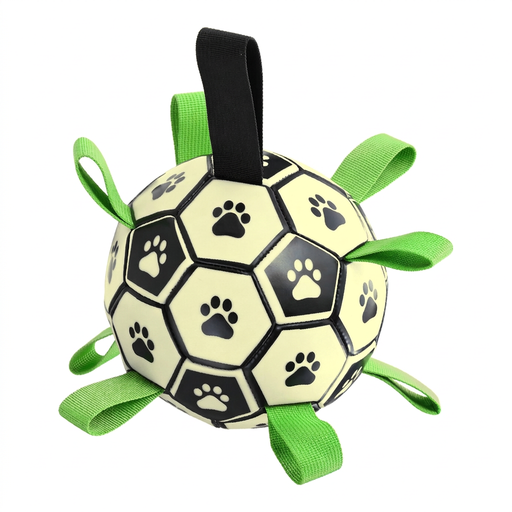
Why it suits this profile: For owners who want to throw, tug and play fetch outdoors, including on grass or in shallow water.
The product information states both the diameter of approximately 15 cm and the restriction to small and medium-sized dogs. This prevents the size from being interpreted too broadly.
Nylon handle for throwing and tugging, a floating design according to the product description and a glow-in-the-dark effect for use in low light.
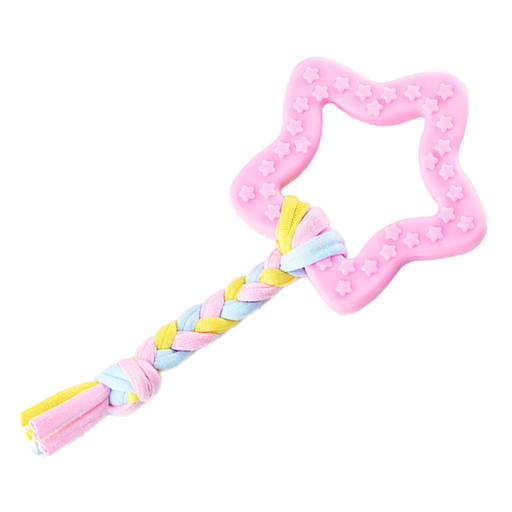
Why it suits this profile: According to the product information, its dimensions of 16.5 × 8 cm and combination of TPR and fabric are designed for puppies and small dogs.
The warning excludes aggressive chewers and medium to large breeds. This makes it clearer when you need a different type of dog toy.
Suitable for chewing and tugging, with a flexible TPR section and a design that is easy to grip.
We have put together a complete, up-to-date list of products that fully meet these strict selection criteria and the applicable European safety regulations.
A toy will generally last longer when you alternate how it is used. Do not leave everything out at once, and remove toys as soon as your dog starts chewing them without supervision.
Practical routine:
Supervision remains essential with dog toys for powerful chewers. No material is guaranteed to withstand every dog.
Choose a size that the puppy can grip securely and avoid small detachable parts. TPR or fabric toys may be suitable for gentle chewing and calm tugging. Check the toy frequently, as puppies quickly become stronger chewers.
This depends on the dog’s play style and the material. Replace the toy immediately if you notice tears, loose seams, broken-off parts or a visible squeaker. A toy that still looks tidy but is gradually becoming smaller through chewing also needs replacing.
A squeaker can attract a dog’s attention, but supervision is essential. Stop using the toy as soon as the squeaker becomes accessible or your dog tries to eat parts of it. For dogs that quickly chew through squeakers, a rubber ball without a squeaker may be more practical.
