
Vandaag of morgen in huis

Kwaliteit gegarandeerd

Welkomstaanbiedingen ontgrendelen: GRATIS bezorging | Tot 80% korting | Gratis 30 dagen JoyPlus-proefperiode
Download de app
Buying dark chocolate seems simple: pick a bar, check the cocoa percentage and add it to your basket. Yet chocolate bars vary greatly in flavour, composition, allergens and when you might enjoy them. A bar with 70% cocoa, for example, isn't automatically comparable to a 70% variant with nuts, caramel or extra filling.
As a Joybuy Product Recommendation Officer, I filter product information by practical points. This helps you see more quickly which dark chocolate suits your taste, and stops you from relying solely on packaging or marketing copy.
A higher percentage usually means less sugar in the chocolate, but it doesn't tell you everything about the flavour. Dark chocolate 85% or dark chocolate 90% can be noticeably more bitter and intense than dark chocolate 70%. The ingredients used, the texture and the amount of cocoa butter also affect the experience.
Always check the ingredients list and nutritional values per 100 grams. For example, Lindt Excellence 90% lists 7 grams of sugar per 100 grams, while Lindt Excellence 70% contains 29 grams of sugar per 100 grams. That's a clear difference within the same brand.
Not every bar labelled "dark chocolate" contains 70% cocoa or more. According to the product information, Tony's Chocolonely Pure Almond Sea Salt contains a minimum of 51% cocoa solids. The bar combines dark chocolate with almonds and sea salt, which makes the flavour less one-dimensional than a plain dark chocolate bar.
So read the exact percentage on the packaging. Words like "intense", "rich" or "premium chocolate" are no substitute for verifiable product data.
Chocolate with nuts, orange, caramel or sea salt can be appealing, but additions change the nutritional values and allergen information. In particular, check for milk, soya, nuts, almonds, sesame and gluten. Product information can also change; if you have an allergy, always use the current packaging as your guide.
Use the percentage as a first filter:
The cocoa percentage doesn't tell you how much you should ideally eat. Dark chocolate naturally contains caffeine and theobromine. If you're sensitive to stimulants, it's wise to limit your consumption. When in doubt, follow the information on the packaging.
Ingredients are listed in descending order by weight. If sugar appears early in the list, it forms a relatively large part of the product. With a simple bar, you'll often see cocoa mass, sugar and cocoa butter. With filled or composite snacks, ingredients like dates, almonds, milk powder, syrups or vegetable fats are added.
A short ingredients list makes comparing easier, but it doesn't automatically mean the flavour will suit you. Also look at the desired texture: a thin tablet melts differently to a bar with nuts or a soft filling.
A 100-gram bar is handy for breaking into squares. Larger 180-gram bars are suitable for sharing or for several snacking occasions. Store chocolate in a cool, dry place, out of direct sunlight and away from heat and moisture. Seal the packaging well after opening. Check the best-before date upon receipt and do not use damaged packaging.

Why this suits the profile: The percentage is clearly stated and the 100-gram bar offers a straightforward introduction to dark chocolate.
The cocoa percentage and nutritional values are clearly stated, so you don't have to rely solely on terms like "intense".
70% cocoa, 100 grams and an ingredients list of cocoa mass, sugar, cocoa butter and vanilla.

Why this suits the profile: This bar is aimed at a powerful cocoa flavour and, according to the product information, contains 90% cocoa.
The high percentage makes it clear that this is not a sweet milk or composite bar. The ingredients list remains compact.
90% cocoa, 7 grams of sugar per 100 grams and a 100-gram format.
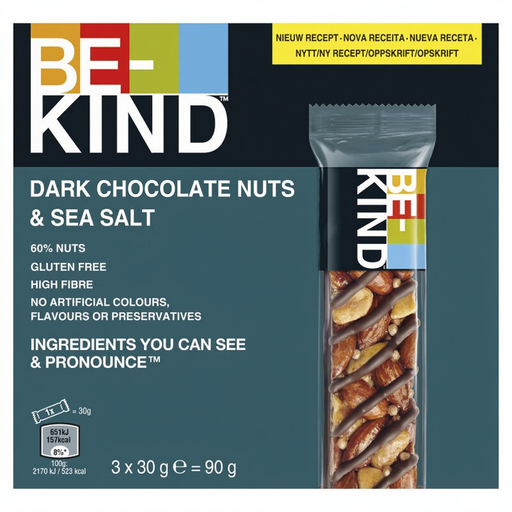
Why this suits the profile: This multipack of three nut bars combines dark chocolate, almonds, peanuts and sea salt for on the go.
The product description clearly states that nuts make up 60% and that the bar contains 16% dark chocolate.
Three individual bars, almonds and peanuts as main ingredients and 17 grams of protein per 100 grams according to the label.
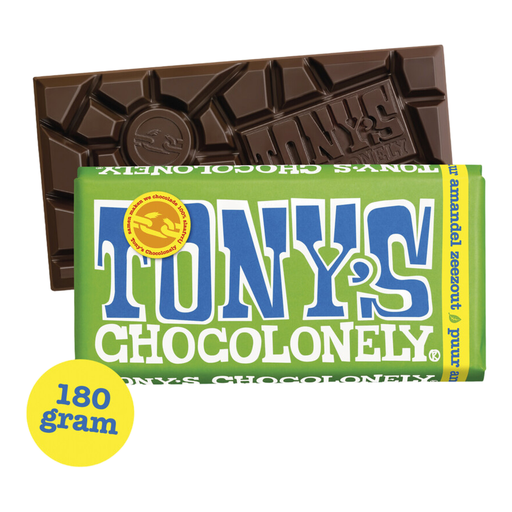
Why this suits the profile: The combination of almond and sea salt suits those who select dark chocolate primarily by flavour and texture.
The label states a minimum of 51% cocoa, 10% almond and 0.5% sea salt. This makes the flavour profile clear in advance.
Large 180-gram bar, crunchy almond pieces and sea salt as clearly named flavour components.
We've put together a full, up-to-date list of products that fully meet these strict selection criteria and current European safety regulations.
70% dark chocolate is often a practical starting point because the cocoa flavour is clearly present without the intensity of 85% or 90%. Do compare the sugar content and the ingredients. Two bars with the same percentage can taste different due to recipe and additions.
The terms are often used interchangeably in shops. The relevant difference is found on the label: the percentage of cocoa solids, the amount of sugar and the presence of milk solids. Also check whether the product is a standard tablet, chocolate with nuts or a composite chocolate snack.
Store the bar sealed in a cool, dry place, out of direct sunlight and away from heat. The fridge is usually not necessary and can affect the texture due to moisture and odour differences. Always refer to the best-before information on the packaging.
