
Vandaag of morgen in huis

Kwaliteit gegarandeerd

Welkomstaanbiedingen ontgrendelen: GRATIS bezorging | Tot 80% korting | Gratis 30 dagen JoyPlus-proefperiode
Download de app
Selecting a new coffee machine can be overwhelming. The market offers a vast array, from quick capsule machines to advanced bean-to-cup models. How do you know which appliance fits your taste, budget, and lifestyle?
As a Joybuy Product Recommendation Officer, I'm here to guide you. In this guide, we'll cut through the marketing jargon and focus on what truly matters: the specifications and features that will help you make the right choice. We'll review several popular models for 2026, enabling you to make an informed decision.
Before you start comparing models, it's helpful to outline your own priorities. These three considerations will help you do just that.
Each type of coffee machine has its own distinct character.
bean-to-cup machine. This type offers the convenience of one-touch coffee-making, but with freshly ground beans. Ideal for those who love the taste of fresh coffee without the hassle.semi-automatic machine, you have complete control over the brewing process, from the grind size to the extraction time. It takes some practice, but the result is an espresso perfectly tailored to your taste.Nespresso machine is a well-known example of a coffee capsule machine. These devices are renowned for their speed, ease of use, and consistent results. Maintenance is minimal, and you can choose from a wide range of flavours.The purchase price is one thing, but long-term costs are just as important.
Two technical details you'll often encounter are pump pressure and milk frothers.
semi-automatic machine often has a steam wand for manually frothing milk. A fully automatic espresso machine may have a completely automated system that draws milk directly from a carton or reservoir.Based on functionality and use cases, we have compiled a few recommendations for you.
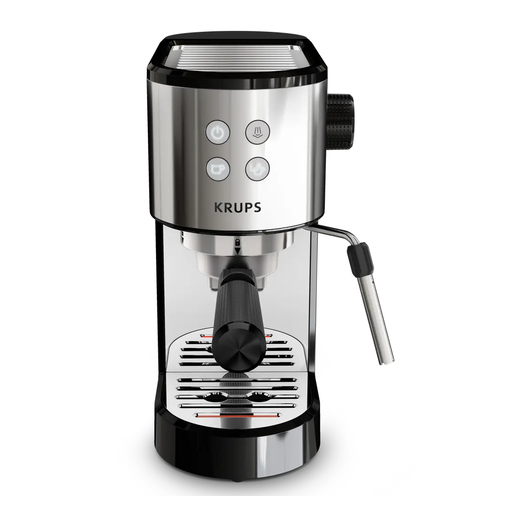
Why it stands out The Krups Virtuoso is a compact semi-automatic machine that strikes a good balance between manual control and ease of use. It's an approachable model for those who want to explore the world of espresso brewing without immediately investing in a professional-grade appliance.
Advantages
Who is this for? For the coffee enthusiast who wants more influence over the flavour of their espresso and enjoys having hands-on control over the brewing process.
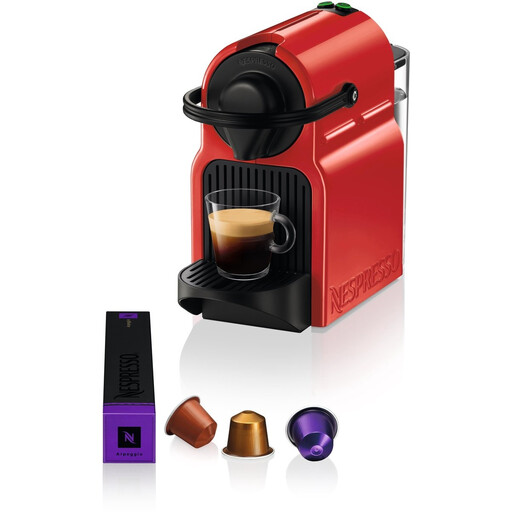
Why it stands out This Nespresso machine from Krups is designed for maximum simplicity and speed. With its ultra-compact size and one-touch operation, you can brew an espresso or lungo in just 25 seconds.
Advantages
Who is this for? Perfect for anyone looking for a quick, consistent cup of coffee without any fuss. Ideal for small households, student dorms, or as a second machine in the office.
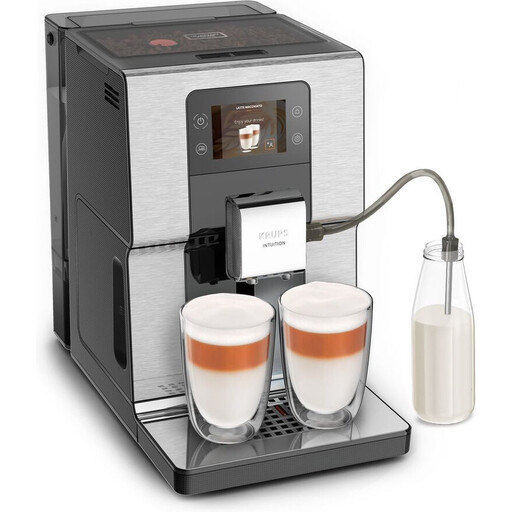
Why it stands out This fully automatic espresso machine from Krups combines the convenience of a bean-to-cup machine with extensive personalisation. According to the manufacturer, this is one of their quietest models. The intuitive colour touchscreen easily guides you through the 17 pre-programmed beverages.
Advantages
Who is this for? For households where various coffee specialities are enjoyed and the convenience of a bean-to-cup machine is valued. Suitable for those who like to personalise their drinks.
Do you already have a favourite coffee maker but miss the ability to froth milk for a cappuccino or latte macchiato? A separate milk frother can be a practical addition. They are simple to use and easy to clean.
View our range of milk frothers here.
A semi-automatic machine gives you manual control over the brewing process. You grind the beans yourself, tamp the coffee, and start and stop the extraction. A fully automatic espresso machine does all of this automatically at the touch of a button: it grinds the beans, brews the coffee, and ejects the used coffee grounds.
For a quality espresso, a pressure of about 9 bar on the coffee itself is the standard. Many manufacturers advertise a pump pressure of 15 bar or 19 bar. This is the maximum pressure the pump can generate, which helps maintain a stable 9 bar during the brewing process. A machine with sufficient pump pressure is therefore a good indicator.
Generally, yes. The purchase price of a bean-to-cup machine is often higher than that of a coffee capsule machine. However, the price per cup of coffee is significantly lower because coffee beans are cheaper in comparison to coffee capsules. In the long run, a bean-to-cup machine can be more economical, depending on how much coffee you drink.
