
Vandaag of morgen in huis

Kwaliteit gegarandeerd

Welkomstaanbiedingen ontgrendelen: GRATIS bezorging | Tot 80% korting | Gratis 30 dagen JoyPlus-proefperiode
Download de app
Chinese pickled mustard is a handy side dish for rice, noodles, congee and stir-fries. The vegetable is often sold as zha cai, pickled mustard stem or pickled mustard tuber. Thanks to its crunchy texture and salty, savoury flavour, it quickly adds extra character to a simple meal.
However, not all packs are the same. The differences lie in salt content, seasoning, size and how it’s used. The points below will help you avoid buying a large pack that doesn’t match your eating habits.
Small sachets of 65 to 80 grams are handy for one or a few meals. A pack of 280, 320, 350 or 800 grams can be better value per portion, but once opened it needs careful storage. So check not just the price, but also the price per 100 grams, the number of portions and the storage instructions.
The flavour can be mild because little chilli or spice has been added, while the salt content is still significant. In the nutritional information provided, the salt content ranges from 3.4 grams to 11 grams per 100 grams. Always compare the nutrition table. If you’re looking for a less salty taste, you can briefly rinse the vegetable and let it drain.
Some products are meant to be eaten straight away. Other varieties contain oil, chilli, garlic or extra flavourings and are better suited to a stir-fry. Mei gan cai, such as the variety from Fan Pi Xiong Di, is dried and pickled mustard greens used mainly as a cooking ingredient. That’s quite different from a small sachet of zha cai that you serve directly with congee.
Look at the ingredients list and nutritional values per 100 grams. Pay attention to:
Claims about taste or preparation method are based on the product description and label. Always check the actual packaging when you buy.
If you’re looking for a crunchy pickled vegetable for congee or rice, you can choose strips, slices or chunks. Strips mix easily through noodles; chunks and pieces give more bite as a loose side dish. The product descriptions of several Wujiang varieties mention a crispy texture, but the actual experience can vary depending on the recipe and personal preference.
Individual sachets are convenient for lunch, on the go, or for a household that doesn’t eat pickled vegetables every day. Larger packs make more sense for regular use. Store unopened products according to the label in a cool, dry place. Once opened, many varieties need to be kept in the fridge and consumed soon after. Always use the best-before information on the pack as a guide.
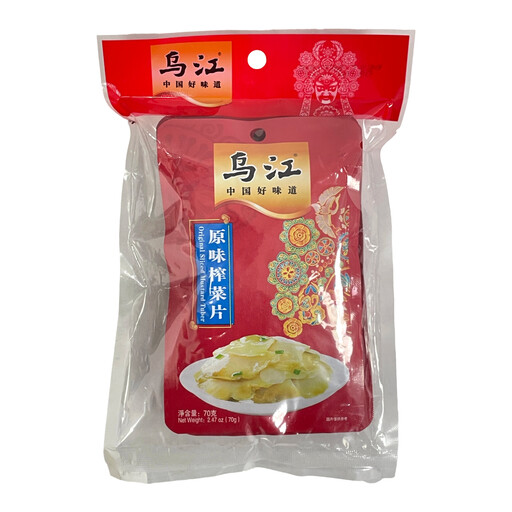
Why this fits the profile: Four separate 70-gram portions are practical for trying zha cai for the first time, for lunches or for meals with rice and noodles.
The portions limit waste after opening. The label states 5.0 grams of salt per 100 grams, so you can compare it with other varieties.
280 grams total, individually wrapped and ready to serve as a Chinese side dish.
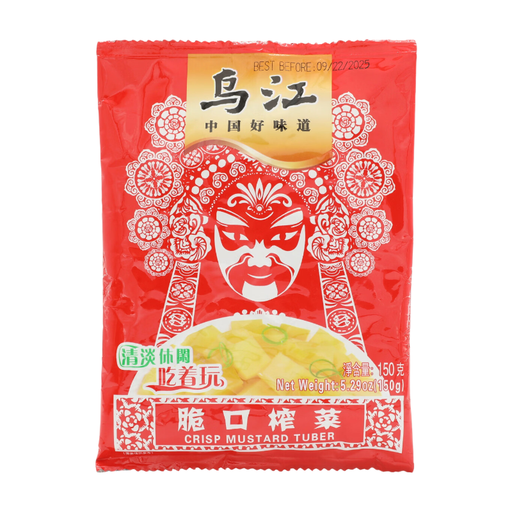
Why this fits the profile: This variety focuses on a crispy texture and a balanced salty flavour, according to the product description.
The nutritional information states 5.1 grams of salt per 100 grams. Do check the net weight on the pack: the information provided mentions both 150 grams per pack and 120 grams net.
Crispy mustard stems, ready to eat and seasoned with chilli, star anise, ginger and fennel, among others.
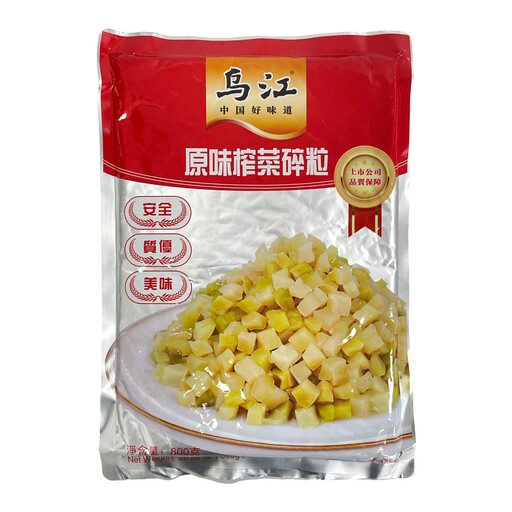
Why this fits the profile: The large size suits households that often use Chinese pickled vegetables in rice, noodles, congee or as a filling.
The portion size makes the price per 100 grams clear, but it only avoids waste if you use the product regularly. The salt content is 5.4 grams per 100 grams.
800 grams of crunchy chunks, 94% pickled mustard tuber according to the product information, and suitable for serving straight away or cooking.
We’ve put together a full, up-to-date list of products that fully meet these strict selection criteria and comply with current European safety regulations.
Be careful with extra soy sauce or salt: pickled mustard already has a salty taste on its own. Rinsing can reduce that flavour, but it won’t necessarily remove all the salt.
Chinese pickled mustard is a preserved vegetable made from mustard tuber or mustard stem. Zha cai is often associated with Sichuan- and Chongqing-style pickled vegetables. Depending on the product, the flavour can be savoury, sour, sweet-and-sour or spicy.
Usually not: many varieties are ready to eat and can be enjoyed straight from the pack. Rinsing is useful, though, if you want a less salty taste. Make sure to drain the vegetable well before adding it to rice, noodles or a stir-fry.
This varies by product and packaging. Follow the instructions on the label. In many cases, an opened pack must be kept in the fridge and consumed as soon as possible. Individual sachets are therefore handy if you use small portions per meal.
