
Vandaag of morgen in huis

Kwaliteit gegarandeerd

Welkomstaanbiedingen ontgrendelen: GRATIS bezorging | Tot 80% korting | Gratis 30 dagen JoyPlus-proefperiode
Download de app
A clicking sound instead of a roaring engine on a cold morning. It's every driver's nightmare. A car jump starter seems like the perfect solution: a compact device that instantly brings your car back to life. But the market is flooded with models that promise the world. Many buyers fall for marketing traps and end up with a device that fails when it really matters.
As a Joybuy Product Recommendation Officer, I see where things go wrong every day. Before you invest in a car jump starter, it's crucial to recognise the common pitfalls.
jump starter with an air compressor, power bank, and flashlight sounds ideal. Unfortunately, on budget models, these extra features are often low-quality. A compressor that can't inflate a car tire to the right pressure or a power bank that barely charges your phone is useless.battery booster is built for cold climates. Cheaper lithium batteries lose significant power at low temperatures—precisely when your car battery is most likely to fail.To avoid a bad buy, focus on the specifications that truly matter. Don't get distracted by marketing terms; look at the facts.
The most important metric isn't peak power, but starting power (also called starting current or 'cranking amps'). This is the sustained current the jump starter can deliver to turn over a heavy-duty engine. A diesel engine requires significantly more starting power than a gasoline engine of a similar size.
Always check the manufacturer's recommendation for engine displacement (in litres) and fuel type (gasoline/diesel). A car battery starter for a 2.0L gasoline engine is not suitable for a 3.0L diesel van. Starting a dead battery on a heavy-duty engine with an underpowered booster can damage the device.
A multi-function device is only useful if every feature works well.
A modern, portable jump starter uses a lithium-ion (Li-ion) or lithium-polymer (LiPo) battery. Pay attention to the operating temperature range. A good model will function reliably between -20°C and +60°C.
Safety is non-negotiable. Choose a model with smart jumper cables that offer protection against short-circuits, reverse polarity, overheating, and overcharging. A clear indicator (often an LED light or an audible alert) that shows whether the clamps are connected correctly is essential.
To help you choose, we've matched several models to specific user profiles. These recommendations are based on objective specifications that align with real-world needs.
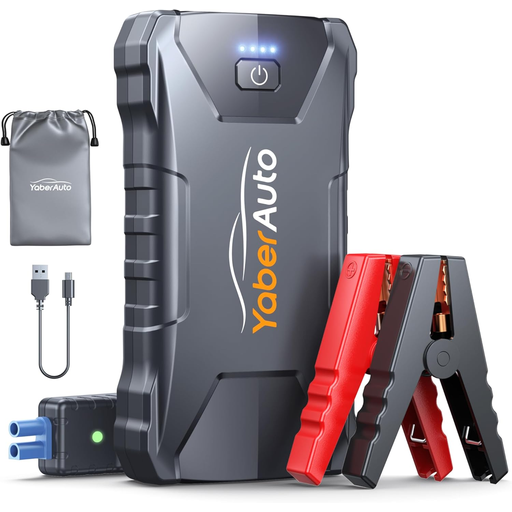
Why This Fits Their Persona: Perfect for drivers of standard gasoline or smaller diesel cars who need a reliable, compact, and affordable solution. It's small enough for the glove compartment and provides ample power for the most common vehicles.
This model focuses on the core function: jump-starting. It has no unnecessary extras that drive up the price. The power rating (2000A peak for up to 7.0L gasoline) is realistic and more than sufficient for its target audience.
Extremely compact and lightweight (0.34 kg): fits anywhere. Built-in safety features: with an alarm for incorrect connections.
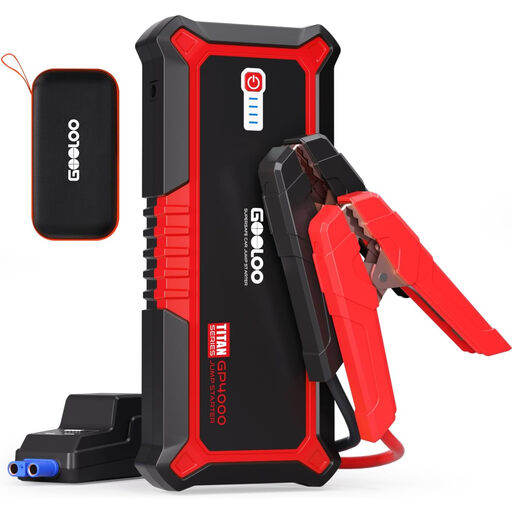
Why This Fits Their Persona: For those who drive an RV, large SUV, van, or a heavy-duty diesel vehicle. This user needs absolute certainty that the starter is powerful enough for a demanding engine, even in cold weather.
Here, the 4000A peak isn't just empty marketing; it's backed by the specification that it can handle diesel engines up to 10.0L. The focus is on pure starting power, with a "BOOST" button for completely dead batteries.
Power for All Engines: Effectively starts all gasoline engines and large diesel engines. Robust Design: Features a sturdy housing and metal clamps for long-term use.
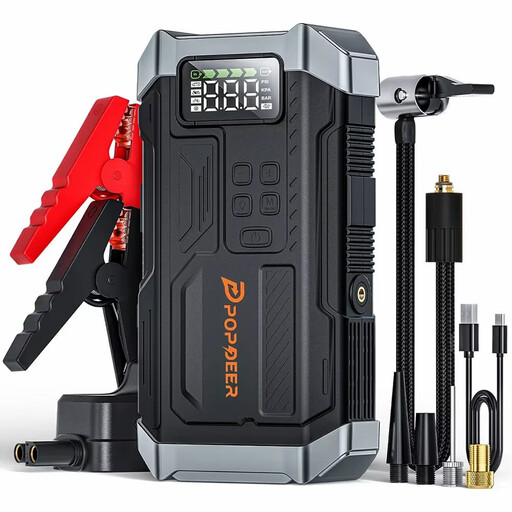
Why This Fits Their Persona: Ideal for campers, boat owners, or anyone who wants a complete emergency kit in a single device. This user wants to not only jump-start a car but also inflate tires, charge devices, and have a light source in the dark.
This is an "all-in-one" that actually delivers. The 150 PSI compressor is powerful enough for car tires, and the 5000A jump starter can handle even large engines (10L gasoline/8L diesel). The features are not gimmicks.
Functional 4-in-1: A powerful `jumpstarter` and a proper air compressor. Smart Compressor: With preset modes and an auto-stop feature.
We have compiled a complete, up-to-date list of products that fully meet these strict selection criteria and safety regulations.
Most manufacturers recommend charging a portable jump starter every 3 to 6 months, even if you don't use it. Lithium batteries have a low self-discharge rate, but they do lose some charge over time. Regular charging ensures it's ready when you need it and extends the battery's lifespan.
Yes, you can. Most jump starters are designed to operate within a wide temperature range, such as -20°C to +60°C (-4°F to 140°F). However, it's true that extreme cold can temporarily reduce the battery's performance. It's best to store it in a place where temperatures aren't too extreme, like the glove compartment, rather than in direct sunlight or the coldest part of the trunk.
Not necessarily. An extremely high peak amperage is unnecessary for a small city car and often makes the product needlessly expensive. It's more important that the starting power and recommended engine compatibility match your vehicle. Choose a model that fits your car instead of just fixating on the biggest number on the box.
