
Vandaag of morgen in huis

Kwaliteit gegarandeerd

Welkomstaanbiedingen ontgrendelen: GRATIS bezorging | Tot 80% korting | Gratis 30 dagen JoyPlus-proefperiode
Download de app
A smoothie blender may seem easy to choose: check the wattage, compare the price and add the appliance to your basket. In practice, differences in capacity, cleaning and portability can determine whether you use it every day or leave it untouched after a few weeks.
For UK households, three pitfalls are particularly relevant:
For soft ingredients such as banana, yoghurt and ripe fruit, a compact smoothie maker with lower power may be sufficient. If you regularly use frozen fruit, nuts, ice cubes or fibrous vegetables, a powerful blender with a suitable blade and enough liquid is a better choice.
Pay attention to the difference between watts, rotational speed and marketing claims. A 900-watt motor and a stated speed of 22,000 revolutions per minute are verifiable product specifications. Claims about blending a certain percentage more smoothly or efficiently are brand claims. According to the brand’s own research or product information, such results may depend on the ingredients and preparation method.
A blender with an ice-crushing function is useful for cold drinks, but always check the manual. Not every model is suitable for large quantities of ice or for blending continuously for long periods.
Choose the capacity based on your daily portion:
Also check the dimensions of the motor base and jug. A smoothie blender that stays on the worktop must fit beneath your kitchen cupboards. A portable blender should fit in your bag or cycle pannier without becoming impractical to carry.
Dishwasher-safe parts save time. However, check exactly which parts this applies to: the cup, jug and lid can often go in the dishwasher, but the motor base cannot, and sometimes the blade cannot either.
A BPA-free cup is a verifiable material specification. Tritan is used for drinking cups on several models. Also look for a lid that closes securely, a non-slip base and a locking mechanism that prevents the appliance from starting when the cup has not been positioned correctly.
Do not use a smoothie blender for hot liquids unless the manufacturer explicitly allows it. Steam and pressure can force the lid off. Unplug the appliance before removing the blade or loosening ingredients that have become stuck.
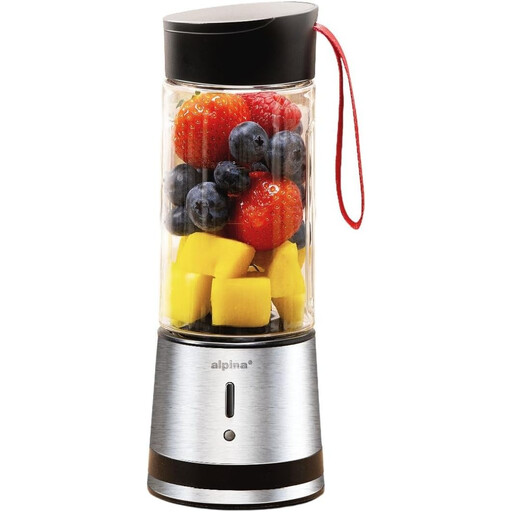
Why it suits this profile: This compact model is designed for simple single-person preparations and takes up very little space, measuring 8 × 8 × 23 cm.
The capacity and power are clearly specified: 300 ml and 125 watts. This means you know in advance that it is a model for small, simple portions rather than a family blender.
Lightweight at 500 grams, compact in size and fitted with a 1500 mAh battery according to the product information.
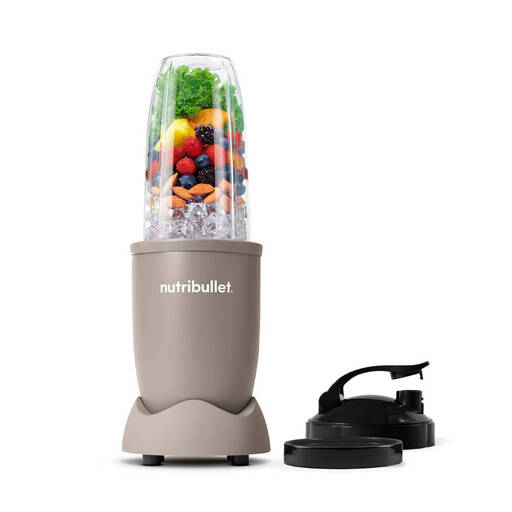
Why it suits this profile: For everyday use, the 900 watts, 700 ml cup and included accessories are practical for smoothies, sauces, pesto and dips.
The product specifications state 900 watts, 22,000 revolutions per minute and a BPA-free Tritan cup. According to the product information, the parts are dishwasher-safe.
Pulse control, a drinking cup and a 2-year warranty period according to the product details.
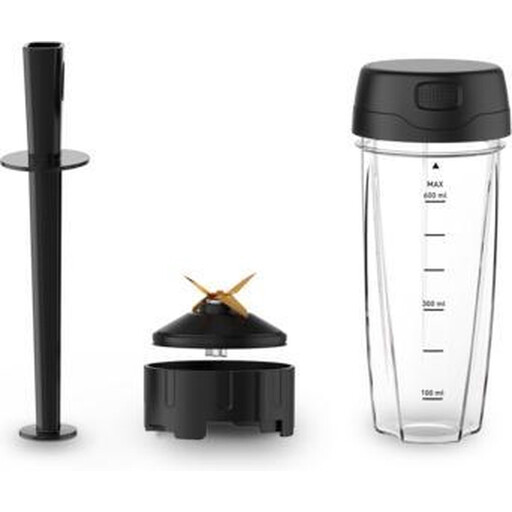
Why it suits this profile: The large 1.75-litre jug is suitable for families and several preparations in succession, such as smoothies, milkshakes, hummus and dips.
The capacity, power and programmes are clearly stated: 1.75 litres, 1600 watts, five automatic programmes and manual speed control.
35,000 revolutions per minute according to the product information, a stirring accessory and a 600 ml Tritan travel cup.

Why it suits this profile: This cordless blender is designed for use on the go, for example in the office, at the gym or while travelling.
It is genuinely a rechargeable personal blender with a stated capacity of 0.48 litres. The product information states that it charges via USB-C and can make more than 15 preparations after approximately one hour of charging.
17,000 revolutions per minute, a sealable drinking lid and removable parts that can be rinsed by hand.
We have put together a complete, up-to-date list of products that fully meet these strict selection criteria and the applicable European safety regulations.
It depends on the ingredients. For soft fruit, yoghurt and liquid, 300 watts may be sufficient. For frozen fruit, nuts and ice, a model with more power and a suitable blade design is more practical. Do not overfill the cup and add liquid first.
Its lifespan depends on usage, cleaning and workload. Do not run the motor for longer than stated in the manual, and do not use a damaged cup or blade. A 2-year warranty period provides a legal or additional point of contact, but normal wear and tear and misuse may be treated differently.
Power consumption is mainly determined by the wattage and the short operating time. A 900-watt model running for one minute theoretically uses approximately 0.015 kWh. With a cordless blender, you also need to consider charging the battery. In practice, the biggest costs are often accessories, replacement blades and parts, so check in advance what is included.
