
Vandaag of morgen in huis

Kwaliteit gegarandeerd

Welkomstaanbiedingen ontgrendelen: GRATIS bezorging | Tot 80% korting | Gratis 30 dagen JoyPlus-proefperiode
Download de app
Buying a LEGO building set sounds simple, until you have to choose from dozens of themes, age ranges and sizes. A colourful box reveals little about the actual play time, difficulty level or the space the model will take up. As a result, parents, grandparents and adult fans sometimes pay for a set that is not right for the recipient.
As a Joybuy Product Recommendation Officer, I filter the most important product information in a straightforward way. This helps you compare LEGO building sets by piece count, age range, play value and decorative potential, without relying solely on marketing images.
A set with lots of bricks is not automatically suitable for hours of enjoyable play. Many of the pieces may be small decorative elements, part of a frame or used in repeated building steps. So also consider:
A LEGO building kit with 100 pieces may be more accessible for a young child than a complicated model with hundreds of small pieces.
LEGO sets for children aged 4 and over often contain larger Starter Bricks and simple, visual instructions. LEGO building sets for ages 9 and over require more patience and careful sorting. LEGO sets for adults aged 18 and over can contain thousands of pieces and are generally designed for focused building and display.
The age recommendation is not an indication of intelligence, but of building complexity and the risk posed by small parts. Be sure to check this when buying a gift for a child who has not built a larger set before.
A model may look compact in the product photo, but require a sizeable shelf or table at home. Measure the available space in advance. Also consider the depth and stability of the construction. A flower bouquet, for example, fits in a vase, while a wall model or castle may need a stable base.
First check the official age category and the number of pieces. Together, these details give you a better idea of the set than the size of the box. For children aged 4 and over, simple story scenarios and recognisable figures are often more important than a high piece count.
For adult builders, 700 to more than 3,000 pieces may be just right for a longer project. The LEGO ART 31215 Vincent Van Gogh – Sunflowers, for example, consists of 2,615 pieces and is intended for fans aged 18 and over. The completed model is approximately 54 cm high, 41 cm wide and 5 cm deep. This makes it suitable as LEGO decoration, but less practical for a small cupboard.
Ask yourself what the set is being bought for:
Some product claims about creativity, educational value or a “realistic” appearance come from the brand. According to LEGO’s own product description, certain sets are intended to support imagination or building skills. Treat this as a product feature, not a guaranteed outcome for every child.
All the sets mentioned contain small parts and therefore carry a warning. Bear this in mind when children are below the recommended age and in households with toddlers or pets.
For models that will be displayed for a long time, a dry cloth and a stable location are practical choices. For wall decoration, also check that the wall, fixings and supporting surface are suitable for the weight of the construction. The selected models do not require batteries.
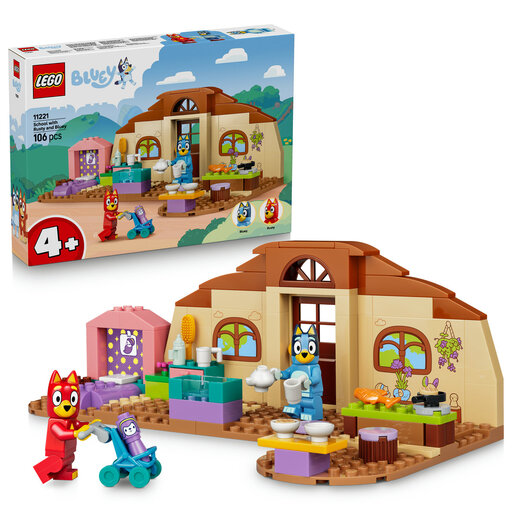
Why it suits this profile: This set is designed for children aged 4 and over, combining building with familiar Bluey-themed role play.
The age recommendation, 106 pieces and Starter Bricks make it a clearer introduction than larger sets designed for older builders.
Two minifigures, a school building with different play areas and accessories for role play.
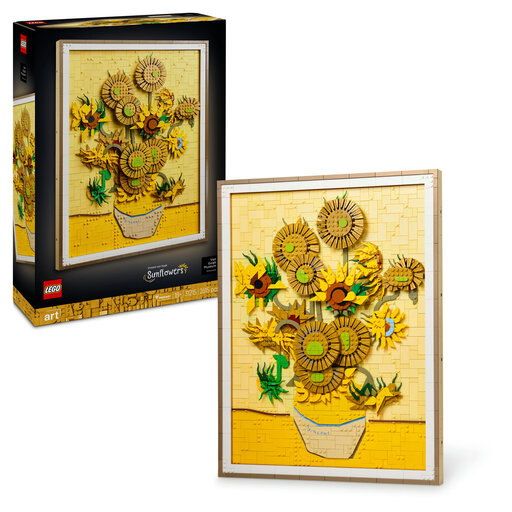
Why it suits this profile: An adult builder who values art, colour and a large display model gets a clearly defined building project.
The product information lists both the piece count and the dimensions, as well as the option to hang the artwork. This lets you assess the available space in advance.
2,615 pieces, 16 adjustable flower petals, a removable frame and a wall bracket according to the product description.
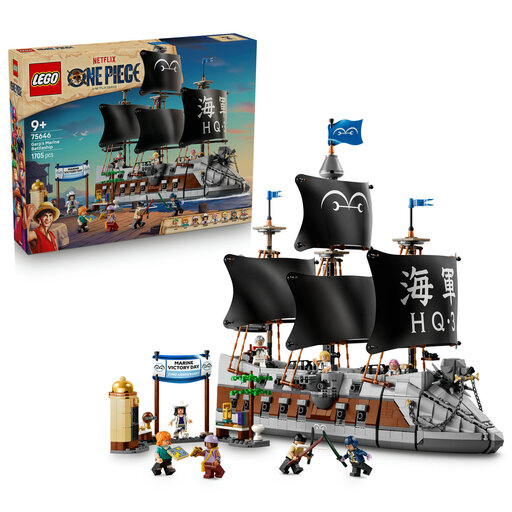
Why it suits this profile: For ONE PIECE fans aged 9 and over who want to build a large model and then play with figures and accessories.
It is more than just a large display model: the deck opens, and the model includes accessories and hidden details for continued play.
1,705 pieces, eight minifigures and dimensions of approximately 39 cm high, 44 cm long and 18 cm wide.
We have put together a complete, up-to-date list of products that fully meet these strict selection criteria and the applicable European safety regulations.
For creative gifts, the theme and recipient are often the deciding factors. LEGO Botanicals flowers, such as the Daisies, Wildflower Bouquet and Bouquet of Roses, combine building with lasting decorative appeal. Do check whether a vase is included; the Daisies set, for example, states that the vase is not included.
LEGO Disney is suitable for fans who value a recognisable character. The Heihei, Pua and Stitch sets are designed for children aged 9 and over and feature movable parts. For a Peanuts fan, LEGO Ideas 21368 Peanuts: Snoopy's Doghouse is a display model for ages 18 and over with 964 pieces.
A LEGO building set with a practical or educational theme may also be a good choice. LEGO Technic 42179 Planet Earth and Moon in Orbit is intended for children aged 10 and over and includes a rotating mechanism that moves the Earth and Moon around the Sun. According to the product description, this model makes the movements of the solar system visible; it is not a replacement for educational materials.
Choose sets marked 4+, with larger Starter Bricks and simple pictorial instructions. The LEGO Bluey School with Rusty and Bluey is one example. Always check the small-parts warning and keep the set away from children below the recommended age.
That depends on the model. LEGO ART, LEGO Botanicals and LEGO Architecture are clearly designed for display. Check the height, width and depth before buying. A large model may need a dedicated shelf, table or wall fixing.
LEGO bricks do not have a fixed shelf life under normal use. Dust, moisture, direct sunlight and falls can affect the appearance or stability of the model. Keep a display model in a dry place, clean it carefully with a dry cloth and move large constructions with both hands.
