
Vandaag of morgen in huis

Kwaliteit gegarandeerd

Welkomstaanbiedingen ontgrendelen: GRATIS bezorging | Tot 80% korting | Gratis 30 dagen JoyPlus-proefperiode
Download de app
Cat treats are useful as a reward, between-meal snack or way to provide extra moisture. However, attractive packaging does not always tell you enough about the ingredients, portion size or ease of use. Some snacks contain relatively high amounts of calories, while others consist mainly of grains or plant-based ingredients. Terms such as “natural”, “hydrating” and “for the coat” are not always used consistently either.
This buying guide helps you compare cat treats using verifiable information. You’ll learn what to look for in terms of flavour, moisture content, calories, ingredients and packaging. We’ll then highlight some popular choices for different types of cat owners.
A small piece or stick can be surprisingly energy-dense per gram. Dry snacks usually contain little moisture and can therefore provide more calories per 100 grams than a liquid cat treat. So don’t just look at the size; check the energy information and recommended daily amount too.
For example, Catisfactions Salmon states that one piece contains fewer than 2 calories. However, the salmon and cheese variety lists a fat content of 22%. This does not mean the snack is unsuitable, but it does make portion control important.
The flavour name is a first indication, not a complete ingredients list. Check how much chicken, tuna, salmon or other animal ingredient is actually included. The INABA Churu Chicken variety lists 30% chicken. The INABA Tuna Seafood variety lists tuna and seafood as ingredients, with 10% crude protein and 91% moisture.
A product with “chicken” in its name may also contain binders, oil, broth or other ingredients. So always compare the composition of each variety.
Most products in this category are complementary pet food. They are intended as treats, not as a replacement for complete cat food. Ideally, keep treats to around 10% of your cat’s daily calorie intake, unless the packaging gives different guidance. Reduce the main meal if necessary.
Pay attention to age too. Some cat treats for adult cats are not suitable for kittens. Whiskas Cat Sticks, for example, are labelled as a snack for adult cats and are not suitable for kittens.
A liquid snack can provide an extra opportunity to take in fluids, but it does not replace fresh drinking water. According to INABA’s product information, various Churu varieties contain between 86% and 91% moisture. This is objectively higher than in dry snacks, which generally contain much less moisture.
A high moisture content also makes a snack easy to spread. You can feed a soft snack by hand, spread it over wet or dry food, or use it as a reward during familiarisation. Follow the storage instructions after opening. Several Churu products state that an opened product should be refrigerated and used within 24 hours.
For cats with limited exercise or an adjusted feeding plan, low-calorie cat treats are practical to portion. INABA Churu products list 6 calories per tube. Catisfactions Salmon lists fewer than 2 calories per piece. These figures come from the product information; always check the label of your chosen variety when purchasing.
Also compare:
Choose a flavour your cat enjoys, but also check for possible sensitivities. If you’re looking for cat treats with chicken, cat treats with tuna or cat treats with salmon, it’s wise to check the full composition. “Grain-free”, for example, does not automatically mean that every animal ingredient is present in a high quantity.
A short ingredients list is easier to assess for a sensitive cat. If you’re changing your cat’s food because of a known allergy, medical condition or dietary advice, consult a vet. Brand claims about the skin, coat or other effects are not a general guarantee. According to a brand’s own research, certain ingredients such as fish oil or vitamin E may be linked to a product purpose, but the effect varies from one animal to another.
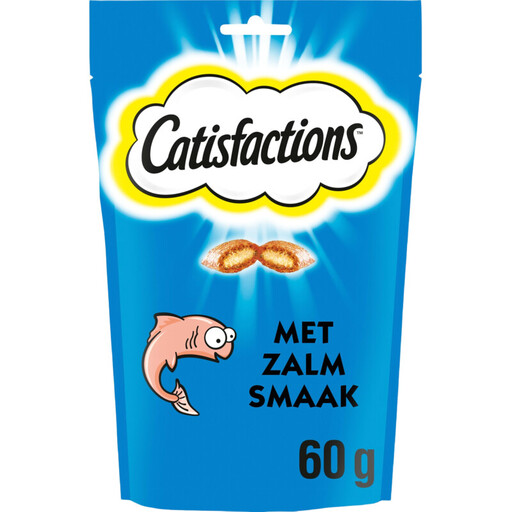
Why it suits this profile: The 60-gram pack is a straightforward choice for anyone who wants to try a familiar flavour without buying a large multipack straight away.
The product information states that each piece contains fewer than 2 calories and gives a clear guideline of no more than 20 pieces per day. This makes portions easy to count.
Crispy outside, soft salmon filling, and no artificial colourings, preservatives or flavourings according to the product description.
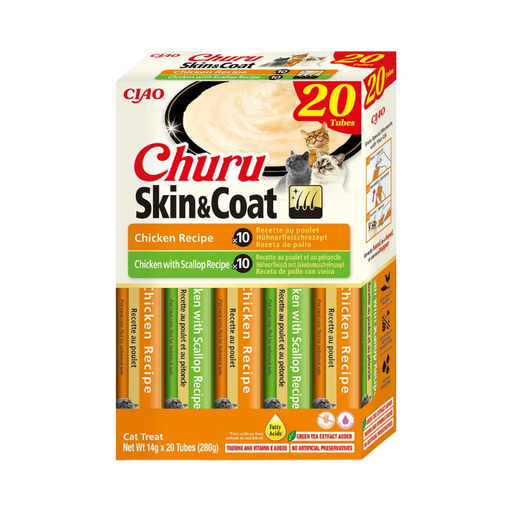
Why it suits this profile: This option combines two chicken varieties in one multipack and is suitable for adult cats according to the product information.
The composition lists 30% chicken and 86% moisture. This gives you a clearer idea of what “with chicken” and the soft texture mean in this product.
Soft texture, 20 sticks of 14 grams, and fish oil plus vitamin E according to the product information. Give 1 to 3 sticks per day as a supplement.
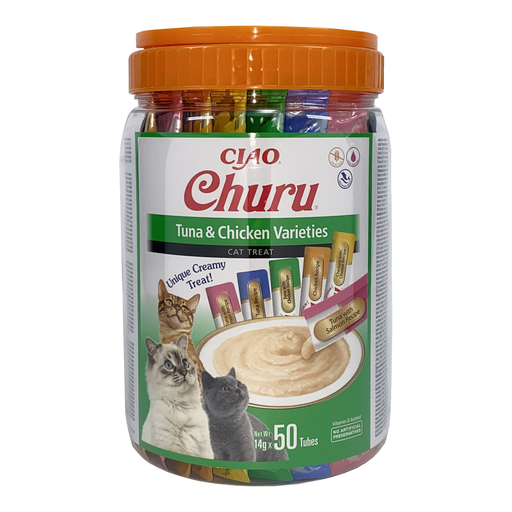
Why it suits this profile: With 50 tubes, this multipack is practical for everyday use, training, as a topper or for hiding medication.
The packaging states 6 calories per tube and 91% moisture. You can therefore plan the daily amount by the tube instead of portioning by guesswork.
A combination of tuna and chicken, 50 tubes of 12 grams, and suitable for hand-feeding or adding to wet and dry food.
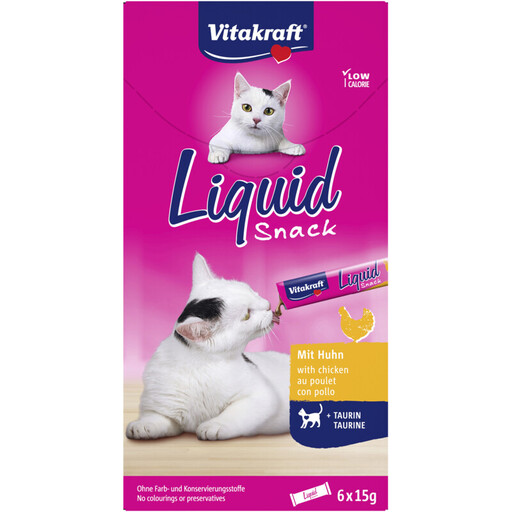
Why it suits this profile: The creamy texture can be given directly, as a topping or frozen as a lolly to cats aged 3 months and over.
The feeding guideline is simple: no more than 1 portion per day. Do check the label, however, as the information provided also lists allergens that may not suit every cat.
6 portions of 15 grams, a liquid format and several serving options. Use immediately after opening or refrigerate leftovers according to the label.
We’ve put together a complete, up-to-date list of products that fully meet these strict selection criteria and the applicable European safety regulations.
A snack with a high moisture content, such as a Churu variety or another liquid cat treat, can provide extra moisture. According to the product information, some INABA Churu treats contain between 86% and 91% moisture. They do not replace drinking water and must not replace complete main meals.
This depends on your cat’s weight, age, activity level and main food. Follow the guideline on the packaging and try to keep treats to a maximum of around 10% of the daily calorie intake. Even with low-calorie cat treats, it’s still sensible to count the portions.
Not automatically. Check the age recommendation, ingredients and allergens. One cat may not tolerate a particular protein source well, while another may have a strong preference for cat treats with tuna or cat treats with salmon. If you’re unsure about your cat’s food or diet, discuss the label with a vet.
