
Vandaag of morgen in huis

Kwaliteit gegarandeerd

Welkomstaanbiedingen ontgrendelen: GRATIS bezorging | Tot 80% korting | Gratis 30 dagen JoyPlus-proefperiode
Download de app
A belt may seem like a simple purchase, but you’ll soon notice if you choose the wrong one. A buckle that won’t fit through your belt loops, a length with little room for adjustment or a material that doesn’t suit your clothes can make a belt impractical. This applies to men’s belts, women’s belts and unisex belts alike.
When you search online for a belt, you’ll often see broad claims about comfort, durability and versatility. It’s best to check the specific product details. The following points can help you distinguish useful information from marketing claims.
A belt’s stated length doesn’t always mean the distance from the buckle to the middle hole. Sometimes the buckle isn’t included; sometimes the total length is given. For a belt with a fixed length, this difference can matter.
If possible, measure a belt that fits you well from the inside of the buckle to the hole you use. Compare that measurement with the size guide for the new belt. Check the waist measurement it’s designed for, rather than relying only on a size such as S, M or XL.
A leather belt and a belt made from bonded leather fibre aren’t automatically the same. If a product is made from 100% leather, this is usually stated explicitly in the product specifications. Bonded leather fibre refers to a different composite material. Faux leather, meanwhile, has a synthetic coating, such as polyurethane.
Choose the material to suit how you’ll use the belt:
A wide buckle won’t fit through every belt loop. For a formal outfit, a belt around 3 to 3.5 cm wide is often a better fit for trousers and suits. A 3.8 cm canvas belt is better suited to jeans and casual clothing.
Also check how the belt fastens. A traditional buckle with holes offers set positions. A step-free adjustable design can be fine-tuned more precisely. With a braided or elasticated belt, check that the stated length and width will work with your waist and clothing.
A belt available in several sizes usually gives you more choice than a one-size model, but only if the measuring method is clear. Check:
A 120 cm long, 3.8 cm wide canvas belt can be worn flexibly thanks to its one-size design. For a belt in fixed sizes, such as 80, 90 or 95, comparing it with a belt you already own is more useful than relying on your usual clothing size.
Care instructions give you practical information about everyday use. A product that can only be cleaned with a damp cloth shouldn’t go in the washing machine. Other models may be suitable for a low-temperature machine wash, but always follow the label on the product you receive.
Check the exact composition. The Calvin Klein FORMAL PLAQUE BELT is described in the product information as 100% leather and is 3.5 cm wide. According to the product description, the JACK&JONES JACHARRY is made from 100% bonded leather fibre. These details can be checked, and they don’t mean the two materials should be treated as identical.
A black belt works well with black or dark brown shoes and formal clothing. A medium brown belt is easier to pair with jeans, chinos and casual outfits. Also consider the colour of the buckle. Brushed metal usually looks more understated than a noticeably shiny finish.
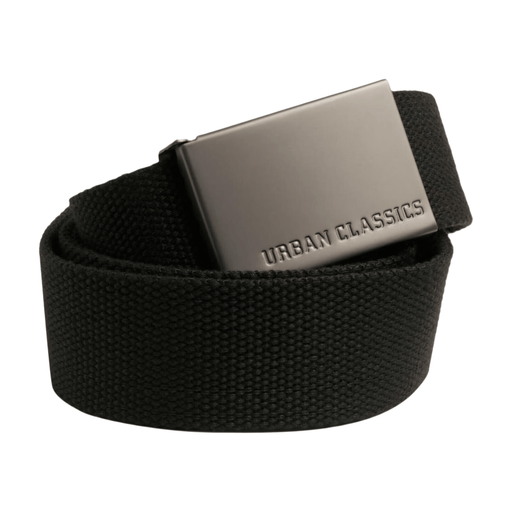
Why it suits this profile: This unisex canvas belt is designed for everyday wear with jeans, chinos and other casual outfits. The strap is 120 cm long and 3.8 cm wide, and can be adjusted continuously.
The sizing and adjustability are clearly stated, so you don’t have to rely solely on a general size label such as one size.
100% polyester canvas, black colour, lacquered metal buckle and cleaning with a soft, damp cloth.
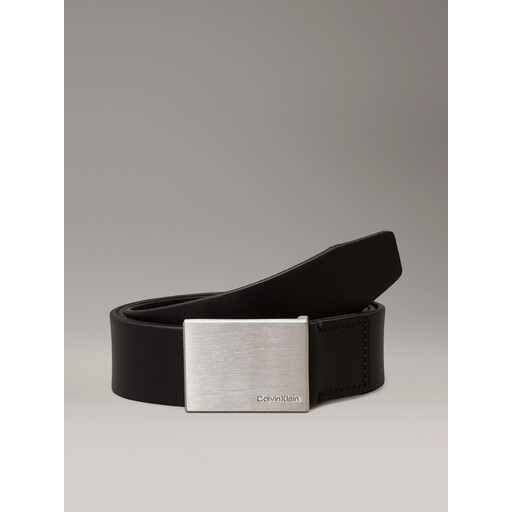
Why it suits this profile: This 3.5 cm black leather belt is suitable for work, formal occasions and outfits with jeans. Size 80 is designed for a specific waist measurement, so check the size guide before ordering.
The product information specifies both the material and the width. This helps you choose a belt for a suit rather than a wider casual style.
According to the product information, it is made from 100% leather, is 3.5 cm wide and has a brushed metal buckle.
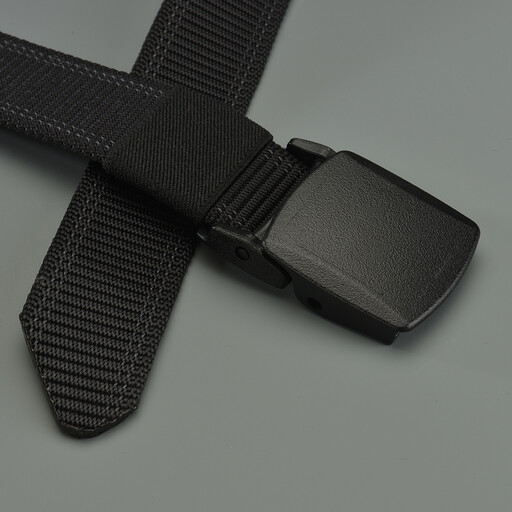
Why it suits this profile: The product name presents this as a lightweight walking and outdoor belt. That makes it a relevant option if you’re looking for a belt for walking, travel or sportswear.
The intended use is clear from the product name. Before buying, check the current size and material details on the product page.
Black design, described in the product name as suitable for light walking and sports use.
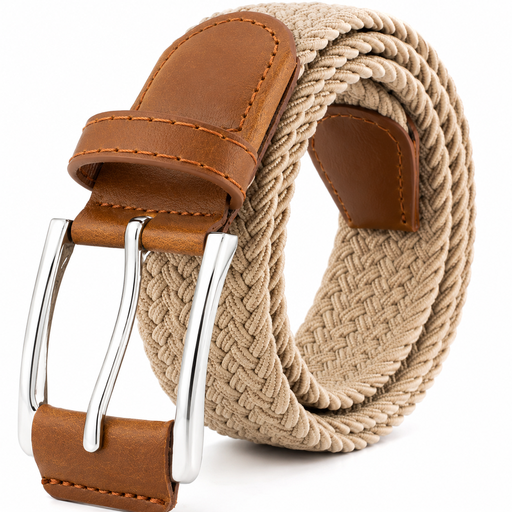
Why it suits this profile: This unisex belt is 3.5 cm wide and 125 cm long. Its elasticated, braided design is a good option for casual outfits if freedom of movement and an adjustable fit are important to you.
The width and length are clearly stated in the product name. Compare these measurements with your waist before placing an order.
Unisex design, elasticated braided construction, 3.5 cm wide and 125 cm long.
We’ve put together a complete, up-to-date list of products that meet these strict selection criteria and the applicable European safety requirements.
Measure a belt that fits you well from the buckle to the hole you usually use. Compare that measurement with the size guide for the new belt. If you’re measuring your waist directly, do so over the clothes you plan to wear the belt with, such as jeans or trousers.
Choose a narrow belt, usually around 3 to 3.5 cm wide, with an understated buckle. A black belt often works well with black shoes; a brown one goes with brown leather shoes. Also check that the belt will fit through the loops on your trousers.
A belt’s lifespan depends on its material, how much it’s used, exposure to moisture and how it’s cared for. Leather may age differently from canvas, faux leather or elasticated fabric. Store a belt flat or loosely rolled, and follow the care instructions provided. Avoid washing or tumble-drying it if the product information advises against this.
