Who is this relevant to?

Choir editor in a quiet room

If you are assessing vocal sections, their positioning and the reverb without recording on a microphone at the same time, you can compare open-back models. Sennheiser and beyerdynamic describe open-back models for listening and mixing.

Editor with long listening sessions

When you listen repeatedly, fit and maintenance matter alongside the sound description. Audio-Technica mentions a detachable cable for the ATH-R70x; Beyerdynamic describes replaceable parts for the DT 700 PRO X and DT 900 PRO X.

Editor who also records

If you sometimes use an active microphone at the same workstation, sound leakage and isolation are important considerations. Beyerdynamic describes the closed-back DT 700 PRO X as a model for recording and monitoring.

What should you look for when choosing?

Open-back, wired

A good fit if: you are monitoring in a quiet room and do not need sound isolation; for example, compare the HD 560S and DT 900 PRO X using the same choir passage.

Bear in mind: an open-back design will not prevent microphone spill; check spatial mix decisions on another playback system too.

Closed-back, wired

A good fit if: you also record with an active microphone or want to block out ambient noise; the DT 700 PRO X is a specific model to compare.

Bear in mind: Beyerdynamic describes the DT 700 PRO X as having a more compact stereo image than the open-back DT 900 PRO X, so check spatial decisions elsewhere too.

Semi-open

A good fit if: you want to compare a specific semi-open model and some sound leakage is acceptable; Beyerdynamic lists the DT 880 PRO as an example.

Bear in mind: the semi-open label does not guarantee suitable isolation when using headphones alongside an active microphone.

What to consider What should you check? Who should pay particular attention?
Vocal sound Compare the same familiar choir passage on the models you are considering. A manufacturer's claim about accuracy is not an independent measurement. If I want to assess vocal sections and tonal balance, I listen to a recording I know well; around 36% of consumers put vocal sound first.
Stereo image and reverb Check important spatial decisions on another playback system too. Sonarworks explains that headphones present channel separation and spatial sound differently from speakers. When I assess vocal positioning and the reverb tail, I want to know how the mix sounds beyond the headphones; around 29% of consumers give space and reverb top priority.
Comfort and maintenance Assess the fit during a listening session and check whether replacement parts are available for the exact model. Beyerdynamic describes replacement parts for the DT 700 PRO X and DT 900 PRO X. During long editing sessions, I want the fit to stay comfortable and parts to be replaceable; around 21% of consumers put comfort during extended listening first.
Isolation when recording Decide whether you will be listening alongside an active microphone and check the isolation in your own setup. Beyerdynamic describes the DT 700 PRO X as a closed-back model for recording and monitoring. If I want to use the same headphones while recording, sound leakage matters; around 14% of consumers put isolation for recording use first.

Common pitfalls

  • Treating spacious-sounding headphones as a complete speaker reference

    Headphone channels reach your ears differently from speakers. As a result, a decision about reverb or stereo width may sound different when played back through speakers.

    Check important spatial decisions on a second playback system, even if you are using an open-back model.

    Checking and adjusting reverb, centre positioning or stereo width may require extra rounds of correction.

  • Choosing an open-back model when you want to record beside a microphone

    An open-back design will not automatically provide the isolation you may need when a microphone is active.

    Decide in advance whether you want to monitor while recording. If so, compare closed-back models too and assess them in your recording setup.

    If one pair of headphones does not suit both situations, you may need a separate pair with good isolation.

  • Treating a specification or manufacturer's claim as a complete suitability test

    An impedance rating or description of accuracy does not, on its own, tell you how the headphones will sound or fit with your interface.

    Check the connection, usable volume and fit with your own equipment and a familiar choir recording.

Brands to compare

Sennheiser

The open-back HD 560S is a wired model to compare for listening in a quiet room.

  • Sennheiser lists a cable with a 3.5 mm plug and a 3.5 to 6.3 mm adapter.
  • The open-back design is not intended to meet a need for isolation or reduce microphone spill; check that your own audio source can drive it too.

beyerdynamic

The DT 900 PRO X offers an open-back option to compare; the DT 700 PRO X is the closed-back option of the two.

  • According to beyerdynamic, both models have a nominal impedance of 48 ohms and a detachable cable.
  • Beyerdynamic describes the DT 700 PRO X as offering greater isolation and the DT 900 PRO X as having a wider stereo image. This difference between these models does not automatically apply to other headphones.

Audio-Technica

The open-back ATH-R70x is a model to compare for extended listening and choir work.

  • Audio-Technica lists a detachable cable and a nominal impedance of 470 ohms.
  • Check with your own interface that you can reach a suitable listening volume. Descriptions of accuracy and comfort are manufacturer claims, not comparative real-world tests.

AKG

The open-back K702 is another model to compare for mixing and extended listening.

  • AKG lists a replaceable mini-XLR cable and replaceable ear pads.
  • Descriptions of spaciousness and precision come from AKG; assess the sound using your own recording.

Neumann

Neumann positions the open-back NDH 30 for editing, mixing and mastering.

  • This model's positioning suits editing work that involves assessing choir vocals and their placement.
  • Claims about accurate localisation and a linear response come from Neumann. An open-back model is not necessarily suitable for use beside an active recording microphone.

Headphones at Joybuy

This Joybuy selection includes headphones and a headset with a range of wireless and wired listening options. The product descriptions do not make these directly comparable as studio reference headphones; check the connection for each model and assess your choir mix using a familiar recording.

Sennheiser MOMENTUM 4 Wireless, Black

Sennheiser MOMENTUM 4 Wireless – Black

The product description mentions both Bluetooth and wired listening; check which connection suits your editing setup.

Bluetooth; supplied 3.5 mm audio cable; passive use without a battery; 42 mm transducer system; adjustable EQ.

View at Joybuy

Bose QuietComfort Ultra Bluetooth Headphones, Black

Bose QuietComfort Ultra Bluetooth Headphones – Black

The description mentions Bluetooth and an audio cable for wired listening; check which connection your interface requires.

Closed-back design; active noise cancellation; wired listening via audio cable.

View at Joybuy
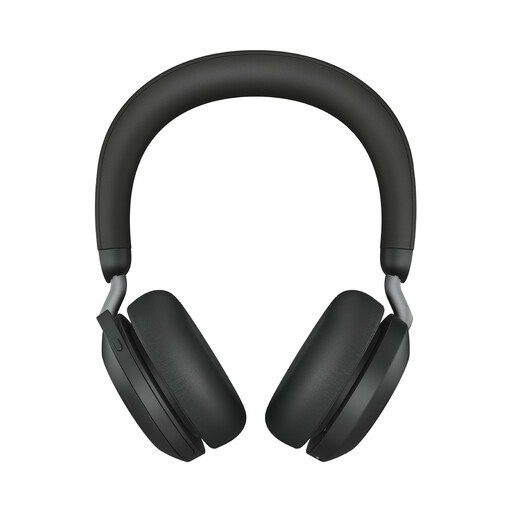
Jabra Evolve2 75, USB-A MS Teams, Black

Jabra Evolve2 75 – USB-A MS Teams, Black

The product description mentions Bluetooth and music playback; check that the headset suits the way you monitor audio.

Bluetooth; active noise cancellation; 40 mm speakers.

View at Joybuy

Bose QuietComfort Ultra Headphones (2nd Gen), Black

Bose QuietComfort Ultra Headphones (2nd Gen) – Black

The product description mentions both Bluetooth and wired connections; check which option you will use with your interface.

Active noise cancellation; detachable cable with USB-C and 3.5 mm connections; foldable design. Supplied without a charger; PD fast charging is not supported.

View at Joybuy

Frequently asked questions

Can I assess a choir's reverb using headphones alone?

Use headphones for close listening, but check a final decision about reverb and stereo on another playback system too if the recording needs to work well there. Sonarworks explains that headphones present channel separation and spatial sound differently from speakers.

Do I always need a separate amplifier for 470-ohm headphones?

No, impedance alone does not tell you that. Audio-Technica lists the ATH-R70x as having a nominal impedance of 470 ohms; check with your own interface that you can reach your desired listening volume before buying extra equipment.

How should I use and maintain headphones during long editing sessions?

Keep the volume moderate and take regular breaks. The World Health Organization points out that both sound level and exposure time matter. If parts are worn, check whether suitable pads, cables or headbands are available for your exact model; Beyerdynamic describes replacements for the DT 700 PRO X and DT 900 PRO X.

What are my rights when buying online in the Netherlands?

According to ACM ConsuWijzer, online purchases generally come with a cooling-off period of up to 14 days after delivery. Your statutory guarantee is separate from any manufacturer's warranty: if a product is faulty despite normal use, the seller must offer an appropriate remedy free of charge. Check the specific returns policy for your purchase.

Is CE marking required for every pair of studio headphones?

Not necessarily: according to the European Union, CE marking is only required when the relevant harmonised rules specifically stipulate it. For a particular wired or wireless model, you therefore need to establish which rules apply.
