What should you look for?
Sound On Sound outlined the general trade-offs between open- and closed-back designs in 2010. Choose based on the noise in your workspace, whether you record with microphones and the connections on your equipment.
Open-back, wired
Choose this if: you mainly listen back in a quiet room and sound leakage is not a concern.
Trade-off: background noise can be heard more easily, and sound can leak out.
Closed-back, wired
Choose this if: background noise interferes with your assessment or you monitor close to microphones.
Trade-off: isolation partly depends on the fit, and does not in itself mean the sound is neutral.
| What to consider |
What should you check? |
Who should give this more weight? |
| Vocal detail and spatial assessment |
Listen to a familiar choir passage and assess stereo placement and tonal balance separately. |
If I want to assess individual voices and their placement, I compare the headphones with a familiar reference recording; around 40% of consumers prioritise vocal detail and spatial assessment. |
| Isolation and sound leakage |
Listen in your own workspace at a normal volume and, when recording, check whether the microphone picks up sound from your headphones. |
If background noise masks quiet passages or I work near a microphone, I want to know whether isolation will help without turning up the volume; around 30% of consumers are most concerned about isolation. |
| Fit and maintenance |
Try the headphones with any glasses you wear and check which ear pads are available for that exact model. |
For longer editing sessions, I want a comfortable fit that lasts and to know which parts can be replaced; around 20% of consumers prioritise comfort and maintenance. |
| Connection and drive requirements |
Check the plug, any adapter and the exact model variant; compare the specifications with those of your headphone output. |
If I want to use my existing interface or computer, I check that the connection is compatible and provides a usable volume; around 10% of consumers cite equipment compatibility as their main concern. |
Headphones at Joybuy
This selection includes over-ear headphones and a headset, with features for listening in noisy surroundings or using a wired connection. For critical choir mixing, check whether a model suits your need for a reliable sound reference.
 No image available
Sennheiser MOMENTUM 4 Wireless, black
The product description mentions active noise cancellation for listening in noisy surroundings.
The title lists a 60-hour battery life; the description mentions an included 3.5 mm audio cable for wired listening.
View at Joybuy
 No image available
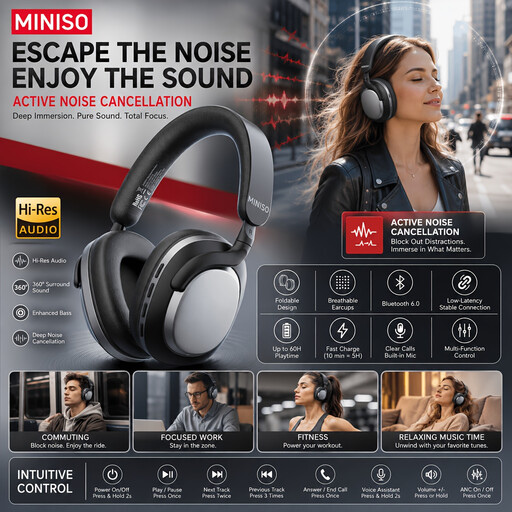
MINISO MG210, black
The product title lists noise cancellation for these wireless over-ear headphones.
The title lists a 24-hour battery life.
View at Joybuy
 No image available
Bose QuietComfort Ultra, black
The product description mentions a closed-back design and active noise cancellation.
According to the description, wired listening is possible with the audio cable included; the stated battery life is up to 24 hours.
View at Joybuy
 No image available
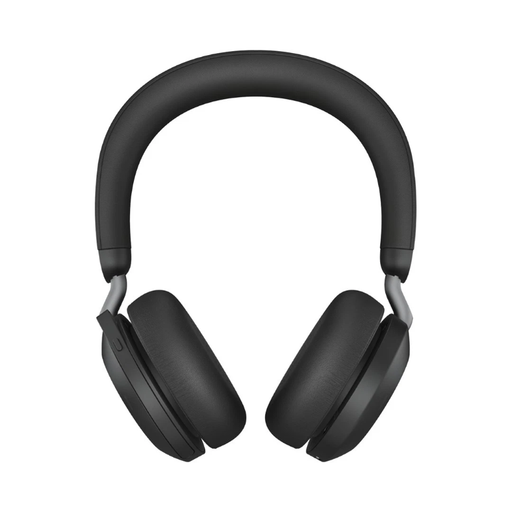
Jabra Evolve2 75 headset
The product description mentions Bluetooth and active noise cancellation for professional communications.
The description lists a USB-C cable for wired use and Microsoft Teams.
View at Joybuy
Frequently asked questions
Does a bright window mean you need open-back or closed-back headphones?
No. Choose based on the noise where you listen and whether you use the headphones near microphones. Sunlight in your workspace does not, by itself, determine which design is right for you.
Can I connect 250 ohm headphones directly to my audio interface?
It depends on the specific headphone output and the sensitivity of the headphones. Focusrite gives recommendations for each interface; don’t automatically apply them to equipment from another brand or model.
How can I avoid continually turning up the volume while editing?
Don’t try to drown out background noise by listening at a higher volume. VeiligheidNL recommends well-fitting headphones to reduce the volume you need; this advice does not set a safe volume level for every studio setup.
What if the headphones I bought online are disappointing or break too soon?
In many cases, distance purchases come with a 14-day cooling-off period, subject to exceptions and conditions. ACM ConsuWijzer explains that you are covered by the legal guarantee if a product does not last as long as you could reasonably expect under normal use; the seller must then provide a suitable solution.
Can I publish an edited choir recording?
Choosing headphones does not give you the right to publish. According to the Dutch government, you may only use copyright-protected music with the creator’s permission; you may not distribute or make a private copy available to the public. Any additional rights or permissions you need depend on the recording and the people involved.


