
Organising a short, busy break
You want to know in advance how much coffee needs to be ready at once and whether a single brew will be enough.


First work out how much coffee the choir group needs at once and whether there’s time to brew another round if needed. A thermal carafe is ideal if you’ll be taking the coffee elsewhere; a glass carafe suits serving it beside the machine. If lots of people need coffee at the same time, a double brewing unit could be a good option. Just check the space and power supply you’ll need, as well as the terms for professional use.
You want to know in advance how much coffee needs to be ready at once and whether a single brew will be enough.
You’re making the coffee somewhere other than where you’ll serve it. The carafe’s capacity and ease of handling are important factors when choosing.
You want to keep filling, brewing and cleaning straightforward. A timer, a clear water-level indicator or a removable filter may also be worth considering.
Ideal if: you’ll serve the coffee beside the machine and brew it around serving time.
Bear in mind: the carafe stays by the machine. Allow time for extra brews if one batch won’t be enough.
Ideal if: you want to brew in advance or take the coffee to the break room.
Bear in mind: check the carafe’s capacity and how to clean it. A second carafe isn’t the same as a second brewing unit.
Ideal if: lots of guests need coffee at almost the same time and you have a suitable space and power supply.
Bear in mind: according to Moccamaster, the KBGT20 brews two 1.25-litre carafes in six minutes. Its stated power consumption is 2,900 W, and the machine needs more space.
| What to consider | What should you check? | Who is this important for? |
|---|---|---|
| Amount per brew | Multiply the number of coffee drinkers by the serving size in millilitres. Compare the result with the capacity per brew and allow for extra rounds if needed. | If I’m making coffee for a large group, I want to know whether one batch will be enough and whether there’s time to make another. Around 36% of consumers say having enough coffee ready at once is their main concern. |
| Serving coffee elsewhere | Consider the route you’ll take and check the carafe’s capacity, spout and lid. Also check whether a suitable second carafe is available. | If the serving area isn’t next to the machine, I want to be able to carry the coffee easily. Around 29% of consumers say serving hot coffee in the right place is their top priority. |
| Preparation | Check whether the exact model has a timer and a clear water-level indicator. | If I have other things to do while preparing, I want to be able to plan the brewing time and amount easily. Around 21% of consumers say ease of preparation is their main concern. |
| Cleaning and supplies | Check which parts are removable, which filter fits and whether a replacement carafe is compatible with the exact model number. | After the break, I want to know how to clean the carafe and filter, and which parts I’ll need for repeated use. Around 14% of consumers say maintenance and supplies are their top priority. |
The stated cup size may not match the capacity of your own mugs. As a result, one brew may make less coffee than you expect.
First calculate the amount in millilitres, then compare it with the number of litres brewed per batch.
A smaller yield could mean extra brews and more waiting.
An extra carafe can hold coffee from another round, but it doesn’t mean the machine can brew two batches at once.
Compare the number of carafes separately from the number of independently usable brewing units.
Allow time to fill the second carafe if you want to brew another round.
A permanent filter needs cleaning after use. Replacement carafes also aren’t necessarily compatible with every model number.
Before buying, check which filters and parts fit the exact model.
You may need a compatible replacement part or cleaning supplies.
According to the manufacturer, the Moccamaster KBGT20 uses 2,900 W and takes up more space than a compact domestic machine.
Check the space available, the power supply and which other appliances are connected to the same circuit.
The KBGT comes with one thermal carafe; the KBGT20 has two brewing units and two carafes.
The Easy Therm with a second carafe is an option for brewing in advance and serving successive rounds.
The KZ818D is a domestic filter coffee machine with a thermal carafe, suited to a planned, smaller round.
The 3000 Series HD7460/40 is a filter coffee machine with a glass carafe, for serving coffee beside the machine.
The CM-1283 is a compact model with a 1-litre thermal carafe.
This selection includes filter coffee machines with a glass carafe for serving beside the machine, as well as a thermal-carafe model for serving coffee elsewhere.
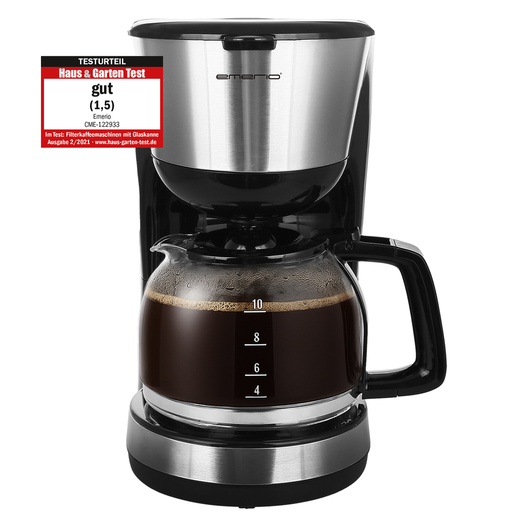 No image available
Suitable for serving coffee beside the machine; the product information lists a glass carafe with a warming plate.
Capacity: 1.25 litres, around 10 cups per brew. Also listed: removable reusable filter and anti-drip function.
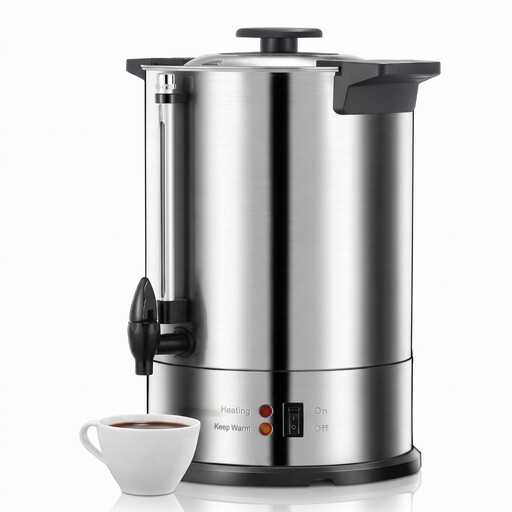 No image available
The product description lists a commercial coffee machine with a tap for serving a group.
Capacity: 15 litres. Also listed: 1,500 W, a reusable stainless steel filter and a keep-warm function.
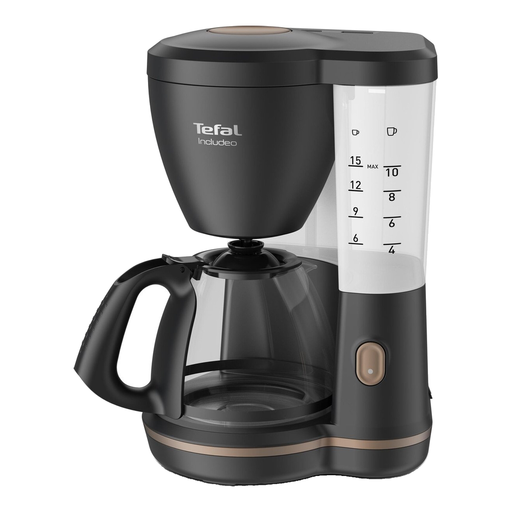 No image available
The glass carafe suits a round of coffee served beside the machine.
Carafe and tank capacity: 1.25 litres. Also listed: removable permanent filter, anti-drip function and automatic shut-off.
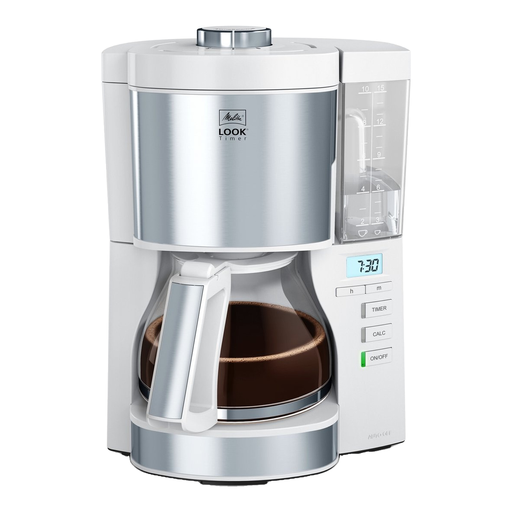 No image available
The timer can help you plan when to brew in advance; the glass carafe is designed for serving beside the machine.
Capacity: 1.25 litres, up to 15 cups. Also listed: adjustable coffee strength, keep-warm function and automatic shut-off.
 No image available
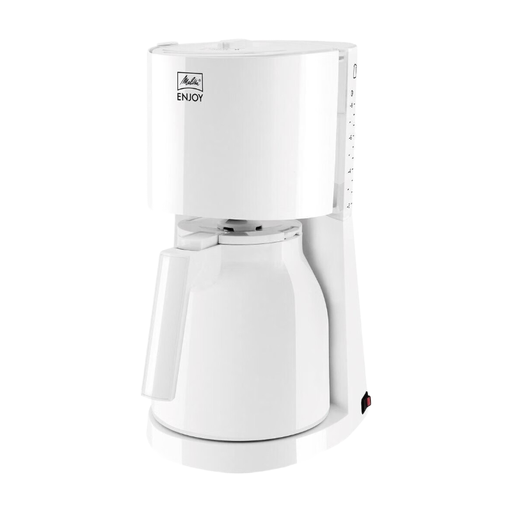
The thermal carafe is ideal for taking coffee to another serving area.
The product information lists automatic shut-off and a water-level indicator. The capacity isn’t specified in the product details shown.
Multiply the expected number of coffee drinkers by the planned amount per serving, then compare the result in litres with the capacity per brew. A manufacturer’s cup count isn’t a standard measure for your own mugs; the Consumers’ Association (Consumentenbond) gives 125 ml as the traditional measure for a cup of filter coffee.
Clean the carafe and filter according to the instructions for your chosen model, and descale the machine regularly. The Consumers’ Association recommends descaling, for example, when you see limescale or the coffee starts to taste worse.
According to the Dutch government, the seller must provide a solution if a product is faulty. There’s no fixed statutory guarantee period in the Netherlands; what you can reasonably expect from the product is what matters. A manufacturer’s guarantee is in addition to this.
The NVWA rules mentioned relate to selling food and drink, not automatically to serving free coffee during a break. The NVWA requires registration and a food safety plan if you sell several times a year, with an exemption from registration for a single sale per year. Whether anything is sold at the community meal determines if those sales rules are relevant.