If cupboard space is your main constraint and the choir mostly drinks black coffee, start with a slim domestic machine and measure the space needed for filling and cleaning, too. If you need to serve lots of members in a short time, compare shared-use or professional models as well, but check the actual time needed to make successive cups: a daily capacity figure doesn’t tell you how quickly a machine can serve a choir during a break.
Who is this guide for?
A choir with a short coffee break
You want to serve several members during the same break. So don’t just look at daily capacity; check how long it takes to make successive cups, too. WMF and JURA publish daily capacity figures, but these don’t in themselves tell you how quickly the machine can serve coffee.
A choir with a small coffee area
You’re looking for a machine that fits and remains accessible for use and maintenance. Melitta lists the Solo as 20 cm wide; also measure the machine’s height and depth, and allow space to fill or remove components.
A volunteer who looks after the machine
You want to know what needs emptying and cleaning after rehearsal. A removable brew group or cleaning programme is particularly useful if someone can carry out the required maintenance. Melitta and WMF describe these features for the models mentioned.
What should you look for?
First measure the available space, then work out how many cups you need during the break. This helps you avoid choosing a machine that fits in the cupboard but isn’t accessible or can’t serve everyone in time.
| What to consider |
What should you check? |
Who is this important for? |
| Coffee in a short time |
Work out how many cups you need and how much time you have; check how long successive drinks take, including refilling and emptying. |
If you want to serve lots of members during one short break, a predictable serving time is especially useful. Around 36% of consumers prioritise this. |
| Fit and accessibility |
Measure the width, depth and height of the storage and serving areas; check that you can access the reservoir and components. |
If cupboard space is limited, you’ll want a machine that fits without blocking access for filling and maintenance. Around 29% of consumers make space their top priority. |
| Cleaning and maintenance |
Check which components are removable, what the manual recommends and who will carry out the maintenance. |
If volunteers look after the machine, you’ll want to know who empties and cleans it after use. Around 21% of consumers prioritise easy maintenance. |
| Black coffee or milk drinks |
Decide which drinks the choir wants and who will operate and clean any milk function. |
If you want to offer milk drinks as well as black coffee, factor in the extra operation and cleaning. Around 14% of consumers make drink variety their top priority. |
Common buying mistakes
-
Confusing daily capacity with speed during the break
The figures published by JURA and WMF are per day, not per minute or per choir break.
Note how many members want coffee and how many minutes they have, then check how long the required run of cups takes.
-
Measuring only the width of the machine
A machine can be slim but still too tall or deep for the cupboard or worktop. Philips lists the EP1220/00 as measuring 246 × 371 × 433 mm; check which measurement refers to the width, height and depth before assessing the available space.
Measure the entire space and leave room to reach the reservoirs and other components.
-
Choosing a milk function without agreeing who will clean it
The Philips and De'Longhi models mentioned have a manual milk frother, so preparing milk drinks involves extra steps.
Choose this kind of function only if someone can take responsibility for operating and cleaning it during or after the break.
Brands worth comparing
Melitta
The Solo is a domestic option to consider if width is limited and the choir mainly drinks black coffee.
- Melitta lists the Solo as 20 cm wide and says it can make two espressos or café crèmes at the same time.
- These figures don’t tell you how long it takes to make a run of cups for the whole choir. Check the other dimensions and the range of drinks available, too.
Philips
The 1200 Series EP1220/00 is an option if you want black coffee and the ability to froth milk manually.
- Philips lists two servings in the model specifications, a 1.8 l water reservoir and dimensions of 246 × 371 × 433 mm.
- The classic milk frother requires manual operation, and these specifications don’t indicate how quickly the machine can serve a group during a break.
De'Longhi
The Magnifica S ECAM22.110.B is a domestic option to compare if you’re looking for adjustable black coffee and a traditional milk frother.
- De'Longhi lists a 1.8 l water reservoir and a coffee grounds container that holds 14 servings for this model.
- The stated container capacity doesn’t guarantee that the machine can serve every choir member during the break.
JURA
The professional WE6 is worth comparing if the machine will be used more intensively on rehearsal days than a small domestic coffee area can handle.
- JURA positions the WE6 for around 30 speciality coffees a day and lists a 3 l water reservoir and a grounds container for 25 servings.
- The daily figure doesn’t tell you how many cups the machine can make during one break. JURA says this model is available through specialist dealers.
WMF
The 1100 S is a professional option to explore if the choir expects to make a lot of cups on a rehearsal day.
- WMF lists a maximum of 80 cups a day for the 1100 S, a 4.5 l reservoir and the option of a fixed water connection.
- These are manufacturer figures, not proof of serving speed during a short break or of whether the machine will fit a particular cupboard.
Bean-to-cup machines at Joybuy
This selection at Joybuy includes fully automatic bean-to-cup machines to compare for shared use, with drink choice, operation and available space in mind.
 No image available
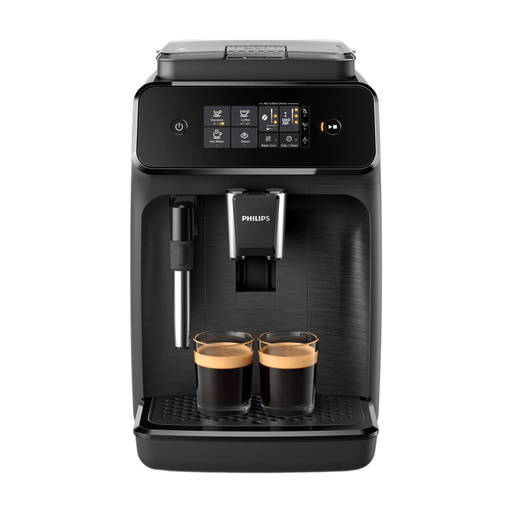
Philips 1200 EP1220/00, black
An option if you want to prepare several servings and use a manual milk frother, too. Philips lists a 1.8 l water reservoir and two servings in the model specifications; the Pannarello steam wand requires manual operation.
View at Joybuy
 No image available
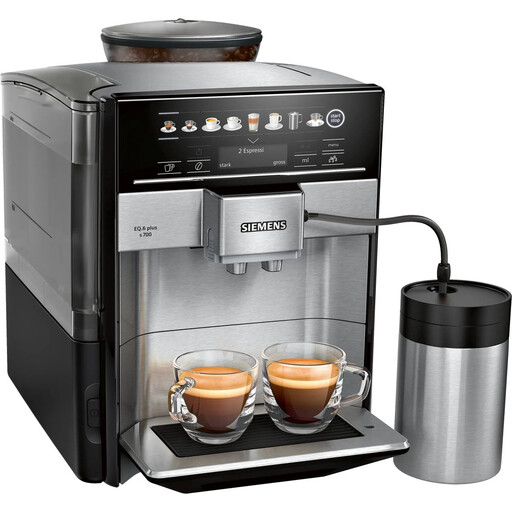
Siemens TE657M03DE EQ.6 Plus s700
An option to consider if the choir wants to offer a range of coffee specialities. For shared use, check what operation and cleaning the chosen machine requires.
View at Joybuy
 No image available
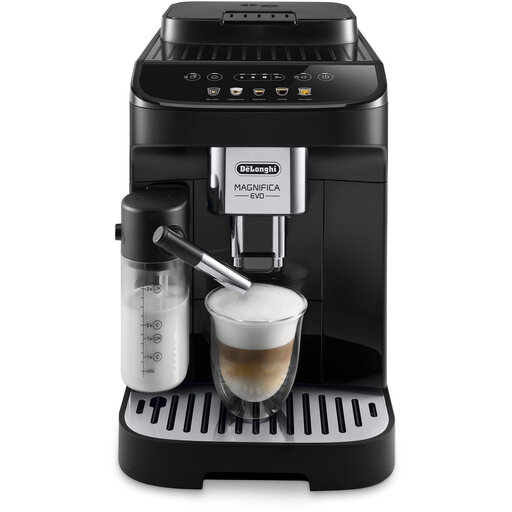
De'Longhi ECAM290.61.B Magnifica Evo
A model to compare if you want to offer milk drinks as well as coffee; the product name lists five one-touch drink options. Check who will take responsibility for operating and maintaining it when it’s being shared.
View at Joybuy
 No image available
De'Longhi Rivelia EXAM440.55.G
An option to consider if you want to be able to use different beans. For milk drinks, the milk reservoir needs to be filled and connected.
View at Joybuy
 No image available
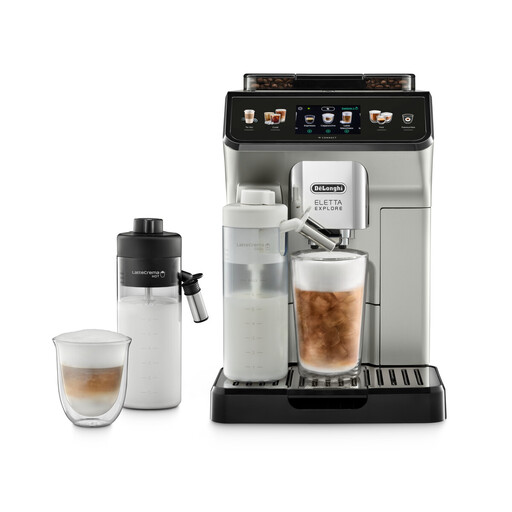
De'Longhi Eletta Explore ECAM450.65
A model to compare if you’re looking for a wide choice of drinks; the product name lists 13 drinks. Bear the available space and maintenance requirements in mind when positioning and sharing the machine.
View at Joybuy
Frequently asked questions
Is a capacity of 30 or 80 cups a day enough for our break?
Not necessarily. JURA lists around 30 speciality coffees a day for the WE6, while WMF lists a maximum of 80 cups a day for the 1100 S; these manufacturer figures don’t tell you how quickly the machines can serve coffee during one break. Work out how many members want coffee and how many minutes they have, then check how long that run of cups takes.
What should you consider when positioning and cleaning the machine?
Measure the machine in all three dimensions and check whether you can reach the reservoirs and components where it will be used. Melitta lists a removable brew group and cleaning and descaling alerts for the Solo; follow the manual for the model you choose.
What costs and warranty rights should you consider alongside the purchase price?
Allow for coffee beans and the cleaning and descaling products suited to the model and how it’s used. According to the Rijksoverheid, consumer purchases in the Netherlands don’t have a fixed statutory warranty period; a manufacturer’s warranty doesn’t replace your statutory rights, and the seller is your point of contact if a product is faulty. Check whether a purchase by an association counts as a consumer or business purchase.
Does a choir need to register if it serves coffee?
This depends in part on whether the choir sells coffee. According to the Netherlands Food and Consumer Product Safety Authority’s guidance, registration is required if sales take place several times a year, but not if there is only one sales occasion a year; if there are several sales occasions, a food safety plan or hygiene code is also required. So first establish whether and how the choir sells coffee. This sales page does not give a separate conclusion on registration when coffee is provided free of charge only.


