
Choir archive manager
Wants to be able to find the original recording and restore it after loss or a mistake. Synology Knowledge Centre explains why a NAS or RAID on its own does not provide a complete back-up.


Start by agreeing how to keep the original choir recording, where to store a separate back-up and who should have access. Then choose a NAS enclosure and suitable drives. A two-bay NAS can be a straightforward place to start, but RAID or a local copy is no substitute for a back-up stored elsewhere. A NAS also won’t automatically make a recording accessible for the long term or give you permission to share it.
Wants to be able to find the original recording and restore it after loss or a mistake. Synology Knowledge Centre explains why a NAS or RAID on its own does not provide a complete back-up.
Wants to decide who can access the recording and whether identifiable voices or protected music can also be shared beyond the archive. The Dutch Data Protection Authority and the Dutch government provide useful guidance on personal data and the use of music.
Wants to preserve the original audio file along with its context, so it can be found and used in the future. The National Archives of the Netherlands explains the importance of long-term accessibility and mentions audio formats such as WAV and BWF in its archiving guidance.
First decide how you’ll restore copies and who will have access. Then check the file workflow, drives and overall set-up. A NAS enclosure, internal drives and a separate back-up destination are different components.
| What to consider | What to look for when buying | Who this matters to |
|---|---|---|
| Recoverability | Check whether you can back up to another device or destination, and agree who will test the recovery process. | If I want to be able to restore the only recording after a problem with the NAS, I focus on having a separate copy. Around 36% of consumers prioritise recoverability. |
| Access and permissions | Decide who can open the files and consider privacy and music rights before sharing anything publicly. | When volunteers manage the recording, I want to limit access to those who need it and consider sharing separately. Around 29% of consumers put controlled access first. |
| Future usability | Keep the original and record the recording context and versions; choose an audio format that suits your archiving workflow. | If the recording needs to be found and understood in the future, I’ll keep the relevant information with it too. Around 21% of consumers focus mainly on future usability. |
| Overall set-up | Check which drive types are suitable, and consider the enclosure, internal drives and back-up destination separately. | I want to know in advance which components I’ll still need, rather than choosing a NAS enclosure on its own. This is the main priority for around 14% of consumers. |
A problem with the NAS or local storage could affect the recording too. Synology warns that RAID or local versions are no substitute for a copy stored elsewhere.
Plan a separate back-up destination and check that you can restore the files from it.
A separate destination also needs to be set up and managed.
A NAS with drive bays isn’t automatically a complete storage solution; internal drives and a back-up destination are separate components.
Make a list of the components you need before buying, and check that your chosen drives are compatible with the exact NAS model.
An identifiable voice may count as personal data, while public use of protected music may also raise rights issues.
Keep the preservation copy separate from any copies intended for sharing, and consider access, the legal basis and rights before publishing.
Synology offers NAS models for central storage and sharing, with back-up features in DSM.
QNAP describes file sharing and back-ups through its own software. According to QNAP, the TS-233 has two bays for 3.5-inch SATA hard drives or 2.5-inch SATA SSDs.
The F2-212 is a two-bay alternative for anyone comparing a simple local NAS set-up.
This selection includes NAS enclosures for central storage and a standalone Synology drive for a suitable existing set-up. Check whether each model suits your capacity requirements, back-up destination and access workflow.
 No image available
A NAS enclosure for a centralised file set-up, with room for multiple internal drives.
The product description lists five drive bays, 8 GB of memory and two 2.5GbE ports. Hard drives aren’t included; choose compatible drives separately.
 No image available
This NAS is described as having user accounts and shared folders to help manage access to files.
The product information lists two drive bays for 2.5- and 3.5-inch drives, along with AES-256 volume encryption. This is a diskless NAS; compatible drives must be installed separately.
 No image available
A NAS enclosure with multiple drive bays for a centralised storage set-up.
The product description lists eight drive bays, an expansion option and two 2.5GbE ports. The installation instructions require compatible hard drives.
 No image available
This NAS enclosure is designed for centralised file sharing and back-up management; choose drives to suit your storage needs.
The description lists four drive bays, two 2.5GbE ports and support for M.2 NVMe cache. Hard drives aren’t included.
 No image available
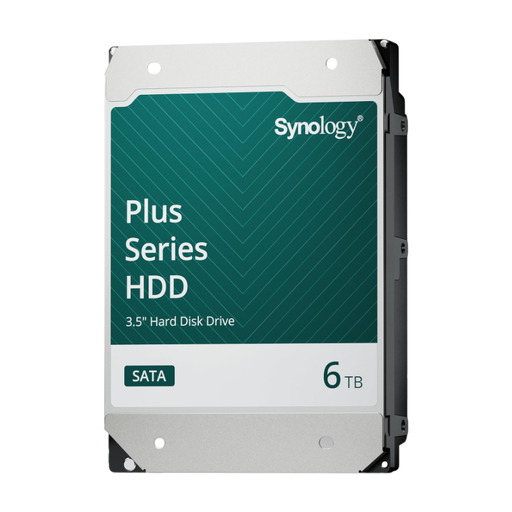
A standalone internal drive for adding storage to a compatible Synology NAS with a suitable drive bay; the drive itself isn’t a NAS for network sharing or access management.
The product description lists 6 TB, a 3.5-inch SATA form factor and 5400 rpm.
Not as the only protection for the recording. Synology warns that RAID or a local copy is no substitute for a back-up stored elsewhere. So, plan a separate destination and check that you can restore your files.
First, check the exact model and the drives it supports. Then set up storage and user permissions, and plan a back-up to a separate destination. QNAP describes Hybrid Backup Sync as a way to copy files to destinations such as an external device, another NAS or cloud storage.
Keep the original file and the information needed to understand the recording. The National Archives of the Netherlands lists WAV and BWF as preferred audio formats under its standard for government information. This is useful guidance, not a format requirement for this community archive.
Check which internal drives you need, whether they’re compatible and which separate back-up destination you’ll use. The enclosure, drives and back-up method are different parts of the set-up.
Not automatically. According to the Dutch Data Protection Authority, an identifiable audio recording may count as personal data; if so, processing it requires an appropriate legal basis, security measures and a retention period. For the specific recording, consider who can be identified and which legal basis applies. You must also consider the relevant rights before making protected music available to the public; making a copy for personal use doesn’t give you general permission to distribute it.