
Sweet-breakfast fans who value wholegrains
You want a chocolate flavour and a crunchy texture, but you’re looking for a breakfast cereal that clearly lists wholegrains among its ingredients.


If you fancy a sweet breakfast with chocolate cereal and want to choose wholegrains, start by comparing the ingredients and nutritional values per 100 g. Check the proportion of wholegrain cereal, fibre, sugars and salt, then choose the texture you prefer. A wholegrain ingredient doesn’t automatically mean a product meets all the criteria of the Dutch Wheel of Five; if you have allergies, also check the packaging of the specific variety you choose.
You want a chocolate flavour and a crunchy texture, but you’re looking for a breakfast cereal that clearly lists wholegrains among its ingredients.
You want to compare chocolate breakfast cereals by their sugar, fibre and salt content per 100 g, rather than relying on the front of the pack alone.
You need to know which cereals and other allergens are in the exact variety you’ve chosen, so you check the current ingredients list and allergen information before buying.
First, decide what matters most for your sweet breakfast: the cereal base, the amount of sugar or the texture. Then compare products of the same type per 100 g, as recommended by the Netherlands Nutrition Centre.
| What to consider | What to check when buying | Who is this important to? |
|---|---|---|
| Wholegrains and fibre | Check which wholegrains are listed in the ingredients and compare the proportion of wholegrains and the fibre content per 100 g. | I want wholegrains to have a clear place in my chocolate cereal; this is the most important factor for around 31% of consumers. |
| Sugars | Compare sugars per 100 g and read the ingredients if you want to know whether sugar has been added. | Chocolate flavour matters to me, but I mainly want to weigh up the amount of sugar. For around 31% of consumers, this is the top priority. |
| Taste and texture | Choose between flakes, loops and crunchy muesli or cruesli, then compare the nutritional values within your chosen type. | I’m mainly looking for a texture that suits the way I eat breakfast, for example with milk or yoghurt; this is the first thing around 23% of consumers consider. |
| Packaging and availability | Check the pack size, the exact variety and where it’s available. | I want to buy the right amount and make sure I’m not choosing a different variety from the one I expected. This is the main concern for around 15% of consumers. |
The front of a pack doesn’t show the proportion of wholegrains, sugars and salt all at once.
Read the ingredients list and compare the nutritional information per 100 g. The Netherlands Nutrition Centre recommends using this basis for comparison.
The Netherlands Nutrition Centre’s criteria for breakfast cereals cover several properties, including the proportion of wholegrains, fibre, salt and added sugar.
If you specifically want a product that meets the Dutch Wheel of Five criteria, check all the relevant requirements; don’t judge it on a single claim.
Product ranges and packaging can change. A listing for a chocolate variety doesn’t mean every shop stocks that exact variety.
Check the current variety and availability, and if you choose an alternative, read its label again.
Ingredients and allergens can vary from one variety to another. Allergens to look out for in chocolate breakfast cereals may include cereals containing gluten, milk, soya, nuts or peanuts.
Check the allergen information and any warnings about traces on every pack you choose.
Among the products discussed, Kellogg's offers both oat-based chocolate breakfast cereals and chocolate flakes.
Nestlé Cereals’ Belgian product information describes FITNESS chocolate varieties made with wholegrains.
Albert Heijn product pages can help you compare the ingredients in specific breakfast cereals.
The range includes different types of chocolate breakfast cereal, including crunchy muesli and flakes.
Lidl offers both crunchy chocolate muesli and a separate breakfast product made with wholegrains.
The Golden Bridge range includes various breakfast cereals, including chocolate flakes and muesli.
This selection includes crunchy chocolate muesli and cruesli, as well as chocolate loops. First choose the product type you’re looking for, then check the nutritional information and ingredients for the exact pack.
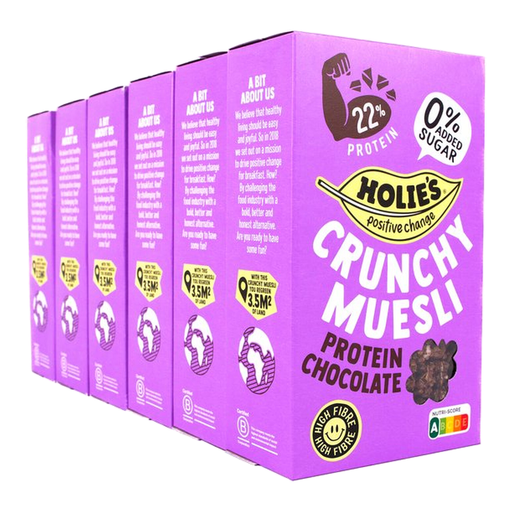 Image unavailable
A good choice if you’re looking for crunchy chocolate muesli in a pack of six 400 g bags.
If the total wholegrain content is essential to you, check the pack for more than just a mention of wholegrain oats. If you have allergies, also read the current allergen information.
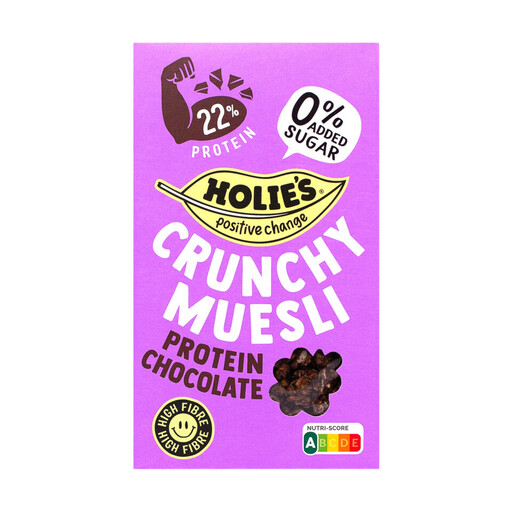 Image unavailable
This 400 g pack is ideal if you’re looking for the same type of crunchy chocolate muesli without buying a multipack.
Check the nutritional information for this variety separately and, if you have allergies, read the ingredients and warnings on the pack.
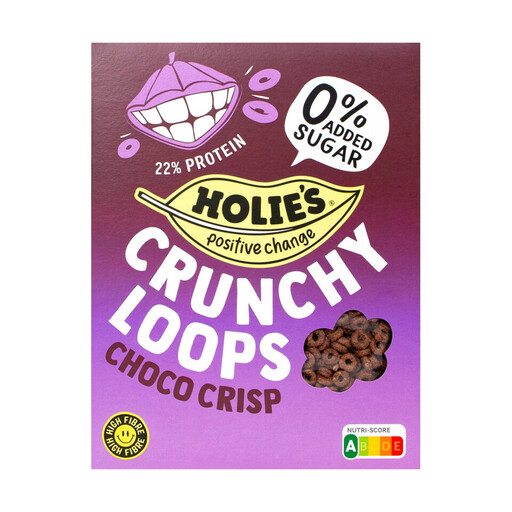 Image unavailable
These 350 g chocolate loops are for anyone who prefers ring-shaped cereal to muesli.
This variety isn’t suitable if you have a peanut allergy. Check the current packaging for other allergens and nutritional information.
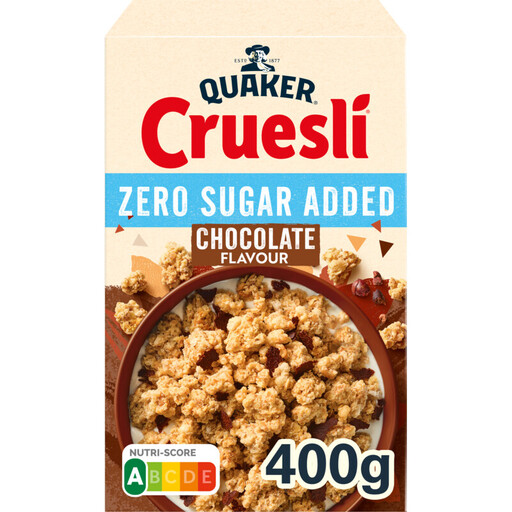 Image unavailable
This 400 g cruesli is a good choice if you’re looking for a crunchy chocolate cereal and want to compare the sugar content carefully.
Read the nutritional information per 100 g and check the ingredients; the product name alone doesn’t tell you everything about its nutritional value. If you have allergies, check the pack.
 Image unavailable
This 450 g chocolate cruesli is a good choice if you’re looking for crunchy muesli clusters and want to take fibre into account.
Check the total wholegrain content on the pack before relying on a wholegrain claim. If you want to avoid added sugar, read the ingredients too, and if you have allergies, check the allergen information.
No, a wholegrain claim alone isn’t enough. The Netherlands Nutrition Centre’s criteria for breakfast cereals include at least 50% wholegrain cereal, at least 8,0 g of fibre per 100 g, no more than 0,69 g of salt per 100 g, and no added sugar. Check that the variety you choose meets all the requirements.
Compare the nutritional information per 100 g, as recommended by the Netherlands Nutrition Centre. Check sugars, fibre, salt and saturated fat, and also read the ingredients list to see what cereals each product is made from.
The Nutri-Score can help you compare products within the same category, but on its own it doesn’t tell you whether a product is right for you or meets the Dutch Wheel of Five criteria. According to the Dutch Government, displaying the score on packaging isn’t compulsory.
Yes, check the ingredients and allergen information for the exact variety you’re buying. The Netherlands Food and Consumer Product Safety Authority explains that 14 allergens must be listed; with breakfast cereals, also look out for any warnings about traces.