
Holidaymakers who prioritise fibre
You’re looking for chocolate breakfast cereals with a clear fibre value per 100 g. The sugar content and the amount you eat per bowl will then help you decide which pack is right for your breakfast.


Choose chocolate breakfast cereals for your holiday home by comparing fibre and sugar per 100 g first, then checking how much you actually eat per bowl. In the European Union, Regulation (EC) No 1924/2006 links the claim ‘high in fibre’ to at least 6 g of fibre per 100 g or 3 g per 100 kcal; the claim alone says nothing about the sugar content. Before you set off, also check the allergens and whether you can store an opened pack somewhere dry and sealed.
You’re looking for chocolate breakfast cereals with a clear fibre value per 100 g. The sugar content and the amount you eat per bowl will then help you decide which pack is right for your breakfast.
You want to work out in advance how many packs you’ll need and how to seal an opened pack in your holiday home. The net weight and number of people having breakfast are also worth considering.
Check the label on the exact product before you set off. The chocolate breakfast cereals described here include ingredients such as wheat and milk; some packs also warn that they may contain traces of nuts or peanuts.
Start with the nutritional information per 100 g, then work out what a typical bowl means for you, and finally check that the packaging and allergens are right for your stay.
| What to consider | What to check before buying | Who it matters to |
|---|---|---|
| Fibre | Check the fibre value per 100 g. If you’re specifically looking for the claim ‘high in fibre’, also bear in mind the alternative threshold per 100 kcal. | I want fibre to be my first selection criterion, not just a prominent word on the front of the pack. This is a priority for around 42% of consumers. |
| Sugars and portion size | Compare sugars per 100 g, then work out the nutritional values for the amount you actually serve yourself. | If adults and children are eating from the same pack, I don’t want to base my choice solely on the suggested portion size. Sugars and bowl size are the main consideration for around 33% of consumers. |
| Stocking up and storage | Check the net weight, storage instructions and whether you can seal the opened pack properly. | For a holiday lasting several days, I want to take enough breakfast without being left with an opened pack that’s difficult to store. This practical consideration matters most to around 17% of consumers. |
| Allergens | Read the ingredients and allergen information on the current pack, even if you’ve bought the product before. | If someone in my group needs to avoid certain ingredients, I want to know before we set off. Checking allergens is the decisive first step for around 8% of consumers. |
A fibre claim doesn’t tell you how much sugar the product contains. ‘Wholegrain’ doesn’t replace the fibre value in the nutrition table either.
Compare fibre and sugars per 100 g, then work out what you get from your usual portion.
Portion sizes on packs can vary, so you may not be comparing the same amount of breakfast cereal.
Start with the values per 100 g, then check how much you’ll put in your bowl at home or in your holiday home.
The products described here show that chocolate breakfast cereals can contain wheat or milk, and may sometimes carry a warning about possible traces of other allergens.
Check the current pack for everyone who’ll be eating it, and take a suitable alternative breakfast if necessary.
A larger pack is only practical if you have a suitable place to keep it and can seal it properly once opened. Nestlé Lion advises that the bag should be tightly closed after opening.
Read the storage instructions on the pack and take a clip or an airtight container if your holiday home doesn’t have one.
The differences below apply to the products mentioned, not to a brand’s entire range. Always compare the pack you’re actually thinking of buying.
Special K Pure Chocolade and Coco Pops Chocos are two different chocolate breakfast cereals, each with 6.0 g of fibre per 100 g.
According to Albert Heijn’s product information, Lion Karamel & Chocolade Cereals is a chocolate and caramel variety with 5.8 g of fibre per 100 g.
AH Chocosmaak schelpen is a supermarket own-brand product in the chocolate breakfast cereal category.
The Jumbo range includes Crunchy Muesli Pure Chocolade. Muesli is a different type of product from chocolate shells, for example.
These products are chocolate muesli or chocolate granola for anyone looking for breakfast cereals for a holiday home. Muesli and granola are different types of product, so compare the nutritional information, portion size and allergens on each pack before choosing.
 No image available
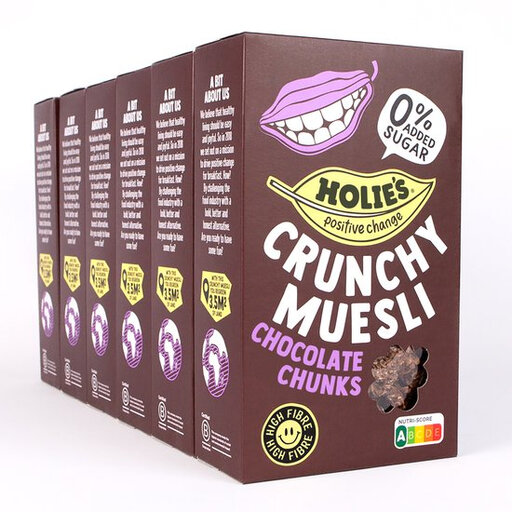
This bundle of six packs of chocolate muesli is a good option if you want to take breakfast for several days. Check the fibre and sugars per 100 g, allergens and storage instructions on the pack to make sure it’s right for your group.
 No image available
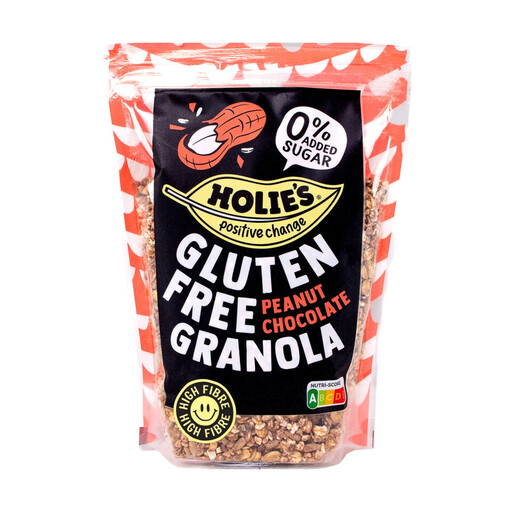
This 330 g pack is chocolate granola with peanut in the product name. If allergens or a gluten-free diet are important to your choice, check the full information on the current label; don’t rely on the product name alone.
 No image available
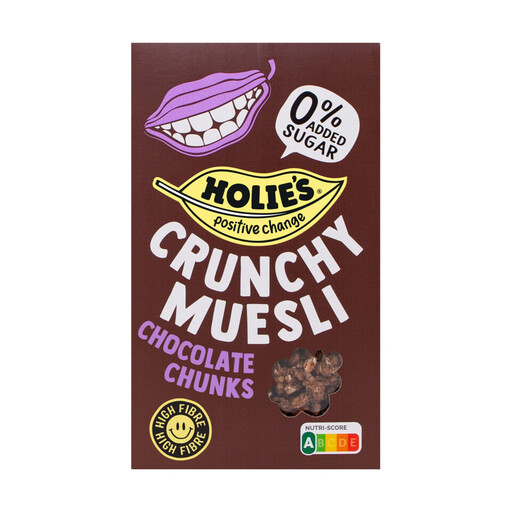
This single 400 g pack of chocolate muesli is a good choice if you don’t want to take a bundle of six. Compare the nutritional information per 100 g and check that the storage instructions suit the space available in your holiday home.
In the European Union, Regulation (EC) No 1924/2006 links this nutrition claim to at least 6 g of fibre per 100 g or 3 g of fibre per 100 kcal. Compare the nutritional information for the exact product; ‘wholegrain’ or a chocolate variety in the name won’t tell you how much fibre it contains.
No, a fibre claim says nothing about the sugar content. Kellogg's Nederland lists 6.0 g of fibre and 17 g of sugars per 100 g for Special K Pure Chocolade; Jumbo also lists 6.0 g of fibre for Coco Pops Chocos, but 22 g of sugars per 100 g. Compare both values on the same basis.
Use the fibre value per 100 g and the amount of breakfast cereal you actually serve yourself. A smaller bowl will contain less fibre than 100 g of the same product; the suggested portion on the pack doesn’t have to be your portion.
Follow the storage instructions on the pack and keep the breakfast cereal dry. Nestlé Lion also says that the bag should be tightly closed after opening. Before you set off, check whether you have a suitable container or clip at your holiday home.
Yes, check the allergen information on the current pack before eating it. Albert Heijn warns that product information may change; the examples mentioned here include wheat and milk, and warnings about possible traces of nuts or peanuts.