For a quick chocolate breakfast, cold muesli or breakfast cereal works well if you have a bowl and milk or yoghurt. An oat cup prepared with hot water requires access to hot water and time to prepare. Then check the wholegrain labelling, ingredients, fibre, sugars and allergens on the packaging: a stated proportion of wholegrain cereal does not automatically make a product entirely wholegrain.
Who is this choice relevant to?
If you’re looking for wholegrain options
You want chocolate breakfast cereal, but you distinguish between a fully wholegrain product and a recipe that contains a proportion of wholegrain cereal. You also take fibre and sugars into account when comparing products.
If you have limited facilities for breakfast
You eat somewhere that may have a bowl and milk or yoghurt, but no hot water — or the other way round. The preparation required determines which option is practical.
If you want chocolate and check allergens
You’re looking for a chocolate variety and want to check before buying whether the product contains ingredients or warnings that are relevant to you, such as cereals containing gluten, milk, soya, nuts or peanuts.
What should you look for when choosing?
First, think about where and how you’ll eat. Cold muesli generally needs a bowl and something to serve it with; for an oat cup, check the water and standing-time instructions. Then compare the grain ingredients and nutritional information of the products that suit your situation.
| What to consider |
What to check before buying |
Who it matters to |
| Wholegrain and fibre |
Read the exact wholegrain labelling and ingredients. Compare fibre on the same basis, for example per 100 g. |
I want to know whether my chocolate breakfast cereal is actually labelled as wholegrain, rather than simply containing a proportion of wholegrain. Around 40% of consumers consider wholegrain status their most important purchase criterion. |
| Preparing breakfast on the go |
Check which bowl, spoon and liquid you’ll need, and whether the product needs to stand before you eat it. |
If I only have breakfast once I’m at the office, the preparation needs to suit what’s available there. For around 30% of consumers, practicality is the most important factor. |
| Chocolate, sugars and allergens |
Compare sugars per 100 g and read the ingredients and allergen information on the current packaging. |
I want to choose a chocolate variety without overlooking sugars or allergens that are relevant to me. This combination is the top priority for around 30% of consumers. |
Common mistakes
-
Assuming ‘with wholewheat’ means entirely wholegrain
According to the Netherlands Food and Consumer Product Safety Authority, a product can only be labelled wholegrain if 100% of its cereal ingredients are wholemeal. For example, Kellogg’s Special K Pure Chocolate states that it contains 32% wholewheat, but it also contains rice and barley.
Read the exact product description and the ingredients list. Treat a stated percentage of wholegrain as information about the product’s composition, not as confirmation on its own that the product is entirely wholegrain.
-
Confusing ‘for on the go’ with ‘no preparation needed’
Cold muesli may require a bowl and milk or yoghurt. According to Albert Heijn’s product information, the preparation instructions for Fuel10K Porridge Oats Chocolate call for 160 ml of boiling water and a wait of 2 to 3 minutes.
Check the preparation instructions before buying and consider which facilities you’ll actually have access to where you’ll be eating breakfast.
-
Relying on a claim without checking the label
A product name or a statement about fibre won’t tell you how much sugar a product contains or which allergens may be present. According to the Netherlands Food and Consumer Product Safety Authority, allergen information for prepacked foods is shown on the label.
Compare the nutritional information on the same basis. If you have an allergy, also check for warnings about the possible presence of allergens.
-
Assuming a whole range reflects the ingredients of one chocolate variety
Jumbo and ALDI stock both chocolate products and separate wholegrain products. That doesn’t mean that every chocolate variety has the same grain ingredients.
Check the ingredients and wholegrain labelling of the specific product you want to buy.
Brands to help you explore your options
Kellogg’s
Special K Pure Chocolate is an example of chocolate breakfast cereal that states it contains a proportion of wholewheat.
- Kellogg’s states that this product contains 32% wholewheat, 6.0 g of fibre and 17 g of sugars per 100 g.
- The product also contains rice and barley; the proportion of wholewheat alone doesn’t confirm that it is entirely wholegrain.
Nestlé
Fitness Chocolate is a chocolate variety for which Nestlé Cereals Belgium lists wholewheat and wholegrain oat flakes.
- The Belgian product page states that it contains 6.7 g of fibre and 20 g of sugars per 100 g.
- Check the Dutch packaging for the current ingredients and nutritional information when you buy it; the Belgian information doesn’t necessarily describe a Dutch variety.
Albert Heijn
AH Oat & Go Chocolate Oatmeal is a chocolate oat option in a cup.
- Albert Heijn states that this variety contains 12 g of fibre and 8.6 g of sugars per 100 g.
- Check the ingredients, wholegrain labelling, allergens and preparation instructions on the cup you buy.
Jumbo
The range includes Crunchy Muesli Pure Chocolate and Special Flakes Pure Chocolate, as well as a separate wholegrain porridge oats product.
- These different product types give you a starting point for comparing cold chocolate breakfast cereals.
- Check the wholegrain labelling and nutritional information for each chocolate product; the characteristics of the separate porridge oats don’t automatically apply to the chocolate varieties.
Lidl
Lidl lists crunchy chocolate muesli in its breakfast range.
- This product type could suit you if you’re looking for cold chocolate muesli.
- Check the packaging of this specific muesli for its grain ingredients, nutritional values and allergens.
Aldi
Under Golden Bridge, ALDI lists chocolate flakes and crunchy chocolate muesli, as well as separate wholegrain products.
- This means you can search specifically for the chocolate variety and then compare its label.
- The fact that other Golden Bridge products are wholegrain doesn’t confirm the wholegrain status of a chocolate variety.
Chocolate muesli for a cold breakfast
These chocolate mueslis are suited to a cold breakfast. If you mainly need a cup that you prepare with hot water, focus on the preparation method rather than treating these products as an equivalent option. For each muesli, check the current packaging if its exact wholegrain status, nutritional information or allergens will affect your choice.
 No image available
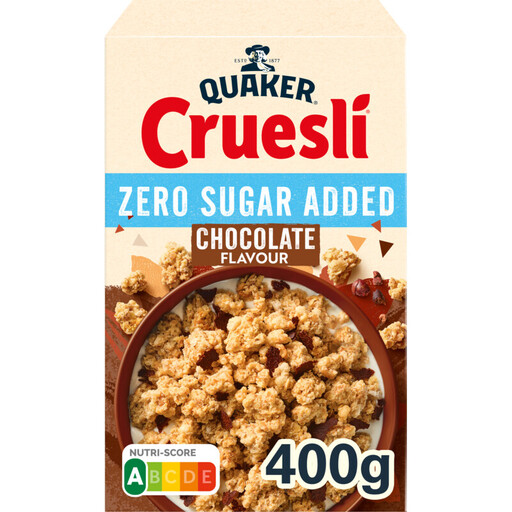
Quaker Cruesli Choco Zero Sugar, 400 g
An option if you’re looking for chocolate muesli for a cold breakfast. The pack contains 400 g; to compare sugars, read the nutritional information rather than relying on the variety name alone.
View on Joybuy
 No image available
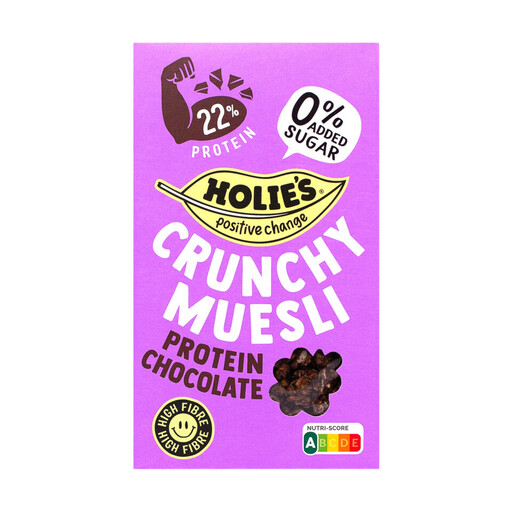
Holie’s Crunchy Muesli Protein Chocolate, 400 g
A chocolate variety for anyone looking for cold muesli. The pack contains 400 g; check the ingredients and nutritional information on the label before choosing based on wholegrain cereal, fibre or sugars.
View on Joybuy
 No image available
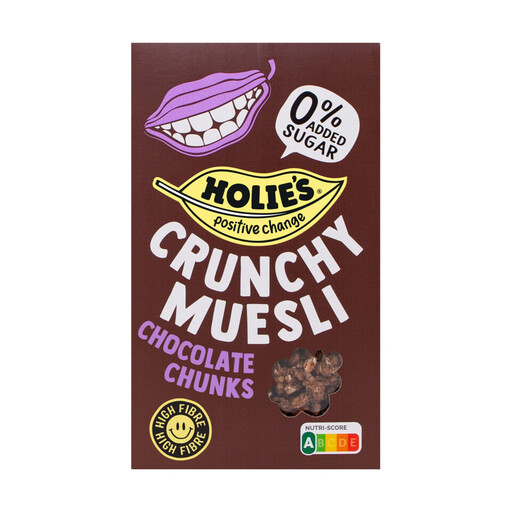
Holie’s Crunchy Muesli Chocolate Chunks, 400 g
A chocolate muesli for a cold breakfast. The pack contains 400 g; check the grain ingredients and any allergens on the current packaging if they’re important to you.
View on Joybuy
Frequently asked questions
When is chocolate breakfast cereal a wholegrain product?
According to the Netherlands Food and Consumer Product Safety Authority, a product can be labelled wholegrain if 100% of its cereal ingredients are wholemeal. An ingredient such as wholewheat, or a stated percentage of wholegrain cereal, doesn’t by itself confirm that the entire product meets this definition.
Can I eat a chocolate oat cup straight away when I’m on the go?
Not every cup is ready to eat without preparation. For Fuel10K Porridge Oats Chocolate, Albert Heijn’s product information states that you need 160 ml of boiling water and a wait of 2 to 3 minutes. For a different cup, check its own preparation instructions and make sure you can follow them safely.
Where can I find allergen information for prepacked breakfast cereal?
The Netherlands Food and Consumer Product Safety Authority states that allergen information must be shown on the label. If you have a relevant allergy, also check the packaging for any warnings about the possible presence of allergens.
Why should I read the label again if I already know the product?
Ingredients, nutritional values and allergy information can change, as Albert Heijn states in its product information. So check the current packaging if your choice depends on wholegrain cereal, sugars or specific allergens.


