
Families planning their breakfast supplies
If several people share the same pack during the week, the serving size on the label can help you work out how many mornings a 500 g or 850 g pack will last.


Choose the pack size based on how many people will be eating, the serving size shown on the pack and how often your household has these cereals during the week. A 500 g or 850 g pack gives you more to work with than a 330 g pack, but a larger pack is only practical if everyone enjoys that variety and you can store it properly once opened. Also compare nutritional values per 100 g, and check the ingredients and allergen information.
If several people share the same pack during the week, the serving size on the label can help you work out how many mornings a 500 g or 850 g pack will last.
If you pay attention to sugars, fibre or other nutritional values, you can compare products per 100 g. According to the Netherlands Nutrition Centre, this is a more useful basis for comparison than servings of different sizes.
A large pack is less practical if not everyone likes the same flavour or texture. If allergens are a concern, check the current label for the variety you choose.
Start with how much your household gets through, then decide whether a smaller pack, a 500 g pack or a larger supply is right for you. Chocolate rice cereals, wheat shells and chocolate crunchy muesli are different product types, so compare their labels rather than looking at weight alone.
When: A smaller pack is a good fit if you have the same chocolate breakfast cereal less often or specifically want Coco Pops Chocos.
Consider: The 330 g pack of Kellogg's Coco Pops Chocos listed by Jumbo contains less than the 500 g and 850 g packs mentioned here.
When: A 500 g pack could work if several people regularly share it and you don't want to open a very large supply.
Consider: Albert Heijn lists 13 servings of 40 g for AH Choco crisps; Jumbo lists approximately 17 servings of 30 g for Rice Crisp Chocosmaak. So the number of breakfasts also depends on the serving size you choose.
When: The 850 g Quaker pack listed by Jumbo is an option if several people regularly have chocolate crunchy muesli for breakfast.
Consider: Crunchy muesli is a different product type from chocolate rice cereals or wheat shells. Make sure you can store the larger quantity in a cool, dry place in a tightly sealed container after opening.
| What to consider | What should you check? | Who is this important for? |
|---|---|---|
| Supply and servings | Check the net weight and serving size on the specific pack. Think about how many people usually share it and whether you can store the rest properly. | If I'm serving breakfast to the household on several weekdays, I want to know how many mornings one pack will last, without having an opened pack sitting around for too long. For an estimated 42% of consumers, planning these supplies comes first. |
| Nutritional information and allergens | Compare sugars, fibre and other relevant nutritional values per 100 g. If anyone has an allergy, check the ingredients and allergens on the current label too. | When I'm choosing between different breakfast cereals, I want to compare their nutritional values on the same basis and check that everyone can eat them. This is the main consideration for an estimated 33% of consumers. |
| Flavour and product type | Before choosing a larger pack, find out whether everyone wants rice cereals, wheat shells or chocolate crunchy muesli. | A large supply isn't much use to me if my household doesn't like the flavour or texture. For an estimated 25% of consumers, this preference matters most. |
The packs discussed range from 330 g to 850 g. Weight alone doesn't tell you how many shared breakfasts you'll get from a pack.
Work it out using the serving size on the pack you've chosen and the number of people eating on a typical weekday morning.
Albert Heijn lists a 40 g serving for AH Choco crisps, while Kellogg's lists 30 g for Coco Pops Chocos. That means the values per serving aren't based on the same amount.
Compare the nutritional values per 100 g first. Then use the serving sizes to estimate how much you'll have, rather than treating them as a recommended bowl size.
A larger pack will stay open for longer if your household doesn't eat that variety regularly. The Netherlands Nutrition Centre recommends storing breakfast cereals somewhere cool, dark and dry.
Seal the pack tightly after opening or use an airtight storage container, and follow the storage advice on the packaging.
Coco Pops Chocos are chocolate-flavoured wheat shells. Jumbo listed this product in a 330 g pack.
AH Choco crisps is a supermarket own-brand product in a 500 g pack.
Jumbo Rice Crisp Chocosmaak is an example of chocolate rice cereals in a 500 g pack.
Quaker makes chocolate crunchy muesli; Jumbo listed an 850 g pack as well as a 450 g pack.
Below you'll find chocolate breakfast cereals for households considering a multipack, as well as smaller packs of crunchy muesli. For each product, check that the quantity and product type suit your weekday breakfasts.
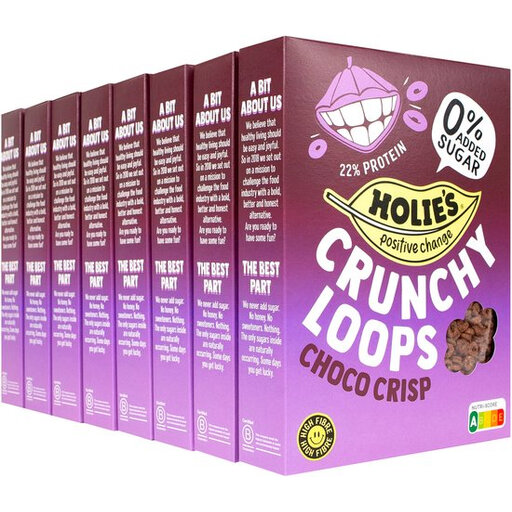 Image unavailable
A multipack of chocolate cereal rings for a household that eats this variety regularly.
The title lists eight 350 g packs. Check the serving size and how to store the packs after opening. If you have allergies, check the label for information about ingredients including wheat and peanuts.
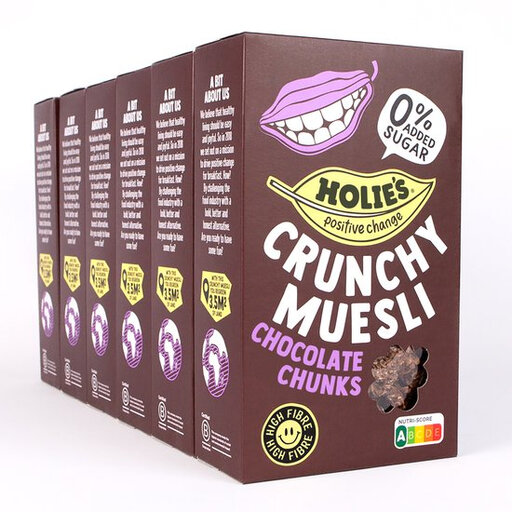 Image unavailable
Chocolate muesli for households looking to buy several packs of the same variety.
The title lists six 400 g packs. Use the serving size to work out whether that quantity suits your household's needs. If you have allergies, check the label for ingredients including oats, spelt and wheat.
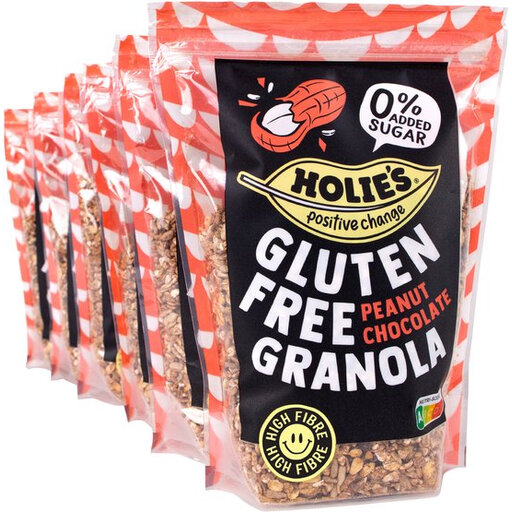 Image unavailable
A multipack of chocolate granola for households that regularly eat this type of product.
The title lists six 330 g packs. Check the serving size and storage instructions, and if you have allergies, pay particular attention to the information about peanuts and oats on the current label. If you need a gluten-free product, check the packaging rather than relying on the product name alone.
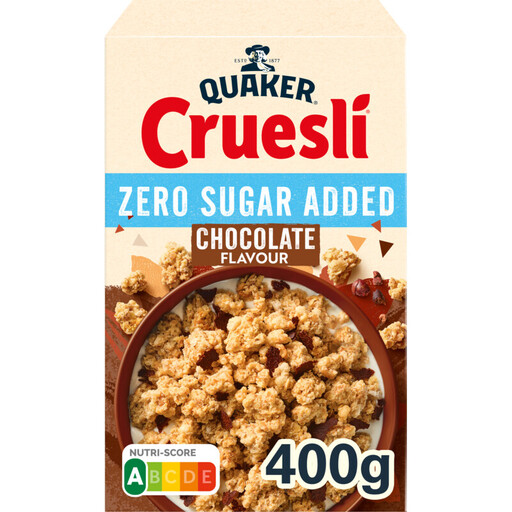 Image unavailable
A 400 g pack of chocolate crunchy muesli for anyone who'd rather open a smaller quantity at a time than buy a multipack.
Check the nutritional information table for the sugar content: the words ‘Zero Sugar’ in the product name are no substitute for checking the value per 100 g. Also check the serving size and allergen information on the pack.
 Image unavailable
A 450 g pack of chocolate crunchy muesli for a household that wants to work out how much of this variety it gets through during the week.
Check the serving size before working out how many shared breakfasts you'll get. If you have allergies, read the current information about cereals containing gluten, soya and wheat, among other ingredients.
It depends on how many people are eating and how much each person has. Albert Heijn lists 13 servings of 40 g for a 500 g pack of AH Choco crisps; with two servings each morning, that works out at around six full mornings. Use the stated serving size as a guide for your calculations, not as a recommended amount for everyone.
First check whether they're the same type of product, then compare their nutritional values per 100 g. The Netherlands Nutrition Centre recommends using this basis to compare labels. Then use the serving size on each pack to work out how many mornings it will last your household.
If someone eating the cereal has a relevant allergy, check the current label for the specific variety before buying. The Netherlands Food and Consumer Product Safety Authority explains that allergens must be clearly identifiable on the label. Ingredients and statements about possible traces vary from product to product.
Store breakfast cereals somewhere cool, dark and dry, and seal the pack tightly after opening. The Netherlands Nutrition Centre also recommends an airtight storage container. Follow the use-by or best-before date and storage advice on the packaging too.