
Night shift workers keeping an eye on sugar
You want to choose a sweet topping and look beyond the wording on the front of the pack: which product is being compared, and how much sugar is in your serving?


If you specifically want chocolate flakes, don’t treat lower-sugar chocolate sprinkles as an identical substitute: they’re different product forms. If demonstrably lower sugar matters more than the shape, you can assess a chocolate sprinkles option by checking what the claim compares it with, as well as the sugar per 100 g and per serving. If you’re mainly looking for something to eat during your night shift, choose a suitable snack first rather than treating loose flakes as a snack.
You want to choose a sweet topping and look beyond the wording on the front of the pack: which product is being compared, and how much sugar is in your serving?
You’re looking for chocolate flakes to put on bread and want to know whether lower-sugar chocolate sprinkles would be an acceptable alternative for you.
You’re feeling peckish during your shift and need to choose between a topping for something like a slice of bread and a snack in its own right. The Netherlands Nutrition Centre lists fruit and bread, among other things, as options for a snack.
First decide whether you’re looking for chocolate flakes, demonstrably less sugar or a snack for your shift. These priorities won’t necessarily lead you to the same type of product.
Choose these: if the flake shape is important to you.
Consider: assess any preference for less sugar separately by checking the current label.
Choose these: if the sugar comparison matters more to you than the flake shape.
Consider: chocolate sprinkles are still a different product form, and any claim is based on comparison with a specific reference product.
Choose this: if you want something to eat during your shift, rather than just something sweet on bread.
Consider: it won’t replace the taste or texture of chocolate flakes.
| What to consider | What should you check? | Who is this most important for? |
|---|---|---|
| Demonstrably less sugar | Check what the claim compares the product with, and look at the sugar per 100 g and per serving. | If I want to choose less sugar, I need to know what the claim means for my serving, even if that means choosing chocolate sprinkles. Around 34% of consumers give this sugar comparison their highest priority. |
| The shape of chocolate flakes | Check whether you’re buying chocolate flakes or chocolate sprinkles, then compare the nutritional information. | The texture of flakes on bread is what matters to me; chocolate sprinkles aren’t automatically a suitable substitute. For around 33% of consumers, product form comes first. |
| A snack for your shift | Decide whether you’re looking for a topping for a slice of bread or something to eat as a snack. | When I get hungry during my shift, I’m looking for something to eat, not just a sweet topping. This is the main priority for around 20% of consumers. |
| Allergens and availability | Check the current label for allergens and make sure the option you’ve chosen is available. | I want to avoid choosing a product that doesn’t suit my dietary requirements or isn’t available when I need it. For around 13% of consumers, this check is the top priority. |
A lower-sugar chocolate sprinkles option may suit your sugar priorities, but it isn’t the same product form as chocolate flakes.
Before comparing, decide which of these two qualities matters most to you.
A claim about less sugar compares the product with a reference product; it doesn’t tell you on its own how much sugar is in your serving.
Read the ingredients, allergen information and nutritional details, especially the sugar per 100 g and per serving.
Chocolate flakes and chocolate sprinkles are toppings. If you’re looking for something to eat during a night shift, that’s a different choice from simply picking a topping.
Decide whether you want a topping for something like a slice of bread or a separate snack. The Netherlands Nutrition Centre lists fruit and bread, among other things, as snack options.
Whether a specific option is available can vary by shop and over time.
Check the current product listing and packaging before relying on a particular chocolate sprinkles option being available.
A brand to consider if you’re specifically looking for chocolate flakes; PLUS lists De Ruijter dark chocolate flakes.
An option for anyone considering lower-sugar chocolate sprinkles as an alternative to flakes.
Jumbo describes a milk chocolate sprinkles option with less sugar.
Albert Heijn lists Céréal chocolate sprinkles options with less sugar in its range for people watching their sugar intake.
ALDI lists 300 g Kiekeboe milk or dark chocolate flakes as a bread topping.
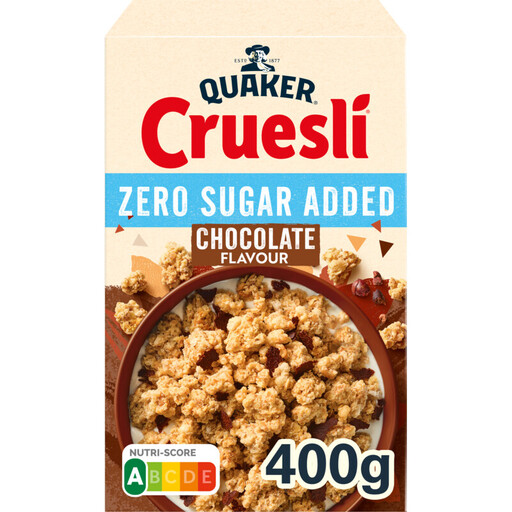
The Cruesli below is an option if you’d prefer a muesli product to a chocolate topping. Check the current nutritional information before assessing it as a lower-sugar alternative; it isn’t chocolate flakes or chocolate sprinkles.
 No image available
A muesli product to consider if you’re looking for something other than a chocolate topping during your shift.
Check the sugar per 100 g and per serving, the ingredients and the allergens on the current packaging. The name Zero Sugar doesn’t, on its own, mean it has been compared with regular chocolate flakes.
No. Chocolate sprinkles and chocolate flakes are different product forms. A sugar claim for chocolate sprinkles doesn’t automatically apply to flakes. First choose the form you want, then compare the nutritional information for the products in question.
That claim doesn’t tell you how much sugar is in your serving. Albert Heijn compares its dark chocolate sprinkles with AH dark chocolate sprinkles. As well as considering that comparison, check the sugar per 100 g and how much you use.
Chocolate flakes are mainly a bread topping, so if you’re hungry, first decide what sort of snack you’re looking for. The Netherlands Nutrition Centre lists fruit and bread, among other things, as snack options; if you like, you can use flakes as a topping on a slice of bread.
Yes. A sugar claim doesn’t tell you which allergens a product contains. Check the allergen information on the current packaging for the exact option you want to buy.