
A student stocking up their cupboard
They’re looking for something to top bread for their first breakfasts or lunches in their new room. The quantity and a suitable place to store the pack matter more than how it looks as a gift.


Chocolate sprinkles can make a useful topping for bread or a small extra when a student moves into their new home, but they’re not a natural substitute for a box of chocolates when a festive presentation matters most. For everyday use, choose a suitable pack size; for a small gift, consider individual portions. If the recipient has a known dietary requirement, always check the packaging of the variant you choose.
Chocolate sprinkles are a practical addition if the student genuinely wants to use them as a topping for bread. If the gift’s appearance matters more than how it will be used, a box of chocolates may be a better choice.
They’re looking for something to top bread for their first breakfasts or lunches in their new room. The quantity and a suitable place to store the pack matter more than how it looks as a gift.
They want to add something edible to another gift. Individual portions can be handy for sharing; Albert Heijn, for example, lists eight portions for De Ruijter Kleintjes.
They’re taking the recipient’s taste preferences, ingredients or allergens into account. The specific variant and its current packaging matter more than the brand name alone.
First decide whether the chocolate sprinkles are meant to stock the cupboard or make a small gift. Then choose the product type and flavour, and check the label of the exact variant if the recipient has specific dietary requirements.
| What to consider | What to check when buying | Who should bear this in mind? |
|---|---|---|
| Quantity and pack size | Check the pack size and whether the student can store it somewhere cool and dry. | Someone who has just moved into student accommodation and wants to eat chocolate sprinkles on bread regularly should look for a quantity that suits their needs. For around 25% of consumers, a practical supply is the top priority. |
| Giftability and sharing | Check the number of portions and whether the product is sprinkles, flakes or a combination. | For a small housewarming gift, I want to give something the recipient can easily share without having to open one large pack straight away. That’s a priority for around 25% of consumers. |
| Flavour and product type | Ask whether they prefer milk or dark chocolate, and distinguish between sprinkles and flakes. | If the recipient has a strong preference for a particular type of chocolate, I don’t want to judge by eye-catching packaging alone. Flavour and product type are the first things around 33% of consumers consider. |
| Ingredients and allergens | Read the current ingredients list, allergen information and, if needed, the nutritional information per 100 g. | If you’re buying for someone with a known allergy or specific dietary requirement, you need to be able to judge whether this particular variant is suitable. For around 17% of consumers, checking the label is a priority. |
Chocolate sprinkles are a topping for bread. If the giver has a festive chocolate gift in mind, a pack of sprinkles may turn out to be a different kind of present from the one they intended.
Choose deliberately between a practical addition for breakfast or lunch and a box of chocolates for a more celebratory presentation. Chocolate sprinkles can also make a little extra alongside a card or another housewarming gift.
Milk, dark and mixed varieties don’t necessarily have the same ingredients. The ingredients list shown by Albert Heijn for De Ruijter Milk Chocolate Sprinkles includes milk and soya, among other things.
Check the ingredients and allergen information on the pack you’ve chosen, especially if the recipient has a known allergy.
A comparison of sugar content doesn’t describe a product’s full composition and, on its own, says nothing about whether it’s suitable for an individual diet.
Check the full nutritional information and ingredients for the specific variant, rather than relying only on the wording on the front of the pack.
These brands offer different types of chocolate sprinkles and similar toppings for bread. Always compare the exact variant: the brand name alone won’t tell you its flavour, pack size or ingredients.
Offers milk and dark chocolate sprinkles, among other products, as well as Kleintjes in individual portions.
Offers different chocolate sprinkle varieties for anyone looking for a particular flavour or shape.
Offers its own-brand chocolate sprinkles alongside products from other brands.
Offers its own-brand chocolate sprinkles in milk and dark varieties, among others.
Offers dark chocolate sprinkles that the manufacturer markets with a claim about reduced sugar.
Lidl offers Mister CHOC Dark Chocolate Sprinkles.
ALDI offers Kiekeboe Dark Chocolate Sprinkles and an XXL variety with extra-large sprinkles.
These De Ruijter products suit the idea of an edible addition for a student’s room. Check the product type: Flake Feast is a flake variety, not chocolate sprinkles.
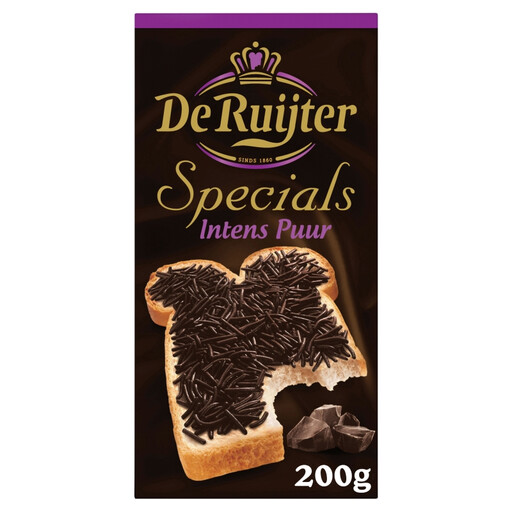 Image unavailable
For someone who specifically wants dark chocolate sprinkles; the pack contains 200 g.
If the recipient has a known allergy, check the ingredients and allergen information on the current packaging.
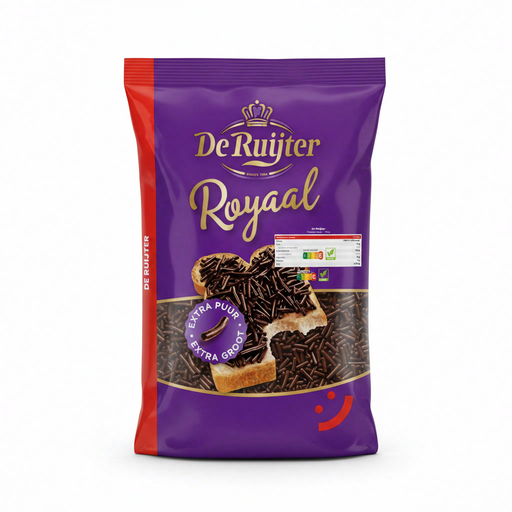 Image unavailable
A 390 g pack for anyone looking to give chocolate topping as a practical addition.
Check that the recipient likes this type of product and can store the pack; if they have an allergy, read the current label.
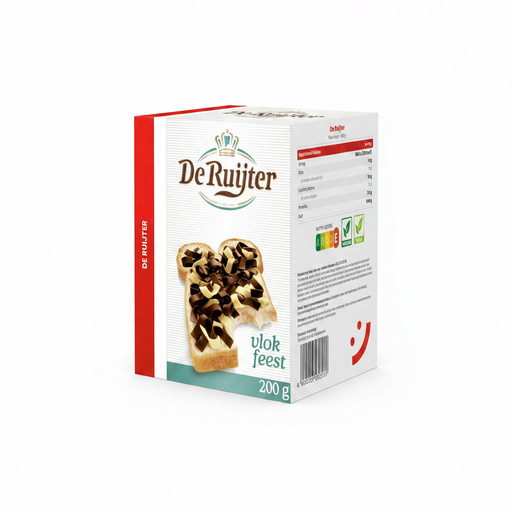 Image unavailable
For anyone who’d like to give flakes as a topping for bread instead of chocolate sprinkles; the pack contains 200 g.
Check that this type of product suits the recipient and, if they have a known allergy, read the current packaging.
No. Chocolate sprinkles are a topping for bread, so they’re used differently from a box of chocolates. Give them as a practical addition if the student enjoys eating them; choose chocolates if you’re after a more celebratory chocolate gift.
A larger pack works well for regular use if the student knows they like the flavour and can store the product properly. Individual portions are better suited to a small gift to share; Albert Heijn lists eight portions for De Ruijter Kleintjes.
Yes. If the recipient has a known allergy, check the packaging of the exact variant you’ve chosen. The Netherlands Food and Consumer Product Safety Authority explains how allergens are listed on food labels; don’t rely on the flavour name or a variant you’ve bought before.
No. ‘Less sugar’ doesn’t mean ‘sugar-free’. If the recipient has a specific requirement, read the full nutritional information and ingredients; don’t assume the claim means the product is suitable for a medical diet.
Follow the storage instructions on the pack you’ve chosen. Albert Heijn advises storing its own-brand chocolate sprinkles in a cool, dark and dry place; also check the best-before date on the product you’re giving.